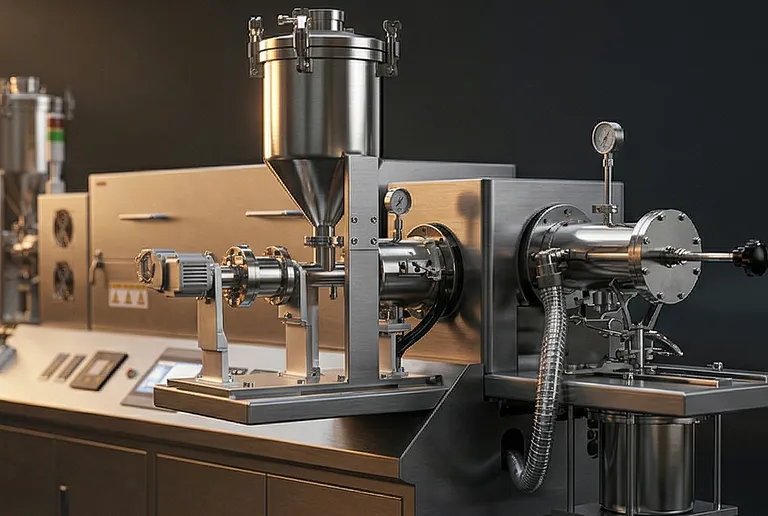
The Invisible Barrier to Metallurgical Perfection
Imagine you have just cast a high-carbon steel ingot, meticulously alloyed with cobalt and aluminum. Your goal is to study ultra-fine pearlite transformation—a breakthrough for material strength. However, when you analyze the samples after a long-duration heat treatment, the data is a mess. The edges of the sample show completely different properties than the core, and your concentration of aluminum has plummeted.
Weeks of preparation are lost. The culprit isn’t your recipe; it is the environment in which that recipe was "cooked." For researchers and engineers working with sensitive alloys, the struggle to achieve a truly uniform internal structure without destroying the surface is a common, yet deeply frustrating, roadblock.
The Common Struggle: Why "Just Adding Heat" Fails
To fix compositional segregation—the uneven distribution of elements that happens during cooling—the standard response is to put the ingot back into a furnace. Many labs attempt this using standard muffle furnaces or atmospheric furnaces, thinking that a high temperature is all that matters.
This approach often leads to two major failures:
- The "Skin" Effect (Decarburization): In an atmospheric furnace, oxygen reacts with the carbon on the steel's surface. This "eats away" the carbon, creating a soft, decarburized layer that renders the sample useless for phase transformation kinetic measurements.
- Oxidative Loss: Elements like aluminum (Al) and cobalt (Co) are highly reactive. At the high temperatures required for homogenization, they don’t just stay put; they oxidize, forming internal oxides or escaping the matrix entirely.
The result? You end up with a "homogenized" ingot that no longer has the chemical composition you started with. This leads to project delays, wasted high-purity raw materials, and unreliable data that can stall critical R&D.
The Science of the "Goldilocks" Environment
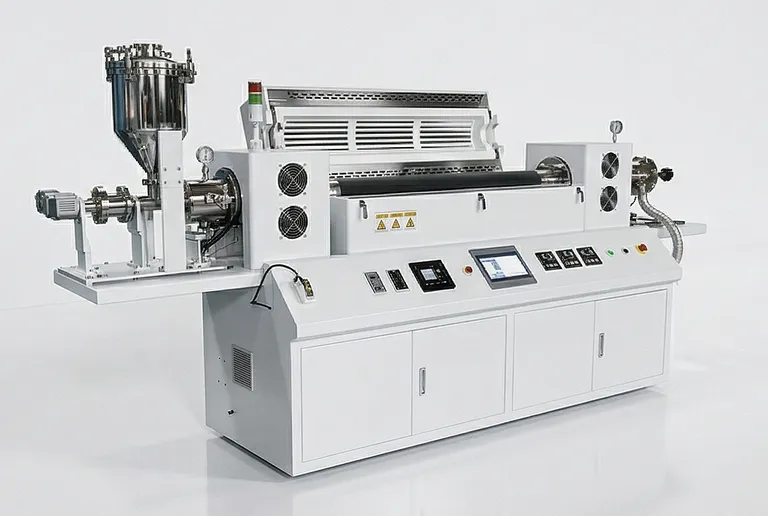
Why is this so difficult? The root of the problem lies in the physics of solid-state diffusion.
To eliminate dendritic segregation (the tree-like patterns of uneven elements formed during casting), atoms must literally migrate through the solid metal. This requires significant kinetic energy, which usually means sustained temperatures around 1200 °C. At this intensity, atoms of Chromium (Cr), Zirconium (Zr), or Cobalt (Co) gain the mobility to move from areas of high concentration to low concentration.
However, 1200 °C is also a "danger zone." At these temperatures, the chemical affinity between oxygen and your alloying elements is at its peak. To achieve the full diffusion required for macroscopic uniformity, you need time—often several hours or even days.
The traditional solution fails because it tries to achieve diffusion in an "active" environment. To succeed, you need a furnace that provides the thermal energy for diffusion while maintaining an extremely low oxygen partial pressure. This is why a high-vacuum environment isn't just a luxury; it is a scientific necessity.
The Solution: KINTEK’s Precision Vacuum Technology
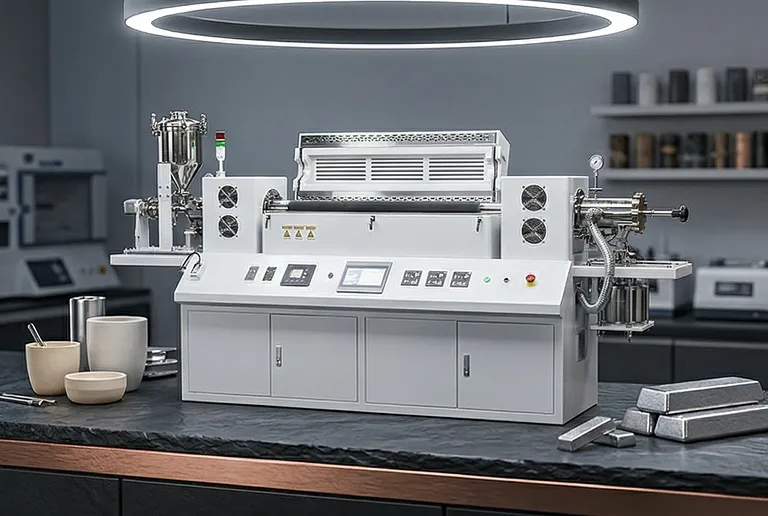
A high-vacuum annealing furnace is designed specifically to solve this paradox. By removing the atmosphere, we remove the "predators" (oxygen and nitrogen) that attack your sample.
At KINTEK, our vacuum high-temperature furnaces are engineered to act as a protective sanctuary for your materials:
- Absolute Purity: By maintaining a high vacuum, our furnaces prevent the oxidative loss of aluminum and cobalt, ensuring the precise chemical ratio of your ingot remains intact from start to finish.
- Surface Preservation: Because there is no oxygen to react with, decarburization is effectively eliminated. This ensures that the surface of your high-carbon steel is as representative of the alloy as the core.
- Thermal Stability for Long Cycles: Homogenization is not a sprint; it’s a marathon. KINTEK systems are built for the long-duration stability required to fully eliminate microstructural non-uniformity without temperature fluctuations that could trigger unwanted phase changes.
Whether you are working with Ti-Al alloys that are hypersensitive to oxygen or Fe-Cr-Al coatings that require precise intermetallic phase formation, the vacuum environment ensures the only thing changing in your sample is the uniformity of its atoms.
Beyond the Fix: Unlocking New Material Potential
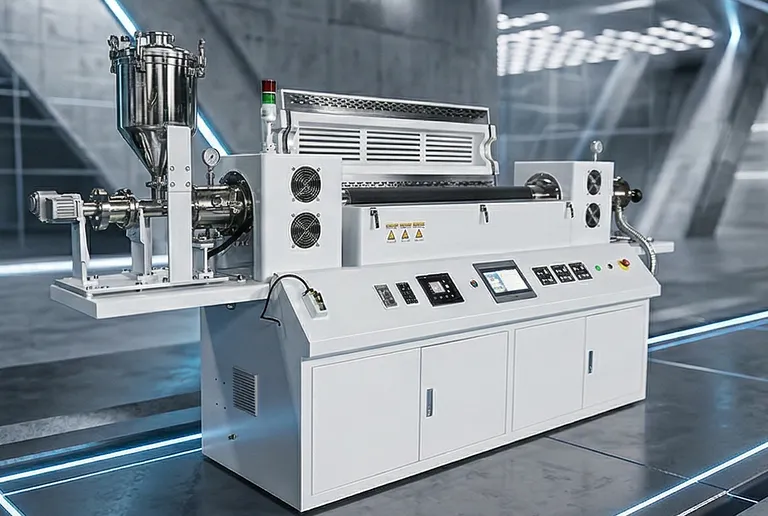
When you solve the problem of inconsistent homogenization, you do more than just "fix a batch." You open the door to more advanced research and more reliable production.
With a stable, high-vacuum thermal process, you can finally explore the limits of ultra-fine pearlite transformation or stabilize the single-phase solid solution structures of high-entropy alloys. You move from "guessing" if your sample is uniform to "knowing" it is. This precision translates to higher product yields, faster paths to market for new alloys, and the confidence that your experimental results are repeatable.
At KINTEK, we understand that your work depends on the integrity of your materials at the atomic level. Our range of customizable vacuum, tube, and induction furnaces is designed to help you master the heat, without compromising the chemistry.
Ready to eliminate segregation and protect your high-value alloys? Our team of technical specialists is ready to help you select or customize the ideal high-temperature vacuum environment for your specific metallurgical challenges. Contact Our Experts today to discuss your project requirements.
Related Products
- 2200 ℃ Tungsten Vacuum Heat Treat and Sintering Furnace
- High Pressure Laboratory Vacuum Tube Furnace
- 9MPa Air Pressure Vacuum Heat Treat and Sintering Furnace
- 2200 ℃ Graphite Vacuum Heat Treat Furnace
- 1400℃ Controlled Inert Nitrogen Atmosphere Furnace
Related Articles
- Why Your High-Strength Titanium Biomaterials Are Brittle—and How Vacuum Heat Treatment Fixes It
- Why Your Alloy Phase Separation Observations Are Inconsistent—And the "Invisible" Variable You’re Missing
- The Unseen Engine: Why Graphite Dominates High-Temperature Vacuum Furnaces
- Heat, Void, and Control: Designing the Heart of a High-Temperature Vacuum Furnace
- The Paradox of Strength: Why Graphite Dominates High-Temperature Vacuum Furnaces



















