The Frustration of the "Perfect" Cold-Rolled Sheet
You’ve spent weeks meticulously cold-rolling your Zr-Nb-Mn (Zirconium-Niobium-Manganese) alloy sheets. On the surface, they look perfect—thin, uniform, and precise. But then comes the mechanical testing. Instead of the high-performance material required for critical applications, you find the sheets are either too brittle to form or inconsistently soft.
Perhaps you’ve seen a batch come out of the furnace with a dull, gray surface scale, or worse, a sheet that snaps like a cracker under a fraction of its rated stress. For researchers and engineers working with reactive alloys, this "trial and error" phase isn't just frustrating; it's an expensive bottleneck that drains resources and stalls innovation.
The Common Struggle: Chasing Balance in a Reactive World
When dealing with cold-rolled alloys, the goal is always to find the "sweet spot" between strength and plasticity. The cold-rolling process induces "work hardening"—it makes the metal stronger, but it also leaves it full of internal stress and significantly reduces its ductility.
To fix this, most teams turn to standard annealing. However, conventional furnaces often introduce a new set of problems:
- The Oxidation Trap: Zirconium has an extreme affinity for oxygen. In a standard atmosphere, even at moderate temperatures, the surface reacts instantly, leading to embrittlement and surface scaling.
- Inconsistent "Fixes": Many try to compensate by using basic inert gas shielding, only to find that trace impurities in the gas still degrade the alloy’s purity.
- The Cost of Failure: In industries like aerospace, nuclear, or chemical processing, an inconsistent batch isn't just a minor setback; it's a safety risk and a massive financial loss in scrapped high-purity materials.
The Root Cause: Why "Good Enough" Heat Isn't Enough
Why do traditional methods fail these alloys? The answer lies in the microscopic "dance" of atoms.
To restore plasticity, the alloy must undergo recrystallization. This requires heating the material to a specific threshold—typically around 923 K (650°C)—to allow the internal grain structure to reset. However, Zr-Nb-Mn is a complex system. During this heating, a second phase known as beta-Nb particles begins to precipitate.
If your furnace cannot precisely control the environment and the cooling rate, two things happen:
- Chemical Contamination: Oxygen and nitrogen atoms rush into the crystal lattice, locking the grains in place and causing "surface scaling." This makes the material brittle before it even has a chance to recrystallize.
- Kinetics Chaos: Without precise temperature dwell times and regulated cooling, the beta-Nb particles don't distribute correctly. They either grow too large or remain suppressed, resulting in a material that lacks the necessary toughness to withstand high-stress environments.
The Solution: Precision Engineering via Vacuum Environments
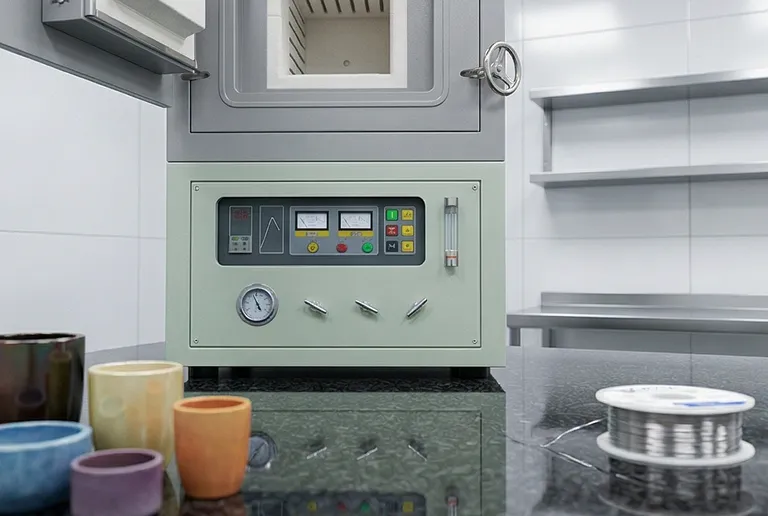
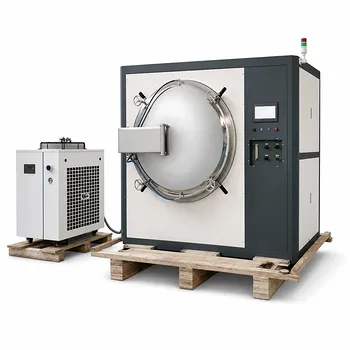
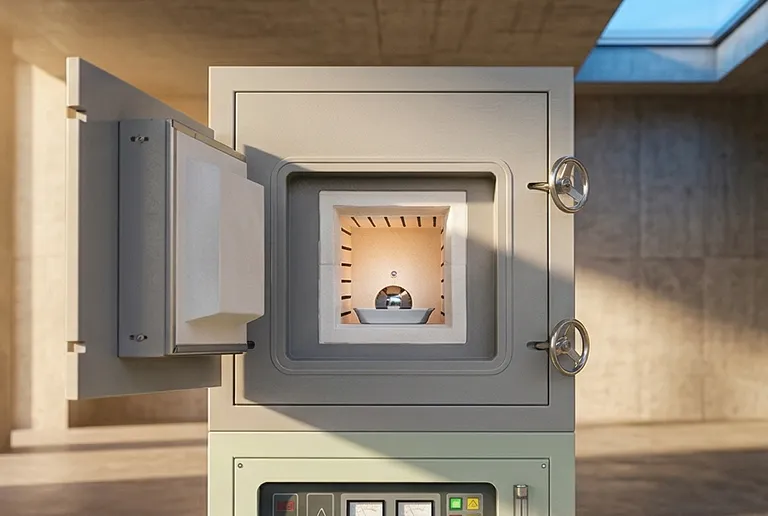
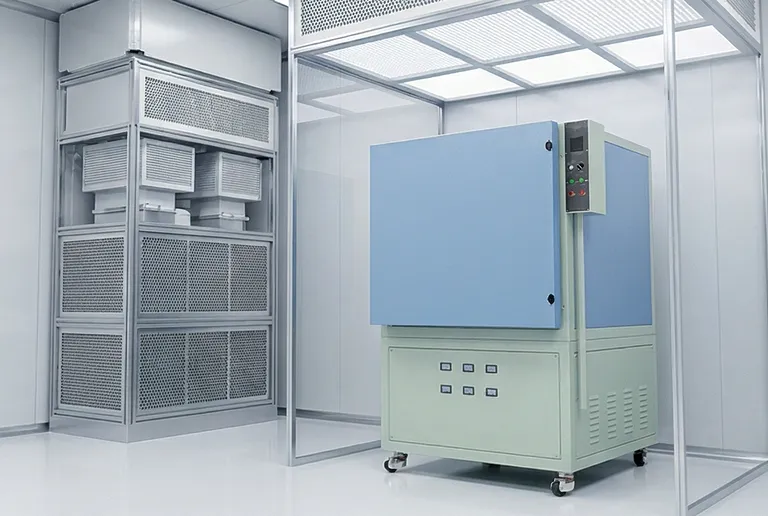
To solve this, you don't just need heat; you need a controlled vacuum environment that acts as a "sterile room" for metallurgy. This is where a High-Temperature Vacuum Annealing Furnace becomes the essential tool rather than an optional luxury.
A vacuum furnace, such as those engineered by KINTEK, addresses the root cause by removing the variables that ruin reactive alloys:
- Absolute Purity: By reaching pressures as low as 10⁻⁵ bar, the furnace effectively eliminates the oxygen and nitrogen that cause embrittlement. This allows for the successful transition of the alloy into its beta-phase region (up to 1273 K) without the risk of surface degradation.
- Kinetic Mastery: Unlike standard ovens, these systems offer precise control over the heating duration and cooling rates. This allows you to "tune" the precipitation kinetics of the beta-Nb particles, ensuring they are perfectly sized and distributed to optimize the balance between strength and plasticity.
- Uniformity: In alloys containing high-melting-point components like Niobium, multiple vacuum cycles and uniform heat distribution ensure macroscopic homogeneity—meaning the beginning of your sheet has the exact same properties as the end.
Opening New Doors: From Problem-Solving to Performance
When you stop fighting oxidation and inconsistent grain growth, your research and production capabilities shift from "surviving" to "thriving."
By mastering the vacuum annealing process, you gain the ability to produce Zr-Nb-Mn sheets with superior crystal structures and enhanced toughness. This opens up new possibilities: you can now explore more aggressive cold-rolling reductions, develop more intricate component geometries, and accelerate the development of high-stress materials that were previously too difficult to stabilize. You aren't just fixing a brittle sheet; you are unlocking the full potential of advanced material science.
Whether you are looking to eliminate work hardening in zirconium alloys or need to ensure the high-purity melting of reactive metals, your choice of thermal processing equipment is the foundation of your success. Our team of specialists understands the complex physics of alloy recrystallization and the stringent requirements of vacuum environments.
Let’s work together to solve your most challenging material property issues and bring precision to your laboratory. Contact Our Experts today to discuss your specific high-temperature furnace needs.
Related Products
- Vacuum Heat Treat Sintering and Brazing Furnace
- Small Vacuum Heat Treat and Tungsten Wire Sintering Furnace
- Vacuum Sealed Continuous Working Rotary Tube Furnace Rotating Tube Furnace
- Vacuum Heat Treat Sintering Furnace Molybdenum Wire Vacuum Sintering Furnace
- Vacuum Heat Treat Sintering Furnace with Pressure for Vacuum Sintering
Related Articles
- Why 10⁻⁶ mbar Vacuum Isn’t Enough for Perfect Brazing—And the Missing Link to Oxide-Free Surfaces
- Why Your High-Temperature Aerospace Joints Fail—and the Science of the Perfect Vacuum Weld
- Why Your 3D-Printed Maraging Steel Parts Aren't Performing—And How to Fix the Structural Weakness
- Why Your Vacuum Brazed Joints Are Failing—And the Precise Pressure Fix You’ve Been Missing
- Beyond Inert: The Physics and Psychology of Perfecting Joints in a Vacuum Furnace