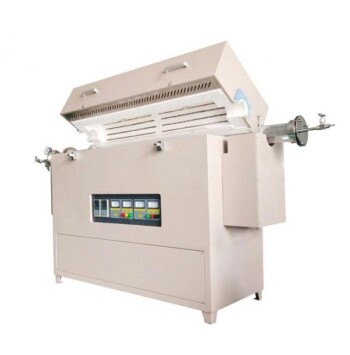
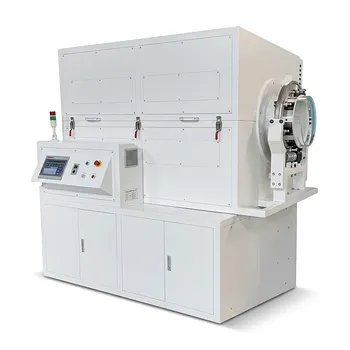
Controlled post-deposition thermal treatment is not a secondary processing step—it is the decisive transformation that turns an unstable, as-deposited film into a high-performance solar selective absorber. Without precise heating in an atmosphere-controlled laboratory furnace, the coating’s metastable intermetallic phases would never reorganize into the stable crystalline dendrites needed for exceptional optical selectivity. This controlled anneal locks in near-perfect solar absorptance while keeping infrared heat emission low, and it delivers the thermal durability required for the extreme stagnation temperatures of high-efficiency collectors.
The performance and longevity of electrodeposited Ni–Sn solar absorber coatings depend entirely on a single, precision-controlled furnace step that converts thermodynamically unstable phases into a stable, light‑trapping microstructure. Miss that thermal window, and the coating’s optical selectivity collapses and degradation accelerates under service conditions.
The Science Behind the Transformation
Why As-Deposited Coatings Fail
Freshly electrodeposited Ni–Sn alloy layers are riddled with thermodynamically metastable intermetallic phases, most notably Ni₃Sn₄. These transient phases are not stable at high operating temperatures. Left untreated, they will undergo uncontrolled phase evolution during collector operation, leading to microstructural cracking, optical drift, and a rapid loss of solar‑selective performance.
How Controlled Heating Drives Phase Stabilization
A carefully regulated thermal anneal in a laboratory furnace initiates diffusion‑controlled phase transformations. At the correct temperature (typically 150 °C and above for these systems), the metastable Ni₃Sn₄ transforms into thermodynamically stable phases like Ni₃Sn₂ and Ni₃Sn. This shift eliminates the driving force for further change, freezing the coating into a structurally sound, high‑temperature‑tolerant state that will not degrade when the collector later reaches stagnation.
Building the Perfect Radiation Trap
The stable phases crystallize into a dendrite microstructure that acts as a natural radiation trap. Light in the solar spectrum becomes multiply reflected and absorbed within this fine‑scale network, resulting in solar absorptance values up to 98%. At the same time, the material retains exceptionally low heat emittance (around 10%) in the infrared, yielding a high selectivity ratio (α/ε ≈ 9.8) that maximizes solar thermal conversion efficiency.
Precision is Everything: The Role of High-Temperature Lab Furnaces
Temperature Uniformity and Ramp‑Rate Control
Achieving the exact phase transformation without damaging the film demands flawless temperature uniformity. Even minor temperature gradients can leave pockets of unconverted metastable material or cause localized overheating that coarsens the nanostructure. Precise ramp rates ensure the diffusion processes proceed evenly throughout the coating, producing a homogeneous, defect‑free absorber layer.
Atmosphere Management to Prevent Oxidation
Solar selective coatings rely on their metallic character for low infrared emittance. Exposure to oxygen during heating would form a surface oxide layer with high thermal emittance, destroying selectivity. High‑temperature lab furnaces with active atmosphere control (inert gas or vacuum) shield the coating during the critical anneal, preserving the pristine optical properties essential for high‑efficiency collectors.
Real‑World Durability Under Thermal Stress
Surviving Stagnation Temperatures
Concentrating solar collectors routinely reach stagnation temperatures far above 300 °C. A coating that has undergone complete, controlled phase stabilization can endure these conditions cycle after cycle without microstructural change. The stable intermetallic phases resist creep, cracking, and further phase evolution that would otherwise degrade optical performance.
Long‑Term Structural Integrity
Beyond withstanding extreme heat, the annealed coating also exhibits enhanced mechanical stability. The removal of absorbed moisture and residual volatile species during the controlled furnace treatment eliminates internal stress sources. This results in a coating that remains adherent and crack‑free over years of thermal cycling, ensuring consistent energy output over the system’s lifetime.
Understanding the Trade‑offs and Pitfalls
Overheating Destroys Nanostructure
Exceeding the optimal annealing temperature window can trigger excessive grain growth and coarsening. The fine dendrite structure that traps solar radiation is irreversibly lost, leading to a sharp drop in solar absorptance even though the phases may be stable.
Insufficient Annealing Leaves Metastable Phases
Undercooking the coating fails to complete the conversion of Ni₃Sn₄. These residual metastable phases will slowly evolve under service heat, causing optical drift—a gradual rise in emittance and fall in absorptance that undermines collector efficiency year after year. Partial annealing also leaves behind volatile residues that can outgas later, creating pinholes.
Atmospheric Contamination
Poor atmosphere control introduces oxidation and carbon contamination. Even a thin oxide film raises infrared emittance dramatically. If binders or organic additives are present, insufficient oxygen exclusion or incorrect ramp rates during debinding stages can leave carbon residues that darken the coating and promote unwanted absorption outside the solar spectrum, ruining spectral selectivity.
Making the Right Choice for Your Goal
The path to a reliable high‑performance solar absorber runs directly through the furnace. Apply these guidelines to align thermal treatment with your specific project demands.
- If your primary focus is maximizing solar conversion efficiency: Prioritize a temperature‑time profile that yields the most developed dendrite network without over‑coarsening. Use inert atmosphere and tight thermal uniformity to preserve the α/ε ratio near 9.8.
- If your primary focus is long‑term thermal stability: Ensure complete phase conversion to stable Ni₃Sn₂ and Ni₃Sn, and incorporate a controlled slow cool to relieve any residual stress. This prevents performance drift even after thousands of stagnation cycles.
- If your primary focus is scaling up production: Invest in multi‑zone atmosphere furnaces with precise ramp controls and verified temperature mapping. Repeatable surface‑quality coatings demand exact process replication across every batch.
The difference between a mediocre solar absorber and a record‑efficiency selective coating is not the deposition technique—it is the precision, atmosphere, and thermal discipline applied inside the laboratory furnace.
Summary Table:
| Processing Aspect | Without Controlled Annealing | With Precision Furnace Annealing |
|---|---|---|
| Phase Composition | Unstable metastable Ni₃Sn₄ | Stable intermetallic Ni₃Sn₂ / Ni₃Sn |
| Microstructure | Disordered, flat layer | Light-trapping dendrite network |
| Optical Selectivity | Severe optical drift under heat | High absorptance (~98%), low emittance (~10%) |
| Thermal Durability | Microcracking & early degradation | Survives extreme stagnation (>300°C) |
Elevate Your Thin-Film Research & Production with KINTEK
Achieving perfect phase transformation and superior optical selectivity requires uncompromised thermal and atmospheric control. KINTEK specializes in advanced laboratory equipment and high-temperature furnaces—including vacuum, controlled atmosphere, tube, muffle, and CVD furnace systems—tailored for precise material processing.
Whether you need ultra-uniform ramp-rate controls, vacuum-tight gas management, or custom OEM/ODM designs for scaling production, KINTEK provides reliable, fully customizable heating solutions to empower your lab's performance.
Contact KINTEK Today to Consult with Our High-Temp Furnace Experts
Related Products
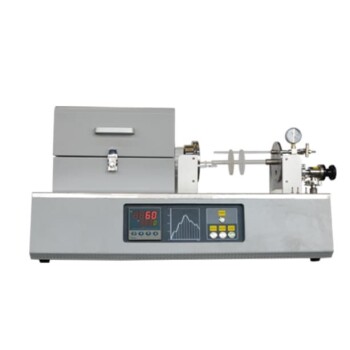
- Laboratory Quartz Tube Furnace RTP Heating Tubular Furnace
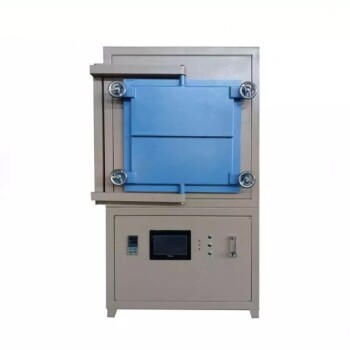
- Laboratory Muffle Oven Furnace with Bottom Lifting
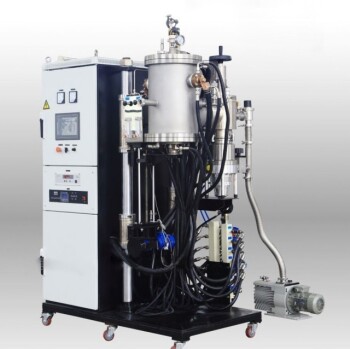
- Small Vacuum Heat Treat and Tungsten Wire Sintering Furnace
- 1400℃ Controlled Inert Nitrogen Atmosphere Furnace
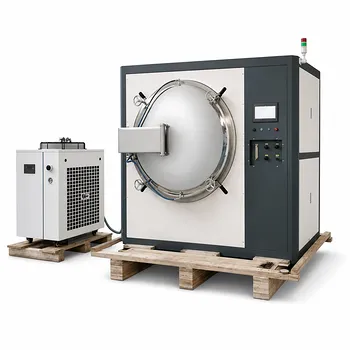
- Vacuum Heat Treat Furnace with Ceramic Fiber Liner
People Also Ask
- What physical conditions does a laboratory Tube Furnace provide for SOEC? Precision Heat for Solid Oxide Characterization
- What are the main features and functions of a laboratory tube furnace? Unlock Precise High-Temp Control for Your Lab
- What role does a laboratory tube furnace play in geological and mineralogical research? Unlock Earth's Secrets with Precision
- Why is a laboratory tube furnace necessary for BiVO4/RGO synthesis? Achieve Precise Nano-Structure Control
- What conditions do tube furnaces provide for Au-Seeded TiO2 nanowires? Master Precision Thermal Synthesis