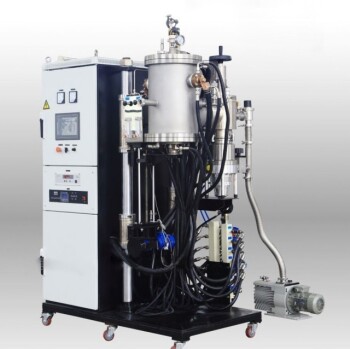
Iron ore sintering is a thermal ballet of multiphase chaos. Without precise control over how heat moves through a packed bed of solids and gases, and how chemical reactions reshape that bed moment by moment, the entire process would collapse into inefficiency and poor product quality. Multiphase heat transfer and gas-solid chemical kinetics are not just academic curiosities—they are the twin pillars that determine energy consumption, sinter strength, and the viability of raw material blends. Laboratory atmosphere furnaces serve as the critical investigative tool to pull these entangled mechanisms apart, allowing researchers to measure, model, and optimize what happens inside the opaque, high-temperature world of a sintering strand.
The core challenge of sintering is that heat, gas flow, and chemical reactions are so deeply coupled that you cannot understand one without the others. Multiphase heat transfer governs the thermal wave that drives reactions, while gas-solid kinetics dictate how quickly coke burns, carbonates decompose, and iron oxides transform—determining the final sinter quality. Laboratory atmosphere furnaces untangle this complexity by creating a controlled microcosm where each variable can be isolated, measured, and fed into predictive models, bridging the gap from raw material to industrial performance.
The Dual Engines of Sintering: Why Multiphase Heat Transfer and Kinetics Matter
Sintering is not a single event but a moving reaction zone. A narrow flame front, sustained by coke combustion, travels through a permeable bed of iron ore fines, fluxes, and returned sinter. Everything that makes the process work—or fail—depends on how heat is transported and how fast the critical reactions occur.
The Thermal Wave That Drives Everything
The sintering bed is a constantly shifting puzzle of gas and solid temperatures. Hot combustion gases convect heat downward, while radiation between particles and conduction through the solids complete the picture.
Heat transfer coefficients determine whether the bed reaches the peak temperature needed for melt formation. Too little heat, and the liquid phase that bonds particles never forms; too much, and you waste fuel or cause over-melting that chokes permeability. The interplay of convective, radiative, and conductive mechanisms is inherently multiphase because the gas is the carrier of enthalpy while the solids store, generate, and conduct it. Researchers need to pinpoint these coefficients to build accurate models.
The Chemical Clock That Sets Sinter Quality
While heat moves, chemistry transforms the bed. The most critical reactions are solid-gas interactions: coke particles reacting with oxygen to generate heat, carbonates like limestone calcining to release CO₂ and produce reactive lime, and iron oxides undergoing partial reduction or re-oxidation.
Each reaction has its own kinetic fingerprint. The rate of coke combustion, for example, is not just a matter of temperature; it depends on oxygen partial pressure, gas-solid contact area, and the evolving pore structure of the burning particle. If combustion is too rapid, the flame front narrows and peak temperatures spike, creating a fragile sinter full of large pores. If it’s too slow, productivity drops. Calcination kinetics, similarly, control how quickly fluxes contribute to melt formation and how CO₂ is managed. Iron oxide reduction, even if partial, shifts the phase composition and can affect the sinter’s reducibility in the blast furnace downstream. Without kinetic data, any process model is just a guess.
Why They Cannot Be Separated
These phenomena are locked together. Heat drives reaction rates, but reactions release or absorb heat, altering the thermal profile. Gas composition changes as O₂ is consumed and CO₂ and CO are generated, which in turn affects subsequent reaction rates. Permeability, dictated by particle size and bed structure, controls the gas flow that delivers oxygen and removes reaction products.
A change in one parameter cascades through the entire multiphase system. This is why empirical trial-and-error on industrial strands is so expensive and risky. To truly optimize sintering, you must understand the coupled physics and chemistry, and that understanding begins in the laboratory.
How Laboratory Atmosphere Furnaces Decode These Interactions
Industrial sintering strands are massive, dusty, and impossible to instrument with the precision needed to isolate fundamental mechanisms. This is where laboratory high-temperature atmosphere furnaces become indispensable. They are not just smaller ovens—they are meticulously engineered simulation platforms that convert real-world complexity into quantifiable data.
Building a Controlled Microcosm of the Sinter Bed
A specialized pot-test furnace recreates the packed-bed geometry of an industrial strand at bench scale. It is equipped with precision gas flow controllers that can mimic specific atmospheric profiles, from the oxygen-rich ignition phase to the lean, CO₂-diluted conditions deeper in the bed. This allows researchers to isolate and simulate exactly the gas-solid reactions that matter—coke combustion at a known O₂ concentration, calcination under a defined CO₂ partial pressure, or reduction in a controlled reducing atmosphere.
The primary advantage is the ability to decouple variables. On a real strand, a change in coke rate alters both heat supply and bed permeability. In the lab furnace, researchers can keep permeability constant while varying gas composition, or maintain a fixed thermal profile while testing different coke particle sizes. This isolation is impossible at full scale but essential for measuring intrinsic reaction rates and heat transfer coefficients.
Measuring What Matters: Temperature and Permeability
Bed-embedded thermocouples are the eyes inside the sintering pot. Typically placed at multiple depths—such as 5 cm, 35 cm, and 75 cm—these thermocouples record the local arithmetic average temperature of the gas and solid phases in direct contact. This data is crucial because it captures the thermal wave’s speed, peak temperature, and shape as it travels downward. A thermocouple at 35 cm shows whether the flame front has widened or narrowed midway through the bed, while the 75 cm reading reveals end-point temperature and whether burn-through is premature.
These measurements directly feed numerical models. When a computational code predicts a peak bed temperature of 1320°C at the 35 cm mark, and the lab furnace’s thermocouple reads 1340°C with a similar bed permeability, the model is validated. If they diverge, the discrepancy points to missing physics—perhaps a kinetic rate constant is off, or the assumed heat transfer correlation fails under certain conditions. This iterative loop between experiment and simulation is how accurate predictive tools are built.
Optimizing Formulations Before Industrial Scale
Beyond basic research, these furnaces are optimization workhorses. By systematically varying raw material blends—changing the ratio of fine ore to concentrates, adjusting flux types, or incorporating recycled in-plant residues—researchers can measure resulting bed permeability, combustion efficiency, and sinter quality indicators. The furnace’s controlled atmosphere ensures that any difference in performance is attributable to the material change, not random fluctuations in plant conditions.
The same platform evaluates process interventions like gas recirculation or auxiliary fuel pre-combustion. If a plant wants to redirect hot waste gas back into the bed to recover energy, lab-scale tests with modified gas compositions can quantify the impact on flame front speed and peak temperature, de-risking the multimillion-dollar decision.
From Solid Phases to Final Composition
Post-test, the sinter cake is a mineralogical archive. The atmosphere furnace preserves the high-temperature phase transformations, allowing metallurgists to analyze the final composition using microscopy or XRD. They can see whether the desired calcium ferrite bonding phase formed, if unreacted lime remained, or if excessive melting created glassy phases that reduce reducibility. This feedback loop links the measured thermal and chemical history directly to the physical properties of the sinter, closing the circle from process conditions to product quality.
Understanding the Trade-offs and Limitations
Laboratory atmosphere furnaces are powerful, but they are not perfect replicas of industrial reality. Recognizing their limitations is essential for applying results wisely.
The Scale Gap and Boundary Effects
A pot test, typically holding tens of kilograms, cannot reproduce every aspect of a strand handling thousands of tonnes per hour. Wall effects in a small vessel can alter gas flow patterns, creating a more uniform permeability than a massive, heterogeneous bed. The heat losses through walls, carefully managed but never zero, differ from the near-adiabatic conditions in the core of an industrial bed. Researchers must apply correction factors or ensure that the scaled-down bed maintains the same key dimensionless numbers governing flow and heat transfer.
The Thermocouple’s Averaging Reality
Bed thermocouples read a local average of gas and solid temperatures, which can obscure fine details of a rapidly moving flame front. The true gas temperature might spike 100°C higher than the solid for a brief instant, but the thermocouple will show a smoothed, lower peak. This can lead to slightly underestimated peak temperatures in models if not accounted for. High-speed sampling and careful placement can mitigate this, but the inherent averaging remains a nuance that must be acknowledged.
Time, Cost, and Complexity
Running a comprehensive series of pot tests is resource-intensive. Each test requires careful bed preparation, precise atmosphere control, and detailed post-mortem analysis. The equipment itself, with high-temperature alloys, multi-zone heating, and gas mixing panels, represents a significant investment. For a plant chasing quick answers, the turnaround time may be longer than a less rigorous trial on a small production segment. The trade-off is always between the depth of insight and the speed of response.
The Trap of Over-Simplification
Precisely because lab furnaces allow isolation, there is a risk of studying a mechanism so cleanly that the results don’t translate back to the messy, coupled reality of the plant. For example, measuring the combustion rate of a single coke particle in a pure O₂-N₂ stream might not capture the inhibiting effect of CO₂ dilution in a real sintering bed. Effective researchers use lab data to build a fundamental model and then validate that model against at least a few well-instrumented industrial campaigns, ensuring the clean insights remain grounded.
Actionable Insights for Your Research
Laboratory atmosphere furnaces are not a single-purpose tool but a flexible platform. Their ultimate value depends on how you align their capabilities with your specific goal.
- If your primary focus is validating a numerical model: Design pot tests with multiple thermocouple depths and carefully measured gas inlet/outlet compositions. Prioritize transient temperature profiles and the exact timing of bed burn-through. Use these data points as hard benchmarks to tune kinetic parameters like activation energies and heat transfer correlations.
- If your primary focus is optimizing raw material formulations: Run a structured design of experiments varying key ingredients (coke content, flux ratio, moisture). Measure bed permeability, peak temperature at multiple levels, and sinter tumble strength. Let the furnace show you the synergistic effects that linear reasoning often misses.
- If your primary focus is evaluating a process technology like gas recirculation: Use the gas control system to simulate the exact recirculated gas composition (lower O₂, higher CO₂, higher humidity). Measure how the flame front speed and heat release shift, and whether the resulting sinter retains sufficient quality. This directly informs safety margins and energy savings potential.
- If your primary focus is troubleshooting a plant problem: Replicate the problematic bed conditions on a smaller scale. If segregation is suspected, deliberately create layers. If a new ore source causes erratic burn-through, test it in the pot furnace against your baseline ore under identical conditions. The controlled environment transforms a confusing plant symptom into a clear root cause.
By embracing the multiphase reality of sintering and using laboratory atmosphere furnaces to systematically decode it, you transform a complex thermal process into a predictable engineering system.
Summary Table:
| Process Aspect | Significance in Sintering | Laboratory Atmosphere Furnace Role |
|---|---|---|
| Multiphase Heat Transfer | Controls thermal wave propagation, peak bed temperatures, and melt formation. | Uses embedded thermocouples to map temperature waves and validate CFD/heat transfer models. |
| Gas-Solid Kinetics | Governs coke combustion speed, limestone calcination, and iron oxide phase changes. | Isolates gas composition, flow rates, and kinetics to decouple reaction rates from bed structure. |
| Formulation Optimization | Determines flame front stability, sinter strength, and overall permeability. | Permits bench-scale testing of raw material blends, fluxes, and recycled additives under controlled conditions. |
| Process Innovations | Impacts energy efficiency, carbon footprint, and flue gas recirculation viability. | Simulates modified atmospheric environments (e.g., low O₂, high CO₂) prior to industrial deployment. |
Advance Your Metallurgical & Thermal Research with KINTEK
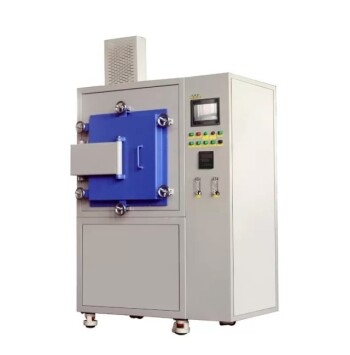
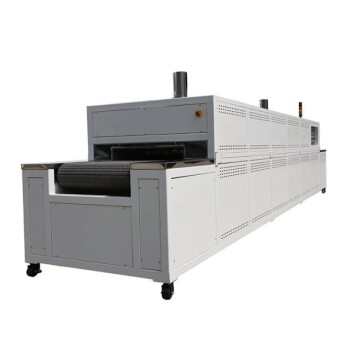
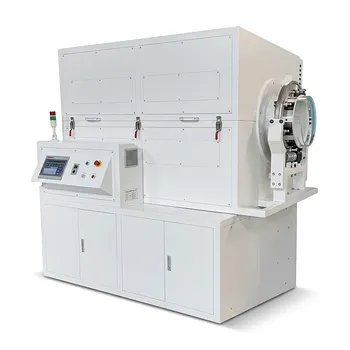
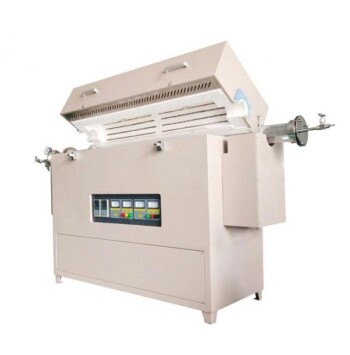
Unlock precise control over complex gas-solid reactions and high-temperature material transformations. KINTEK specializes in premium laboratory equipment and consumables, offering an extensive range of customizable atmosphere furnaces, muffle furnaces, tube furnaces, vacuum systems, and induction melting equipment engineered to meet your exact experimental standards.
Whether you are modeling heat transfer kinetics, optimizing iron ore formulations, or de-risking new industrial processes, KINTEK delivers reliable, high-performance thermal equipment tailored to your lab's needs.
👉 Contact KINTEK today to consult with our specialists and request a custom quote!
Related Products
- 1400℃ Controlled Inert Nitrogen Atmosphere Furnace
- Laboratory Muffle Oven Furnace with Bottom Lifting
- 1700℃ Controlled Inert Nitrogen Atmosphere Furnace
- 1200℃ Controlled Inert Nitrogen Atmosphere Furnace
- 1200℃ Muffle Oven Furnace for Laboratory
People Also Ask
- How does nitrogen atmosphere control in high-temperature furnaces prevent the decomposition of silicon nitride during sintering?
- How does oxygen partial pressure control affect ceramic sintering? Master Defect Chemistry
- Why is thorough binder burnout necessary before sintering advanced ceramics? Ensure Peak Density & Zero Defects
- How do controlled-atmosphere furnaces support polymer pyrolysis? Master SiC & Si3N4 Ceramic Conversion
- Why is controlled-atmosphere heating required for functional ceramics and sensors? Master Defect Engineering