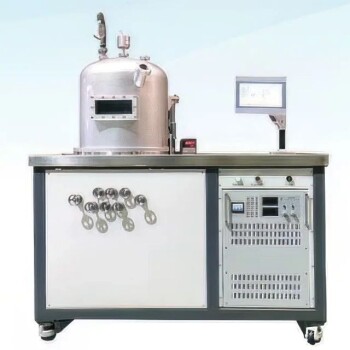
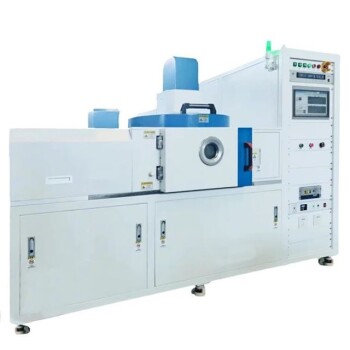
Higher gas diffusivity at reduced pressure is the fundamental reason LPCVD systems operate in the 1–15 kPa range. At these pressures, precursor molecules diffuse to the substrate surface much faster and more evenly, while gaseous byproducts are rapidly swept away. This mass-transport advantage directly translates into films with outstanding thickness and compositional uniformity—even across large substrates or full batch loads.
Uniformity is the core value proposition of LPCVD. By operating at sub‑atmospheric pressures, the process shifts from a slow, chaotic diffusion regime to a rapid, transit-driven mass transport regime. Without this pressure window, the exceptional film consistency demanded by semiconductor and advanced ceramic applications would be impossible to achieve in a furnace environment.
How Pressure Governs Gas Transport in CVD
The pressure inside the chamber is the master switch for two related transport phenomena: gas concentration and gas-phase diffusivity. Changing the pressure from atmospheric (roughly 101 kPa) down to the LPCVD window of 1–15 kPa completely alters how fast molecules move through the gas phase.
The Role of Gas-Phase Diffusivity
Gaseous diffusivity increases as pressure decreases.
At atmospheric pressure, gas molecules collide so frequently that their net movement is sluggish. When the chamber is pumped down to a few kPa, the mean free path between collisions grows significantly. This allows precursor molecules to travel from the gas inlet to every part of the wafer surface much faster.
In practice, this means the transport of reactive species is no longer the bottleneck. The deposition process becomes limited by the surface reaction rate rather than by how quickly fresh molecules can arrive, which is exactly what you want for thickness control.
From Precursor Delivery to By-Product Removal
Uniform film growth requires two things to happen simultaneously across the entire substrate:
- Equal supply of precursor molecules to every surface site.
- Rapid removal of reaction byproducts before they block active sites.
At 1–15 kPa, the high diffusivity accomplishes both. Precursor transport is so efficient that the gas-phase concentration above the wafer stays nearly uniform, eliminating the “depletion effect” seen near the edges of substrates at higher pressures. Meanwhile, waste gases are pulled away quickly, preventing re-incorporation or parasitic gas-phase nucleation.
The Direct Benefits of Low-Pressure Operation
Unmatched Thickness and Compositional Uniformity
The primary reward of that 1–15 kPa window is massive uniformity improvements.
When diffusivity is high, every wafer in a batch furnace sees essentially the same precursor concentration. The result is a film whose thickness varies by only a few nanometers across an entire load, both wafer‑to‑wafer and within‑wafer.
This uniformity also extends to composition. In multi-component films, the steady, evenly distributed precursor flux ensures that the stoichiometry—the ratio of elements—remains consistent everywhere. For applications like doped polysilicon contacts or hexagonal boron nitride (hBN) layers, that compositional fidelity is non‑negotiable.
Suppression of Unwanted Gas-Phase Reactions
Operating at 1–15 kPa also minimizes parasitic gas-phase reactions.
At atmospheric pressure, precursors often react in the gas before ever reaching the surface, forming small particles that fall onto the film and create defects. The low-pressure environment drastically reduces the frequency of these molecular collisions, pushing the reaction chemistry toward the surface where it belongs.
This leads to denser, higher-quality films with fewer embedded particles and a lower risk of pinholes. That’s why LPCVD is the go‑to technique when the end application cannot tolerate micro‑voids or contamination—think passivated contacts in solar cells or gate dielectrics in advanced transistors.
Understanding the Trade-offs
The benefits of the 1–15 kPa regime do not come for free. Being aware of the downsides lets you decide when LPCVD is the right approach.
Slower Deposition Rates
A reaction-limited process is inherently slower.
Because the surface reaction rate now governs the growth speed, deposition rates in LPCVD are typically lower than those in atmospheric-pressure CVD. You trade processing time for uniformity and film quality. For thick films, the longer furnace cycle must be factored into the manufacturing throughput.
Higher Equipment Complexity and Cost
Maintaining a stable sub‑atmospheric pressure requires sophisticated vacuum pumps, pressure controllers, and leak‑tight chambers.
The furnace tube itself must be designed to handle thermal stress under vacuum, and the pumping system adds capital and maintenance expense. For applications where uniformity is not critical, the simpler and cheaper atmospheric system may still be the better choice.
Sensitivity to Pressure Fluctuations
In the 1–15 kPa window, even small pressure drifts can alter diffusivity enough to affect film properties.
That means you need precise pressure regulation throughout the deposition. The process window is wide enough to be practical, but it demands rigorous control that less critical coating methods can do without.
Making the Right Choice for Your Deposition Goal
How you navigate the 1–15 kPa decision depends entirely on what you need the film to accomplish.
- If your primary focus is extreme thickness uniformity across a full batch: LPCVD’s high diffusivity at this pressure range is non‑negotiable. It is the proven method to achieve single‑digit nanometer variation across dozens of wafers.
- If your primary focus is film density and compositional fidelity: Stick with the 1–15 kPa window. The reduced gas-phase chemistry ensures a dense, stoichiometric film with minimal defects.
- If your primary focus is protecting sensitive underlying layers: The low-pressure, surface-reaction‑limited growth produces such a conformal, damage‑free coat that it acts as an excellent shield during subsequent high‑energy steps like sputtering.
- If your primary focus is the highest possible throughput and cost is paramount: Evaluate whether atmospheric‑pressure CVD can meet your uniformity spec. If not, plan for the longer cycle times and vacuum infrastructure of LPCVD as the necessary investment for quality.
Ultimately, the 1–15 kPa operating range is not an arbitrary choice—it is the physical sweet spot where gas-phase mass transport becomes your ally, delivering the film uniformity and purity that define the LPCVD advantage.
Summary Table:
| Parameter / Mechanism | Behavior at 1–15 kPa Window | Practical Impact |
|---|---|---|
| Gas Diffusivity | Substantially increased | Fast, even precursor transport across batch loads |
| Deposition Regime | Surface-reaction limited | Eliminates edge-depletion effect; superior thickness control |
| Gas-Phase Reactions | Drastically suppressed | Denser films with minimal pinholes and micro-particle defects |
| Deposition Rate | Reduced compared to APCVD | Trade-off: Lower growth speed for extreme uniformity |
| System Requirements | Demands precise vacuum control | Trade-off: Requires vacuum pumps and leak-tight chambers |
Elevate Your Thin Film Deposition with KINTEK Precision Furnaces
Achieving single-digit nanometer film uniformity requires precise pressure regulation and uncompromised thermal control. At KINTEK, we specialize in comprehensive laboratory equipment and customizable high-temperature furnaces—including advanced CVD, atmosphere, vacuum, tube, and muffle furnace systems—tailored to meet the strict demands of semiconductor and material science research.
Ready to optimize your deposition processes and enhance lab efficiency? Contact KINTEK today for customized furnace solutions!
Related Products
- Custom Made Versatile CVD Tube Furnace Chemical Vapor Deposition CVD Equipment Machine
- Split Chamber CVD Tube Furnace with Vacuum Station CVD Machine
- Slide PECVD Tube Furnace with Liquid Gasifier PECVD Machine
- Inclined Rotary Plasma Enhanced Chemical Deposition PECVD Tube Furnace Machine
- Multi Heating Zones CVD Tube Furnace Machine for Chemical Vapor Deposition Equipment
People Also Ask
- What is a CVD tube furnace and what is its primary function? Discover Precision Thin-Film Deposition
- Why are CVD tube furnace sintering systems indispensable for 2D material research and production? Unlock Atomic-Scale Precision
- Which industries and research fields benefit from CVD tube furnace sintering systems for 2D materials? Unlock Next-Gen Tech Innovations
- How does CVD tube furnace sintering enhance graphene growth? Achieve Superior Crystallinity and High Electron Mobility
- What are the key features of CVD tube furnaces for 2D material processing? Unlock Precision Synthesis for Superior Materials