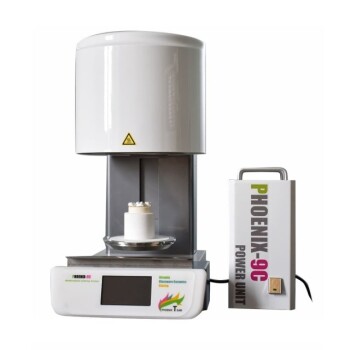
Temperature, time, atmosphere, and the chemical and physical state of the feed material are the non‑negotiable pillars. Uniform product quality demands precise control over peak sintering temperature, hold time, heating and cooling rates, furnace atmosphere, raw‑mix chemistry/homogeneity, and physical preparation—including particle size, green density, and moisture. In industrial operations, this also extends to solid fuel distribution and thermal profile management through the bed. In laboratory powder sintering, applied pressure becomes a critical additional lever.
Uniform product quality in any high‑temperature sintering operation is not a single‑parameter game—it is the orchestration of thermal energy input, chemical uniformity, physical feedstock characteristics, and the surrounding gas environment. When any one of these drifts out of its optimal window, the result is incomplete densification, uncontrolled grain growth, phase inhomogeneity, or mechanical property scatter.
Understanding the Core Sintering Drivers
Sintering unifies a mass of particles into a coherent solid through atomic‑scale mass transport, driven by the minimization of total interfacial energy. The final microstructure—and therefore the mechanical, thermal, and chemical consistency of the product—is determined by how well you manage the variables that dictate diffusion rates, pore elimination, and phase evolution.
This section deconstructs those variables into three interconnected domains: thermal control, chemical and physical feed preparation, and atmospheric management. In advanced operations, applied pressure adds a fourth dimension.
The Thermal Trinity: Temperature, Time, and Ramp Rates
The thermal profile is the primary engine of sintering. Get this wrong, and all other efforts are undermined.
Peak Temperature Activates the Right Diffusion Mechanisms
Sintering temperature must be high enough to make solid‑state diffusion the dominant mass‑transport mechanism. Diffusion coefficients increase exponentially with temperature, so seemingly small deviations can shift the process from gentle neck growth and pore rounding to catastrophic grain coarsening or unwanted liquid‑phase formation.
If the temperature is too low, diffusion is sluggish; irregular sinter bonds may never form, leaving high residual porosity and weak joints. If it is too high, exaggerated grain growth consumes the driving force for densification, often trapping pores inside large grains where they can never be eliminated. For iron ore sinter strands, this translates directly to ignition temperature and the thermal profile down the bed—insufficient peak temperature leads to weak, friable sinter; excessive temperature wastes fuel and can create fused, glassy structures that are hard to reduce in a blast furnace.
Dwell Time Balances Densification with Microstructural Restraint
Hold time at the peak temperature dictates how far mass transport can proceed. A longer dwell allows pores to shrink and grain boundaries to migrate, increasing density and neck size. However, there is a point of diminishing returns: after achieving near‑full density, extended holding merely coarsens grains, degrading strength and toughness.
In laboratory powder sintering, the optimal time is the minimum needed to reach the target density without triggering abnormal grain growth. In industrial sinter strands, the concept of “hold time” maps to the burn‑through point—the moment the flame front reaches the grate. Uniform burn‑through across the entire bed ensures that every particle of the cake experiences the same thermal history, preventing under‑fired “green” zones or over‑fired, re‑oxidized sections.
Heating and Cooling Rates Prevent Thermal Shock and Defects
Ramp rates on both heating and cooling sides are often overlooked, yet they are decisive for uniformity. Excessively rapid heating can cause thermal gradients that lead to cracking, warpage, or core‑shell microstructures where the surface densifies before the interior has even begun to bond.
Similarly, uncontrolled fast cooling can lock in residual stresses, induce microcracking, or precipitate undesired secondary phases. In high‑temperature laboratory furnaces, multi‑zone programmable controllers allow a carefully designed cooling curve that avoids the brittle temperature ranges where most materials are susceptible to thermal shock.
Chemical Homogeneity and Feed Composition
You cannot sinter your way out of a chemically non‑uniform feedstock. Chemical variability is the root cause of inconsistent local melting, variable mechanical properties, and unpredictable dimensional change.
Raw‑Mix Homogeneity as the First Quality Filter
In iron ore sintering, operators control basicity (CaO/SiO₂), total iron content, silica, and magnesia through precise weighting and blending of ore fines, fluxes, and return fines. Poor mixing creates pockets where the liquid‑phase formation temperature is different, leading to a patchwork of strongly bonded and weakly bonded regions.
In powder metallurgy and ceramics, the equivalent principle is compositional uniformity of the starting powder mix. Even minor segregation of binder, lubricant, or sintering activator particles means that some regions densify earlier or shrink faster, generating internal stresses that can cause distortion or cracking.
Sintering Activators and Solid Fuel Additions
Sintering activators (e.g., small additions of nickel, boron, or phosphorus in ferrous powder metallurgy) accelerate diffusion kinetics, lower the required sintering temperature, and refine the final grain size. Their uniform dispersion is essential—if concentrated locally, they create soft spots or liquid films that drastically alter local shrinkage.
In tonnage‑scale iron ore sintering, solid fuel (coke breeze) plays an analogous role. The fuel distribution across the bed must be uniform to give a flat, even burn‑through front. Variations in fuel content cause hot spots (over‑melting) or cold zones (incomplete bonding), directly reducing product yield and strength consistency.
Physical Preparation: Particle Size, Green Density, and Moisture
Before any heat is applied, the physical architecture of the powder compact or raw‑mix bed sets the stage for everything that follows.
Particle Size Dictates Driving Force and Pathways
Starting particle size is a powerful lever because surface energy scales with inverse radius. Finer powders sinter faster due to their high specific surface area and short diffusion distances. However, an excessively wide particle size distribution can lead to differential sintering—fine particles coalesce into dense aggregates while coarse particles remain loosely bonded.
The laboratory furnace operator selects particle size to achieve a pre‑defined shrinkage target, but at the industrial scale (iron ore sintering), the analogous parameter is granulation and bed permeability. The raw mix must form permeable, stable aggregates that survive the flame front without collapsing. A collapsed bed chokes gas flow, destroying the uniformity of the thermal wave.
Green Density and Its Uniformity
Green density—the packing density of the unfired compact—determines the initial quantity and size distribution of pores. Higher green density reduces the amount of shrinkage required to reach full density and minimizes shape distortion. However, if green density is not uniform (e.g., due to die wall friction in powder compaction or segregation in a sinter strand), the final part will warp or contain density gradients.
Moisture as a Process Enabler
In iron ore sintering, moisture content is a critical control knob for bed permeability. A few tenths of a percent water change can dramatically alter granule strength and the condensation zone during burn‑through. Too much moisture collapses the bed; too little prevents the formation of strong green granules. Both extremes lead to an uneven thermal front and non‑uniform product quality.
In ceramic powder processing, moisture (or binder content) similarly affects green strength and the ease with which gases escape during the early heating stages. Uncontrolled moisture release can cause blistering or internal cracks.
Atmosphere Control: Protecting and Shaping the Reaction
The furnace atmosphere is not a passive bystander—it chemically participates in or prevents reactions that define the final product.
Preventing Oxidation and Maintaining Stoichiometry
In powder metallurgy steel sintering, a neutral or reducing atmosphere (dissociated ammonia, hydrogen‑nitrogen mixtures) prevents oxidation of iron particles. Oxides on powder surfaces block inter‑particle diffusion and result in weak, brittle bonds.
In oxide ceramic firing, the oxygen partial pressure can be tuned to maintain the desired oxidation state of multivalent cations, preventing unwanted color changes or phase separation. High‑vacuum sintering is used when even trace oxygen would degrade the material—such as for refractory metals or advanced technical ceramics.
Active Atmospheres for Surface Cleaning and Reaction Control
Active atmospheres do more than protect. Hydrogen can reduce surface oxides on metal powders, leaving clean metal‑metal contacts that sinter rapidly. Carbon‑containing atmospheres can help maintain carbon content in steel parts, while inert gases like argon serve only to shield against oxidation without chemical interaction. In all cases, atmosphere flow rate and uniformity across the load are just as important as composition to prevent local starvation or stagnant eddies.
Understanding the Trade‑offs
No parameter stands alone; each decision creates a cascade of compromises.
Temperature vs. Dwell Time. A higher temperature can reduce the required hold time, boosting throughput, but it increases the risk of grain growth and distortion. A lower temperature with a longer hold gives finer grains but demands more furnace time and energy.
High Density vs. Dimensional Precision. Pushing densification close to 100% often requires higher temperatures or applied pressure, but these lead to greater and less predictable shrinkage. If tight tolerances are paramount, you may need to accept slightly lower density and compensate with post‑sintering operations.
Fine Particles vs. Handleability. Finer powders sinter better, but they are more prone to agglomeration, require more binder, and create green bodies with lower permeability—making it harder to vent decomposition gases during heating.
Atmosphere Complexity vs. Cost. Using hydrogen or high‑vacuum systems provides superior surface cleaning and oxidation protection but adds significant capital and operational cost. A simple nitrogen atmosphere may be sufficient for less demanding applications but cannot reduce pre‑existing surface oxides.
Pressure‑Assisted Sintering. Hot pressing or hot isostatic pressing applies external load to accelerate pore closure, enabling full density at lower temperatures and shorter times. The trade‑off is complexity, tooling cost, and limitations on part geometry.
Making the Right Choice for Your Process Goal
Every sintering operation must tailor its control priorities to its unique quality and productivity demands. Here is a goal‑oriented guide, applicable whether you are running an iron ore sinter strand or a laboratory vacuum furnace.
- If your primary focus is maximum throughput in tonnage‑scale sintering: Prioritize precise solid fuel distribution, moisture control for bed permeability, and consistent burn‑through to avoid cold zones and recycling losses. Chemical homogeneity through automated raw‑mix dosing is your foundation for repeatable strength and reducibility.
- If your primary focus is dense, high‑performance powder metal or ceramic components: Invest in programmable multi‑zone temperature control, active atmosphere systems that reduce surface oxides, and tight control over particle size distribution and green density uniformity. Consider pressure‑assisted sintering if the geometry allows it.
- If your primary focus is research‑scale reproducibility and microstructure optimization: Treat heating rate, dwell time, and cooling rate as primary levers. Use high‑purity powders with narrow particle size distributions, and run experiments under precisely controlled atmospheres to isolate the effect of a single variable.
- If your primary focus is cost reduction while maintaining acceptable quality: Do not simply lower the peak temperature. Instead, optimize physical preparation (better mixing, granulation, green density) and explore sintering activators that allow lower‑temperature processing without sacrificing density. A small additive can deliver outsized energy savings.
Mastering uniform product quality during high‑temperature sintering means treating the process not as a fixed recipe, but as an interactive system of chemical, thermal, and physical variables—each one a lever that can be pulled only when you understand its impact on all the others.
Summary Table:
| Parameter Domain | Key Control Variables | Impact on Product Quality & Process Risk |
|---|---|---|
| Thermal Profile | Peak temperature, dwell time, ramp rates | Dictates mass transport & grain growth; prevents cracking and residual stress. |
| Feed Composition | Raw-mix homogeneity, sintering activators, fuel distribution | Ensures uniform phase evolution; prevents weak spots and local over-melting. |
| Physical Prep | Particle size distribution, green density, moisture content | Controls shrinkage & warpage; maintains green strength and bed permeability. |
| Furnace Atmosphere | Gas composition, flow rate, vacuum/oxygen partial pressure | Prevents surface oxidation; cleans particle surfaces & stabilizes stoichiometry. |
Master Your Sintering Process with KINTEK
Achieving consistent, high-density sintering results requires exact control over thermal profiles, ramp rates, and processing atmospheres. KINTEK specializes in high-performance laboratory equipment and consumables, offering a comprehensive range of customizable high-temperature furnaces—including muffle, tube, rotary, vacuum, atmosphere, CVD, dental, and induction melting furnaces designed to meet your precise research and manufacturing needs.
Don't let temperature drift or uncontrolled atmospheres compromise your material quality. Contact KINTEK today to consult with our thermal technology experts and discover the ideal furnace solution for your laboratory!
Related Products
- 2200 ℃ Tungsten Vacuum Heat Treat and Sintering Furnace
- High Temperature Muffle Oven Furnace for Laboratory Debinding and Pre Sintering
- 2200 ℃ Graphite Vacuum Heat Treat Furnace
- Vacuum Heat Treat Sintering Furnace Molybdenum Wire Vacuum Sintering Furnace
- 1400℃ High Temperature Laboratory Tube Furnace with Alumina Tube
People Also Ask
- How does a tungsten-heated vacuum sintering furnace prepare (TbxY1-x)2O3 ceramics? Achieve 99%+ Density & Purity
- How do compaction pressure and vacuum sintering optimize porous ceramics? Maximize Density & Toughness
- What wear-resistance enhancements are achieved by powder coating? The Role of Vacuum Sintering Furnaces
- What role does a high-temperature vacuum sintering furnace play in the densification of WC-10(Ni, Ni/Co) alloys?
- How does high-temp vacuum sintering influence Y-TZP mechanical properties? Achieve Max Toughness