The primary thermal processing mechanisms governing pore morphology and grain growth during melt-texturing of YBa₂Cu₃O₇₋ₓ are precise control of the temperature profile (heating rate, hold temperature, duration, and cooling), strict atmospheric regulation, and the strategic addition of secondary dopant phases. These factors all modulate the kinetics of the peritectic reaction, dictating whether pores remain trapped inside grains or are eliminated through liquid‑phase filling, and they directly shape the final, current‑carrying microstructure.
Melt‑texturing is fundamentally a liquid‑phase sintering process where the peritectic formation of YBa₂Cu₃O₇₋ₓ grains must be choreographed. Thermal parameters must balance grain coarsening to force liquid into pores, while preventing abnormal grain growth that permanently isolates pores inside the superconducting phase. Dopants further modify interfacial energies, giving entrapped melt inclusions their final crystallographically aligned shape.
The Melt‑Texturing Growth Process: A Peritectic Reaction
During melt‑texturing, the YBa₂Cu₃O₇₋ₓ (123) superconducting phase forms through a peritectic reaction between solid Y₂BaCuO₅ (211) particles and an oxide melt.
The 123 grains grow preferentially along specific crystallographic directions, such as ⟨100⟩.
This directional growth front can naturally engulf isolated pores and melt pockets, trapping them inside the advancing grain.
The volume, shape, and distribution of these trapped features directly determine the quality of the final superconductor—especially its critical current density.
Thermal processing stands as the primary tool to either eliminate or align these imperfections.
How Thermal Profiles Govern Pore Entrapment
Abnormal grain growth is the enemy of pore elimination.
Rapid or uncontrolled heating that triggers localized grain coarsening causes grain boundaries to migrate faster than pores can move.
Pores are then left behind inside the growing grains, where they face extremely long lattice diffusion paths for removal.
The inverse power‑law relationship between densification rate and grain size makes entrapment permanent.
For lattice diffusion the grain size exponent is 3, and for grain boundary diffusion it is 4; therefore, even a small increase in grain size kills the densification rate.
Using a high‑temperature muffle furnace with strict temperature stability and uniformity prevents such abnormal growth.
This keeps pores positioned on grain boundaries where diffusion distances remain short, giving liquid‑phase mechanisms a chance to act.
Liquid‑Phase Pore Filling: The Hold‑Time Dictates Elimination
As the 123 grains coarsen in the peritectic melt, the radius of curvature of the liquid menisci between them increases linearly with grain size.
When a meniscus radius reaches equality with the radius of a given pore, complete wetting of the pore surface occurs.
This creates a hydrostatic pressure differential that forces the liquid into the pore, rapidly filling it.
Because the critical grain size needed to trigger filling is proportional to the pore diameter, smaller pores are eliminated earlier in the thermal cycle.
Larger pores demand further grain growth and extended high‑temperature hold times before they can be filled.
This mechanism explains why a simple variation in dwell time changes the population and morphology of remnant melt inclusions.
Atmosphere and Furnace Control
The peritectic reaction and the stability of the 123 phase are extremely sensitive to oxygen partial pressure.
Performing melt‑texturing in a controlled high‑temperature atmosphere ensures the oxide melt remains at the correct composition and that the reaction kinetics stay within the optimal window.
A furnace capable of tight atmosphere regulation and strict temperature uniformity therefore minimizes entrapped pore volume and promotes the textured grain alignment essential for high critical current density.
The Role of Secondary Phases and Interfacial Energy
Introducing secondary phases, such as BaCeO₃, deliberately alters the solid‑liquid interfacial energies.
When pores or melt pockets become entrapped, these modified interfacial energies force them to adopt elongated, crystallographically aligned shapes that follow the growth fronts.
The result is not random spherical porosity but ordered, elongated features that may be less detrimental to current flow.
In effect, the chemical environment of the melt—modified by dopants and controlled by atmosphere—works synergistically with thermal history.
The temperature profile determines which pores are filled, while the interfacial engineering determines the shape of those that remain.
Understanding the Trade‑offs and Pitfalls
Over‑firing is a real danger.
Excessively long hold times or temperatures that are too high can lead to liquid loss, non‑stoichiometry, or even decomposition of the 123 phase.
Once the liquid is depleted, the pore‑filling mechanism shuts down, leaving behind a percolating network of open porosity.
Non‑uniform heating triggers abnormal grain growth.
A furnace that cannot maintain a flat thermal profile will create hot spots.
In those regions, grains grow catastrophically fast, trapping pores inside them long before liquid filling can act.
Interfacial engineering has its limits.
Adding dopants changes the peritectic temperature and the liquid composition.
If the additive fraction is too high, it can poison grain growth or stabilize a second liquid phase, completely disrupting the texturing process.
Making the Right Choice for Your Melt‑Texturing Cycle
These thermal processing levers must be matched to your specific goal.
- If your primary focus is minimizing trapped porosity for maximum critical current density: Optimize the high‑temperature hold time just long enough to allow the liquid to fill the largest pores. Use a furnace with verified temperature uniformity (±1 °C) to prevent abnormal grain growth, and maintain strict oxygen atmosphere control.
- If your primary focus is engineering a specific pore morphology to reduce crack sensitivity: Exploit secondary phases like BaCeO₃. Combine a moderate hold time with a tailored cooling rate to lock in the elongated, aligned inclusion shape before coarsening can fill them.
- If your primary focus is scalability and reproducibility: Invest in a muffle furnace with multi‑zone control and automated gas handling. The repeatability of the peritectic reaction across large sample volumes depends absolutely on thermal uniformity and atmosphere stability.
Mastery of these mechanisms turns melt‑texturing from a random nucleation process into a predictable engineering route to high‑performance bulk superconductors.
Summary Table:
| Mechanism / Parameter | Physical Mechanism | Impact on Microstructure & Performance |
|---|---|---|
| Temperature Stability | Prevents abnormal grain growth and grain boundary migration | Keeps pores on boundaries, allowing short-path diffusion |
| Extended Hold Time | Increases liquid meniscus curvature to force melt into pores | Eliminates remnant porosity; larger pores require longer hold times |
| Atmosphere Regulation | Maintains oxygen partial pressure and melt stoichiometry | Keeps peritectic reaction kinetics in the optimal window |
| Secondary Dopants | Alters solid-liquid interfacial energies | Forces entrapped melt inclusions into crystallographically aligned shapes |
Achieve Superior Grain Texturing and Density with KINTEK
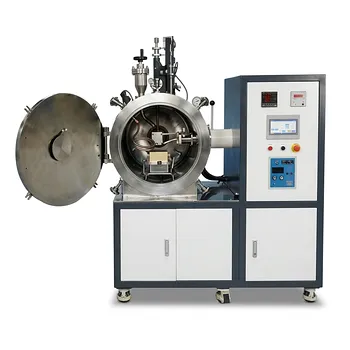
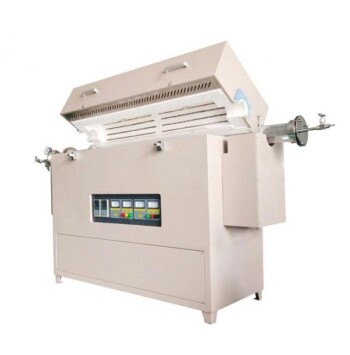
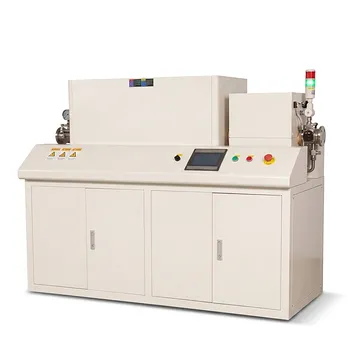
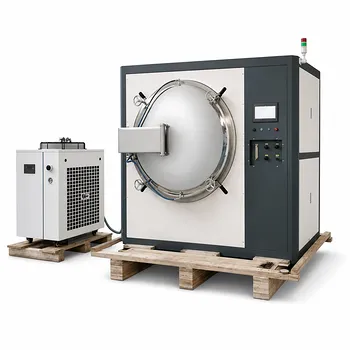
Precise temperature uniformity (±1 °C) and strict atmosphere regulation are vital to controlling the peritectic reaction and eliminating entrapped porosity in bulk superconductors. KINTEK specializes in high-performance laboratory equipment, offering a comprehensive range of customizable high-temperature furnaces—including muffle, tube, atmosphere, vacuum, and CVD systems tailored to your material research requirements.
Ready to elevate your melt-texturing reproducibility and superconductor performance? Contact our thermal processing experts today to find the ideal customizable furnace solution for your laboratory!
Related Products
- Vacuum Induction Melting Furnace
- Controlled Inert Nitrogen Hydrogen Atmosphere Furnace
- Laboratory Quartz Tube Furnace RTP Heating Tubular Furnace
- Vertical Laboratory Quartz Tube Furnace Tubular Furnace
- 2200 ℃ Tungsten Vacuum Heat Treat and Sintering Furnace
People Also Ask
- What are the core functions of the High Vacuum Induction Melting (VIM) furnace? Optimize DD5 Superalloy Purification
- Why is a Vacuum Induction Melting furnace (VIM) used for Cu-Zn-Al-Sn alloys? Achieve Precision Composition Control
- What are the technical advantages of using a Vacuum Induction Melting furnace in the development of advanced packaging steel?
- What are the advantages of using a VIM furnace to control residual oxygen pressure? Achieve Superior Metal Uniformity
- What is the role of VIM and directional solidification in aero-engine blade substrates? Engineering Extreme Durability