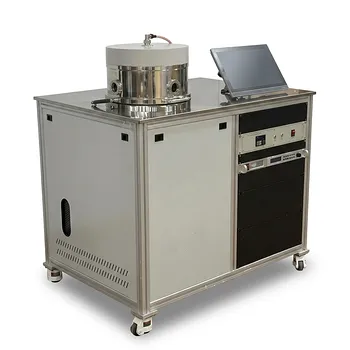
Precise thermal uniformity and controlled steam concentrations are the foundational conditions provided by an atmosphere tube furnace for catalyst steam treatment. This equipment ensures a stable environment where constant steam flow and accurate temperature control (often at 400°C or higher) facilitate the migration of metal species and the transformation of the catalyst framework.
The atmosphere tube furnace acts as a controlled thermodynamic reactor that enables the precise modification of catalyst structures through synchronized thermal and chemical stress. By maintaining a uniform steam-rich environment, it facilitates the transition of metal ions into highly dispersed active sites without compromising the material's structural integrity.
Precision Control of the Thermal Environment
Uniform Temperature Distribution
The furnace provides a highly stable thermal zone, ensuring that the catalyst bed experiences identical conditions throughout the treatment. This uniformity is critical for inducing the migration of metal species from zeolite frameworks at specific activation energies.
Programmable Heating Rates
Precise control over the heating rate prevents thermal shock and allows for the gradual thermal decomposition of organic ligands. This controlled ramp-up is essential for maintaining the desired morphology of precursors before they transition into active phases.
High-Temperature Stability
Modern tube furnaces can maintain constant temperatures ranging from 400°C to 800°C with minimal fluctuation. This stability is necessary for complex processes like the Strong Metal-Support Interaction (SMSI) or the creation of oxygen vacancies in ceria supports.
Atmospheric Integrity and Steam Regulation
Constant Steam Flow and Concentration
The furnace allows for the introduction of air or inert streams containing specific moisture levels, such as 10 vol.% H2O. This constant flow ensures that the steam-to-solid ratio remains consistent, preventing localized saturation or depletion during the reaction.
Effective System Purging
Before introducing steam or reducing gases, the tube furnace uses inert gases to eliminate oxygen and residual impurities. This ensures that the catalyst surface remains uncontaminated and that the subsequent steam treatment occurs in a chemically "clean" environment.
Optimized Mass Transfer
The dynamic process environment within the furnace tube promotes thorough contact between the gaseous steam and the solid catalyst particles. This intimate contact is what drives the ordered transformation of framework sites and the development of active surface oxygen.
Facilitating Material Transformation
Metal Species Migration and Dispersion
Under the influence of flowing hot steam, metal species are prompted to move from the internal framework of a support (like zeolites) to the surface. This process results in the formation of highly dispersed nanoclusters, such as alpha-Fe2O3, which are more catalytically active.
Surface and Pore Modification
Atmosphere control allows for the directional removal of oxygen-containing functional groups without damaging the underlying pore structure. This is particularly vital when treating activated carbon or zeolites where surface area preservation is a priority.
Creation of Active Defects
The high-temperature steam environment induces the formation of oxygen vacancies and new active surface sites. These defects are critical for improving low-temperature purification performance for molecules like methane and nitrogen oxides.
Understanding the Trade-offs
Mass Transfer Limitations
While tube furnaces provide excellent atmosphere control, they can suffer from mass transfer gradients if the catalyst bed is too deep. In a fixed-bed configuration, the steam may not penetrate the center of a dense sample as effectively as the outer layers.
Condensation Risks
Maintaining a steam atmosphere requires precise heat tracing on the inlet and outlet lines. If any part of the system falls below the dew point, liquid water can form, potentially leaching active metals or damaging the catalyst structure.
Scalability Constraints
Atmosphere tube furnaces are ideal for precise laboratory research but present challenges for large-scale production. The radial temperature gradients inherent in larger tubes can make it difficult to replicate the exact conditions found in smaller, research-grade units.
How to Apply This to Your Project
Making the Right Choice for Your Goal
- If your primary focus is nanocluster dispersion: Prioritize a furnace with high-precision steam flow controllers to ensure consistent metal migration from the framework.
- If your primary focus is support modification (e.g., ceria or carbon): Focus on furnaces with programmable atmospheric switching to transition between oxidative roasting and steam treatment.
- If your primary focus is zeolite framework stability: Ensure the furnace has a multi-zone heating configuration to provide the highest possible level of thermal uniformity across the catalyst bed.
By leveraging the precise thermal and atmospheric control of a tube furnace, researchers can achieve the exact structural transformations required to optimize catalyst performance.
Summary Table:
| Key Condition | Benefit for Catalyst Treatment | Technical Requirement |
|---|---|---|
| Thermal Uniformity | Ensures consistent metal migration from frameworks | Stable zone (400°C - 800°C) |
| Steam Regulation | Precise control of framework & surface modification | Constant flow (e.g., 10 vol.% H2O) |
| Atmospheric Integrity | Eliminates impurities & prevents contamination | Inert gas purging system |
| Heating Rate Control | Prevents thermal shock & preserves morphology | Programmable ramp-up rates |
| Mass Transfer | Promotes thorough gas-solid contact | Optimized tube diameter/flow |
Elevate Your Catalyst Research with KINTEK Precision
Achieving the perfect active site dispersion requires uncompromising control over your thermal environment. KINTEK specializes in high-performance laboratory equipment, offering a comprehensive range of atmosphere tube furnaces, muffle furnaces, rotary, vacuum, and CVD systems—all fully customizable to meet your specific steam treatment and material synthesis needs.
Whether you are focusing on zeolite stability, nanocluster dispersion, or support modification, our technical experts provide the reliable, high-temperature solutions necessary to drive your innovations forward.
Ready to optimize your catalyst performance? Contact KINTEK today to discuss your custom furnace requirements!
References
- Rui Hu, Zhijian Da. Nano-Hollow Zeolite-Encapsulated Highly Dispersed Ultra-Fine Fe Nanoparticles as Fischer–Tropsch Catalyst for Syngas-to-Olefins. DOI: 10.3390/catal13060948
This article is also based on technical information from Kintek Furnace Knowledge Base .
Related Products
- 1200℃ Controlled Inert Nitrogen Atmosphere Furnace
- Mesh Belt Controlled Atmosphere Furnace Inert Nitrogen Atmosphere Furnace
- 1700℃ Controlled Inert Nitrogen Atmosphere Furnace
- Controlled Inert Nitrogen Hydrogen Atmosphere Furnace
- High Pressure Laboratory Vacuum Tube Furnace
People Also Ask
- What controlled-atmosphere furnace conditions are required for sintering powder metallurgy copper alloy compacts? Ideal Setup
- How Sintering Temp Affects Density & Resistivity of Cu-Oxide Composites
- How does introducing reactive gases into a controlled atmosphere furnace affect ceramic densification and coarsening?
- What are the operational considerations for a controlled atmosphere furnace? Master Key Factors for Material Processing
- How does a vacuum or controlled atmosphere furnace facilitate sessile-drop experiments? Optimize Alloy Wetting Analysis