The core strategy is a precision-engineered thermal management stack. To prevent the conductive pressing plungers from acting as heat sinks and causing "end-cooling," two critical components are inserted into the assembly: high-electrical-resistivity, low-thermal-conductivity wafers are placed directly between the plungers and the sample, and a ceramic die liner isolates the sample from the die wall. This combination effectively traps Joule heat within the powder compact, ensuring a homogeneous temperature profile from end to end.
The fundamental approach to eliminating end-cooling is a two-part thermal isolation system. First, a refractory wafer acts as a thermal barrier on the axial faces. Second, a ceramic liner prevents heat loss radially through the die. Together, they transform the assembly from a heat-dissipating structure into a heat-containment crucible, forcing the generated energy to densify the material uniformly.
The Root Cause: Plunger-Induced End-Cooling
The very tooling that applies pressure also creates a thermal problem. Highly conductive pressing plungers, often made of graphite or copper alloys, are excellent pathways for heat.
The Heat Sink Effect
During sintering, the sample generates its own heat through Joule heating. However, the plungers rapidly conduct this heat away from the sample's top and bottom faces. This creates a significant temperature drop at the ends of the compact.
The Resulting Microstructural Defect
This localized cooling leads to non-uniform densification. The ends remain under-dense and poorly bonded compared to the hot center. This creates a structurally compromised component with a boundary region of inferior quality, effectively wasting material and energy.
The Wafer Solution: Blocking Axial Heat Loss
To fight the heat sink effect, a thin, specialized wafer is introduced into the assembly. This component is the primary defense against axial temperature gradients.
Material Properties as a Design Tool
The wafer material is not arbitrarily chosen; its function is defined by its contrasting properties. It must possess high electrical resistivity to resist current flow without generating significant heat itself, and critically, low thermal conductivity to act as a bottleneck for heat escaping from the sample into the plunger.
The Refractory Requirement
These wafers are made from materials with a high melting point. They must survive the peak sintering temperature without degrading, softening, or chemically reacting with the tooling or sample. This inert, thermally insulating block ensures that the sample ends experience the same thermal history as the core.
Die Wall Isolation: Controlling Radial Heat Flow
Axial blocking is only half the strategy. Heat can just as easily escape radially through the graphite die body, creating a cooler outer surface on the sample.
The Role of Ceramic Die Liners
A ceramic die liner is inserted inside the graphite die to surround the powder compact. This liner is chosen for its electrical and thermal insulation properties. It electrically isolates the sample, preventing current from shunting through the die wall and bypassing the compact.
Trapping the Joule Heat
By thermally isolating the sample from the die, the liner traps generated Joule heat inside the powder mass. This action simultaneously minimizes the radial temperature gradient and works synergistically with the end-wafers to create a nearly isothermal processing environment for the entire 3D volume of the part.
Mastering the Interface: The Critical Role of Contact
A perfect thermal barrier fails without uniform electrical input. The final design strategy addresses the microscopic gaps and points of contact at every interface.
Uniform Current Distribution with Graphite Paper
Placing thin graphite paper foils between the punches, the sample, and the die components is essential. This compliant layer deforms under pressure to create perfectly uniform electrical contact across all touching surfaces. This eliminates localized current concentrations and associated hot spots.
Preventing Chemical Bonding
Beyond electrical uniformity, the graphite paper acts as a release agent. It prevents direct contact between the sample and tooling, reliably stopping chemical bonding, sticking, or diffusion at high temperatures. This ensures the sample can be extracted without damage and the tooling remains reusable.
Understanding the Trade-offs
This integrated thermal management system induces a complex electrical-thermal interplay. Designers must be aware that these fixes are not without secondary consequences.
The Risk with Heterogeneous Samples
If the sample itself is a layered or composite structure with varying electrical conductivity, the current distribution becomes unstable. In a parallel configuration, current concentrates in high-conductivity regions. In a series configuration, intense localized heating occurs in high-resistivity layers. The insulating wafer and liner can exacerbate these gradients by trapping uneven heat.
The Thermal Diffusivity Bottleneck
If the material being sintered has inherently low thermal diffusivity, the heat generated locally cannot dissipate within the sample quickly enough. Even with a perfect external insulating setup, severe internal thermal gradients can still form, leading to non-uniform densification and part distortion. The design strategy must therefore be paired with a heating cycle slow enough to allow internal conduction.
Engineering Your Assembly for Perfect Sintering
The right assembly strategy is a direct function of your sample's properties and your process goals. The configuration is not one-size-fits-all.
- If your primary focus is sintering a homogeneous, highly diffusive material: The baseline strategy of refractory wafers and a ceramic die liner will excel. You can rely on the trapped heat to equalize naturally, enabling a faster cycle and ensuring a high-density, uniform final part.
- If your primary focus is a heterogeneous laminate or low-diffusivity ceramic: You must go beyond insulation and dial back the power ramp rate. This gives internal heat conduction time to work. Ignoring this will cause distortions and density gradients that the physical barriers alone cannot prevent.
- If your primary focus is tooling longevity and sample purity: Never overlook the graphite paper interface. This single, low-cost component is your insurance policy against contamination and tooling damage, ensuring the thermal design's precision translates into a clean, high-yield process.
Mastering the thermal architecture of the sintering assembly is what transforms a simple press-and-heat operation into a precision manufacturing process.
Summary Table:
| Assembly Component | Key Material Properties | Primary Function in Thermal Management |
|---|---|---|
| Refractory Wafers | High electrical resistivity, low thermal conductivity | Blocks axial heat loss to plungers; eliminates end-face cooling |
| Ceramic Die Liners | High electrical & thermal insulation | Prevents radial heat loss; stops current shunting through the die wall |
| Graphite Paper Foils | Compliant, conductive graphite | Ensures uniform electrical contact; prevents sample-tooling bonding |
Master Thermal Precision in Your High-Temperature Workflows
Struggling with temperature gradients, thermal stress, or non-uniform material densification? KINTEK specializes in premium laboratory equipment and high-performance consumables engineered for demanding thermal processes.
Whether you need specialized consumables or complete high-temperature furnace systems—including muffle, tube, rotary, vacuum, CVD, atmosphere, dental, and induction melting furnaces—our solutions are fully customizable to meet your exact research and production specs.
Don't let thermal loss compromise your material performance. Contact KINTEK today to optimize your lab setup!
Related Products
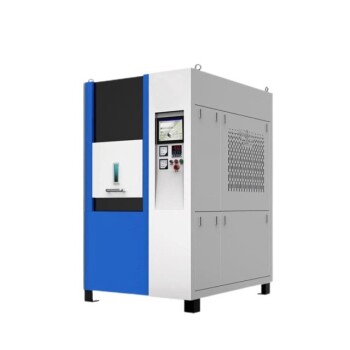
- Spark Plasma Sintering SPS Furnace
- Vacuum Heat Treat Sintering Furnace Molybdenum Wire Vacuum Sintering Furnace
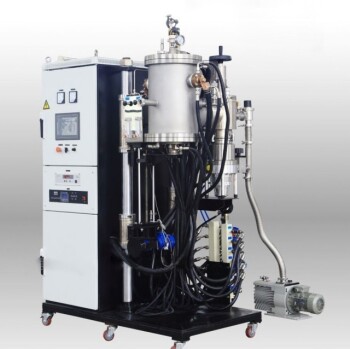
- Small Vacuum Heat Treat and Tungsten Wire Sintering Furnace
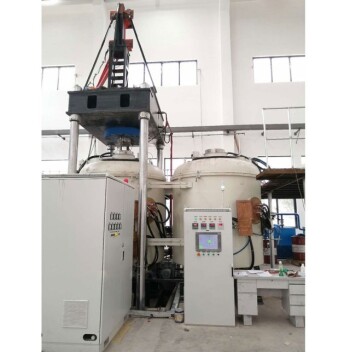
- Vacuum Heat Treat Sintering Furnace with Pressure for Vacuum Sintering
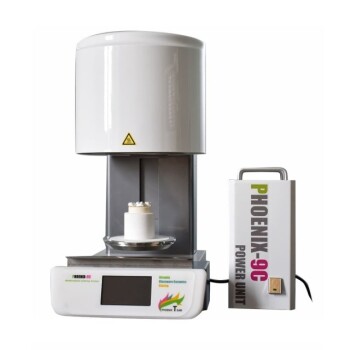
- Chairside Dental Porcelain Zirconia Sintering Furnace with Transformer for Ceramic Restorations
People Also Ask
- Why is it necessary to maintain a high vacuum environment during the SPS of SiC? Key to High-Density Ceramics
- How does the heating mechanism of Spark Plasma Sintering (SPS) function? Enhance TiC/SiC Composite Fabrication
- What are the technical advantages of using an SPS sintering furnace? Elevate Al2O3-TiC Material Performance
- What are the advantages of Spark Plasma Sintering (SPS)? Achieve Superior Microstructures
- What are the steps in the discharge plasma sintering process? Master Fast, High-Density Material Consolidation