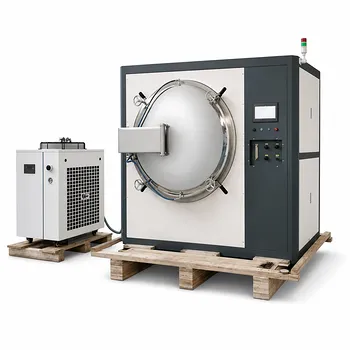
Controlled cooling is not a passive step—it is a deliberate, active stage that defines the final integrity and performance of both functional and structural ceramics. When operating high-temperature sintering furnaces, a precisely managed cooling rate and an intentional annealing hold are indispensable for preventing thermal shock cracks, relieving internal stress, and engineering the exact microstructure required for the final application.
The cooling profile directly determines whether a sintered ceramic component emerges as a high-density, defect-free part or a fractured, substandard reject. An annealing stage is the proven method for transforming a fragile glassy matrix into a stable, creep-resistant grain-boundary network.
Why Cooling and Annealing Are Non-Negotiable Steps
The Hidden Danger of Uncontrolled Cooling
Rapid cooling from sintering temperatures introduces severe temperature gradients across a ceramic part. These gradients generate differential contraction, creating tensile and compressive stresses that can exceed the material’s fracture toughness. The result is catastrophic cracking or micro-cracking that renders the component useless.
A programmable multi-segment temperature controller is the only reliable way to manage the cooling curve. By stretching the time over which the part transitions to room temperature, the furnace allows thermal energy to dissipate evenly, preventing extreme stress concentrations.
Unmanaged cooling rates also disrupt chemical stoichiometry. In complex oxide ceramics, abrupt temperature drops can freeze in high-temperature disorder or cause undesirable phase decomposition. A controlled ramp down preserves the intended cation oxidation states and prevents the loss of volatile elements, ensuring the final ceramic meets its dielectric or structural specifications.
The Annealing Hold as a Stress-Relief Valve
Even with a gradual cooling ramp, atomic-level residual stresses remain trapped within the ceramic matrix. This is especially critical in systems that contain a residual glassy phase or have undergone phase transformations with associated volume changes.
A dedicated annealing hold—a temperature plateau below the sintering temperature but above the glass transition—gives the material time to relax. Atomic bonds rearrange, and viscous flow within the glassy phase dissipates stress. Without this pause, the part may survive furnace exit but fail later during machining or service due to latent tensions. Think of annealing as a “thermal breather” that resets the internal strain to near zero.
Microstructural Engineering Through Cooling and Annealing
Dictating Second-Phase Morphology
The cooling rate directly controls how secondary phases precipitate out of the matrix. Fast cooling often traps solute in a supersaturated solid solution or forces it to form a continuous, brittle glassy film along grain boundaries. Slow, controlled cooling, by contrast, promotes the nucleation and growth of discrete, isolated particles.
This distinction is make-or-break for properties like fracture toughness and high-temperature creep. Discrete particles pin grain boundaries and deflect cracks, while continuous films act as fast diffusion paths that accelerate creep. The furnace’s cooling profile is the master switch that selects between these two microstructures.
Crystallizing Grain-Boundary Phases for Creep Resistance
A prime example of annealing’s power is in structural ceramics like silicon nitride (Si3N4). These materials are typically sintered with liquid-phase additives that form a glassy grain-boundary phase upon solidification. In its glassy state, this phase softens at high temperatures, leading to premature creep failure.
A post-sintering annealing hold crystallizes this glass into a refractory secondary phase. The transformed grain boundaries resist sliding and cavitation, dramatically improving high-temperature creep resistance. The same principle applies to any ceramic system where a transient liquid phase must be converted to a stable, load-bearing solid before final cooling to room temperature.
Preserving Chemical Stoichiometry and Defect States
For many functional ceramics—such as barium titanate or zinc oxide—the oxygen stoichiometry is the master variable controlling electrical behavior. Rapid cooling can trap an equilibrium concentration of oxygen vacancies that yields a semiconducting character, whereas a slow cool in a controlled atmosphere allows the lattice to re-oxidize and become insulating.
An annealing stage in a precisely regulated atmosphere lets you fine-tune the point defect population. You can deliberately adjust oxygen partial pressure during the hold to achieve a specific conductivity or dielectric constant, confident that the property will be frozen in only after a controlled cool.
Understanding the Trade-offs
Throughput vs. Stress Relief
The primary tension is between cycle time and part quality. An ultra-slow cooling ramp with a long annealing hold guarantees minimal residual stress, but it ties up the furnace and consumes energy. For non-critical parts, you might accept a faster ramp and a slightly higher risk of internal micro-cracks, provided a final non-destructive inspection catches rejects. The decision must be driven by the component’s ultimate stress state and safety margin.
Over-Annealing and Grain Growth
An annealing hold set too high or too long can be counterproductive. Residual thermal energy can drive unwanted grain growth, especially if the hold temperature sits in a regime where grain boundary mobility is still significant. This coarse microstructure can degrade strength and toughness, negating the benefits of stress relief. You must choose an annealing temperature that is below the threshold for rapid grain boundary migration while still above the glass transition for stress relaxation.
Atmosphere Interactions During Cooling
The furnace atmosphere doesn’t become irrelevant once the sintering soak ends. During cooling, the oxygen partial pressure or inert gas purity can still influence surface oxidation, volatile species re-condensation, or even back-reactions with residual gases. A carefully controlled cooling atmosphere prevents post-sintering phase decomposition and ensures that the high-diffusivity gases used to close pores (like hydrogen) are safely purged before the furnace door opens.
Making the Right Choice for Your Goal
The specific role of controlled cooling and annealing depends entirely on the ceramic system and its intended performance. Apply these focused strategies to align the furnace program with your outcome.
- If your primary focus is structural integrity and crack-free parts: Program a slow, multi-segment cooling curve from the sintering temperature to at least 800°C, and insert a 1–4 hour annealing hold just above the glass transition temperature to relieve thermal mismatch stresses.
- If your primary focus is maximizing high-temperature creep resistance: Identify the crystallization temperature of the grain-boundary glass and hold there for the time needed for full devitrification. Follow with a controlled cool that preserves the now-stable crystalline grain boundaries.
- If your primary focus is achieving a specific electrical response (e.g., high resistivity): Use an annealing hold at a lower temperature under a precisely controlled oxygen partial pressure to equilibrate defects, then cool slowly in the same atmosphere to freeze that state into the lattice.
- If your primary focus is eliminating residual porosity for optical transparency: After sintering, maintain a high-diffusivity atmosphere (like H2) while slowly cooling through the pore closure region to prevent trapped gas from re-expanding, and avoid any annealing hold that could coarsen remaining pores.
Treat your furnace’s cooling segment as the final shaping step—it defines the material’s destiny as much as the peak sintering temperature does.
Summary Table:
| Objective | Furnace Cooling & Annealing Strategy | Material & Performance Benefit |
|---|---|---|
| Structural Integrity | Multi-segment slow cooling + hold above glass transition | Eliminates thermal shock, stress, and micro-cracks |
| Creep Resistance | Post-sinter annealing hold at crystallization temp | Crystallizes brittle glass into load-bearing solid |
| Electrical Response | Lower-temp annealing under controlled oxygen pressure | Fine-tunes oxygen vacancies & stoichiometry |
| Optical Transparency | Slow cooling in high-diffusivity atmosphere (e.g., H2) | Prevents trapped gas expansion & pore coarsening |
Master Precise Thermal Processing with KINTEK High-Temperature Furnaces
Achieving defect-free, high-performance ceramics requires exact temperature ramps, programmable cooling, and tailored annealing atmospheres. KINTEK provides industry-leading laboratory equipment and consumables engineered for absolute precision. Our broad range of high-temperature furnaces—including muffle, tube, rotary, vacuum, CVD, atmosphere, dental, and induction melting furnaces—can be customized to meet your exact ceramic research or production needs.
Ready to eliminate micro-cracks and unlock optimal ceramic microstructures? Contact KINTEK today for customized furnace solutions!
Related Products
- High Temperature Muffle Oven Furnace for Laboratory Debinding and Pre Sintering
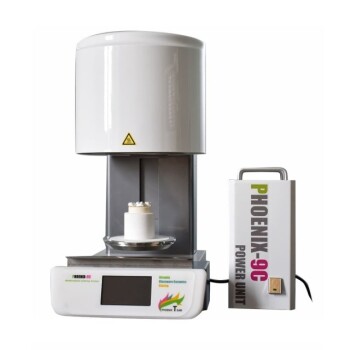
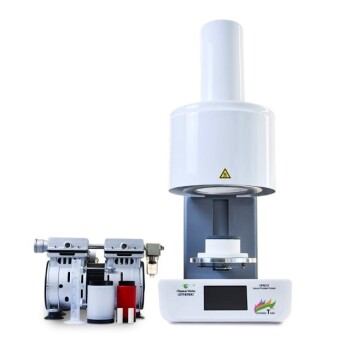
- Chairside Dental Porcelain Zirconia Sintering Furnace with Transformer for Ceramic Restorations
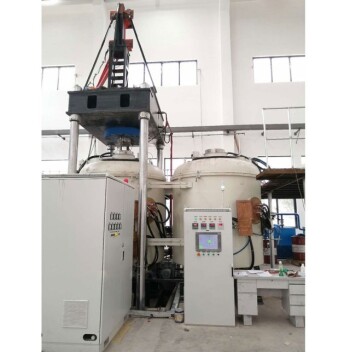
- 2200 ℃ Tungsten Vacuum Heat Treat and Sintering Furnace
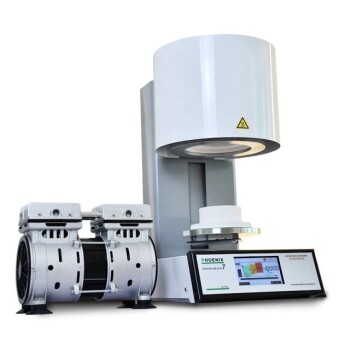
- Dental Porcelain Zirconia Sintering Ceramic Vacuum Press Furnace
- 2200 ℃ Graphite Vacuum Heat Treat Furnace
People Also Ask
- What thermal phenomena occur during polymer binder burnout in ceramic green bodies? Lab Furnace Guide
- Why is controlled heat treatment in a muffle furnace necessary for calcined clay? Achieve Optimal Pozzolanic Activity
- What role does a high-temperature muffle furnace play in STFO synthesis? Achieve Pure Perovskite Results
- How does a high-temperature muffle furnace facilitate the formation of LaNbxAl1−xO3+δ perovskite structures? Key Roles
- What role does a high-temperature muffle furnace play in the formation of biochar catalysts? Master Catalyst Synthesis