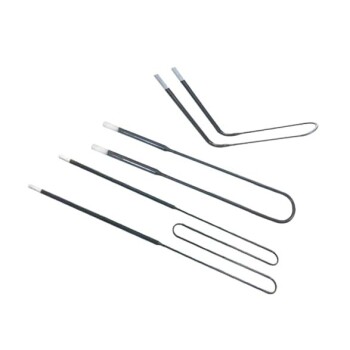
The electrically heated muffle furnace serves as the precision-controlled core of the carbonization process. It provides the stable thermal environment and oxygen-limited conditions necessary to convert raw biomass into high-quality charcoal while capturing volatile byproducts.
The muffle furnace acts as a controlled reactor that manages the thermochemical decomposition of biomass, ensuring high fixed carbon content and stable yields. By integrating a gas recovery system, it transitions from a simple heating element to a sophisticated tool for managing volatile emissions and simulating industrial-grade production.
Precision Thermal Regulation
Maintaining Constant Heating Rates
A critical role of the muffle furnace is its ability to provide a constant heating rate, often as precise as 1.67°C per minute. This slow, controlled increase in temperature is vital for slow pyrolysis, allowing organic components to decompose steadily without destroying the structural integrity of the resulting charcoal.
Maximum Temperature Control
The furnace allows for precise multi-stage temperature control, typically ranging from 150°C to 900°C depending on the specific biomass. This precision ensures the material reaches the exact threshold required for complete carbonization while preventing the "over-burning" that can reduce gravimetric yield.
Simulation of Industrial Conditions
Because it provides a closed and highly regulated environment, the muffle furnace effectively simulates industrial carbonization. This allows researchers and producers to predict how large-scale batches will perform regarding fixed carbon content and chemical stability.
Environmental Control and Material Quality
Establishing Oxygen-Limited Conditions
The muffle furnace, often used in conjunction with a gas-tight retort, creates an anaerobic or oxygen-lean environment. This is essential to induce thermochemical decomposition rather than simple combustion, which would otherwise turn the biomass into ash instead of charcoal.
The Function of Gas Recovery Systems
The integrated gas recovery system is responsible for managing and condensing volatile components released during heating. This not only prevents hazardous emissions from escaping but also allows for the collection of wood vinegar and bio-oils, which are valuable byproducts of the pyrolysis process.
Development of Porous Structures
By precisely controlling the residence time and thermal environment, the furnace facilitates the structural rearrangement of carbon. This is critical for creating charcoal with well-developed pore structures, which significantly enhances the material's ability to adsorb heavy metals or pollutants.
Understanding the Trade-offs
Scaling and Energy Efficiency Constraints
While muffle furnaces offer unparalleled precision, they are often limited by batch size and high energy consumption. Using electricity to maintain high temperatures over long residence times (sometimes several hours) makes this setup more suitable for laboratory research or high-value specialty charcoal than for mass-market fuel production.
Complexity of Gas Handling
Equipping a furnace with a gas recovery system introduces technical complexity and maintenance requirements. If the recovery system is not properly calibrated or cleaned, volatile tars can condense in the exhaust lines, leading to potential blockages or safety hazards.
Applying This Technology to Your Goals
How to Optimize Your Carbonization Results
To achieve the best results with an electrically heated muffle furnace, you must align your temperature settings and recovery protocols with your final product requirements.
- If your primary focus is High Carbon Yield: Use a slow heating rate (under 2°C/min) and a moderate maximum temperature to maximize the solid charcoal output.
- If your primary focus is Adsorption Capacity: Prioritize higher temperatures (above 600°C) and longer residence times to fully develop the microporous structure.
- If your primary focus is Environmental Compliance: Ensure the gas recovery system is fully operational to condense all volatiles and prevent the release of greenhouse gases.
The strategic use of a muffle furnace transforms raw organic waste into a high-value, stable carbon product through rigorous thermal and atmospheric control.
Summary Table:
| Key Feature | Role in Charcoal Production | Benefit to Material Quality |
|---|---|---|
| Precision Thermal Control | Maintains constant heating rates (e.g., 1.67°C/min) | Prevents structural damage; ensures high fixed carbon content. |
| Oxygen-Limited Environment | Creates anaerobic conditions for slow pyrolysis | Induces thermochemical decomposition instead of simple combustion. |
| Gas Recovery System | Captures and condenses volatile byproducts | Collects valuable bio-oils/wood vinegar and reduces emissions. |
| Structural Regulation | Facilitates carbon rearrangement and residence time | Develops advanced porous structures for superior adsorption capacity. |
Elevate Your Carbonization Research with KINTEK
Achieving high-purity charcoal requires absolute control over temperature and atmosphere. KINTEK specializes in high-performance laboratory equipment and consumables, offering a comprehensive range of high-temperature furnaces, including muffle, tube, vacuum, CVD, and atmosphere furnaces.
Our systems are fully customizable to meet your unique research needs, ensuring you can simulate industrial-grade production with lab-scale precision. Whether you are optimizing for gravimetric yield or maximizing adsorption capacity, KINTEK provides the reliability and technical support you need to succeed.
Ready to optimize your thermal processes? Contact KINTEK experts today to find your custom furnace solution!
References
- Gabriel Soares Lopes Gomes, Marcos Vinícius Winckler Caldeira. Influence of spacing between trees on wood and charcoal quality indicators. DOI: 10.1590/01047760202430013270
This article is also based on technical information from Kintek Furnace Knowledge Base .
Related Products
- 1800℃ High Temperature Muffle Oven Furnace for Laboratory
- 1700℃ High Temperature Muffle Oven Furnace for Laboratory
- Laboratory Muffle Oven Furnace with Bottom Lifting
- 1400℃ Muffle Oven Furnace for Laboratory
- 1200℃ Muffle Oven Furnace for Laboratory
People Also Ask
- How does a high-temperature laboratory muffle furnace affect material properties? Transform Anodic Oxide Films Fast
- What is the primary function of a high-temperature laboratory muffle furnace in chemical synthesis? Achieve Precision.
- Why is a laboratory high-temperature muffle furnace used for BaTiO3? Achieve Optimal Tetragonal Crystalline Phases
- What role does a muffle furnace play in plant bark mineral analysis? Essential for Precise Dry Ashing & Trace Extraction
- What functions does a laboratory muffle furnace perform for AISI 1025 steel post-processing? Precision Thermal Control