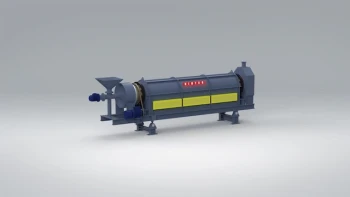
The high-temperature muffle furnace acts as the controlled reactor required to transform raw biomass into a stable, carbon-rich biochar skeleton. It provides the precise, oxygen-limited environment necessary for thermochemical conversion, ensuring that organic materials undergo pyrolysis rather than combustion. By strictly managing temperature gradients and atmospheric conditions, the furnace determines the final biochar’s porosity, surface area, and chemical functionality.
The muffle furnace is the primary tool for regulating the pyrolysis environment, directly dictating the structural integrity and adsorption performance of biochar through precise control over thermal decomposition and carbon enrichment.
Creating the Ideal Pyrolysis Environment
Maintaining an Oxygen-Free Atmosphere
A muffle furnace provides a sealed, reductive environment that is either anaerobic or oxygen-limited. This is critical because it prevents the biomass from burning into ash, allowing the material to carbonize and retain its carbon framework.
Facilitating Thermochemical Transformation
The furnace drives the physical and chemical transformation of pre-treated organic materials through dehydration and devolatilization. This process eliminates volatile substances and moisture, leaving behind a concentrated carbonaceous material with a stable physicochemical structure.
Precise Thermal Management
Stable temperature control is the most significant factor in biochar production. The furnace allows researchers to maintain specific heating rates—typically between 8°C and 10°C per minute—to ensure uniform carbonization throughout the sample.
Impact of Temperature on Biochar Quality
Regulating Porosity and Surface Area
The furnace temperature directly determines the degree of graphitization and the development of the pore structure. Higher temperatures, often ranging from 500°C to 900°C, generally increase the specific surface area, which is essential for effective adsorption in soil remediation.
Shaping Surface Functional Groups
By controlling the holding time and peak temperature, the muffle furnace regulates the types of functional groups present on the biochar surface. These chemical groups are responsible for the material's ability to bind with heavy metals and other pollutants.
Defining Carbon Content and Ash Yield
The precise heat application in a muffle furnace dictates the ratio of fixed carbon to volatile matter and ash. Maintaining a stable environment ensures the resulting biochar meets the specific requirements for its intended application, such as carbon sequestration or contaminant filtration.
Understanding Technical Trade-offs
Heating Rates vs. Structural Integrity
While rapid heating can increase throughput, it may lead to non-uniform carbonization or "cracking" of the biochar framework. Slow, controlled heating rates in a muffle furnace are preferred for developing a well-defined, highly porous structure.
Temperature vs. Adsorption Capacity
Increasing the furnace temperature generally improves the surface area but can lead to the loss of certain oxygen-containing functional groups. If your goal is chemical bonding rather than physical adsorption, lower temperatures (around 300°C to 450°C) might be more effective despite a lower surface area.
Batch Limitations and Scalability
Muffle furnaces are excellent for precision and laboratory-scale production but operate as batch processes. This means they offer high control and repeatability but are less efficient for high-volume industrial biochar manufacturing compared to continuous kilns.
Optimizing Your Protocol for Biochar Goals
To achieve the best results with your high-temperature muffle furnace, align your heating parameters with your specific remediation or material goals.
- If your primary focus is heavy metal adsorption: Maintain moderate temperatures (450°C–600°C) and slow heating rates to preserve a balance between surface area and active functional groups.
- If your primary focus is maximum surface area: Utilize higher temperatures (above 700°C) to maximize pore development and graphitization, which enhances physical adsorption capacity.
- If your primary focus is soil carbon sequestration: Focus on longer holding times at stable temperatures to ensure the removal of all volatile components, resulting in a more chemically stable carbon skeleton.
By mastering the thermal precision of the muffle furnace, you can engineer biochar with the exact physical and chemical properties required for complex environmental applications.
Summary Table:
| Feature | Role in Biochar Production | Impact on Biochar Quality |
|---|---|---|
| Oxygen-Free Atmosphere | Prevents biomass combustion | Preserves the carbon framework and skeletons |
| Thermal Precision | Regulates pyrolysis temperatures | Determines porosity and specific surface area |
| Controlled Heating Rate | Ensures uniform carbonization | Prevents structural cracking and ensures integrity |
| Atmospheric Control | Manages volatile removal | Defines chemical functionality and carbon content |
Elevate Your Biochar Research with KINTEK Precision
Achieving the perfect biochar skeleton requires absolute control over your thermal environment. KINTEK specializes in high-performance laboratory equipment, providing a comprehensive range of high-temperature furnaces—including muffle, tube, vacuum, and atmosphere furnaces—engineered for precise carbonization and material synthesis.
Whether you are optimizing soil remediation protocols or developing advanced carbon adsorbents, our customizable furnaces ensure the uniform heating and atmospheric stability your research demands.
Ready to enhance your lab's efficiency and output? Contact our technical experts today to find the ideal furnace solution tailored to your unique research needs!
References
- Zhongxin Hua, Qiankun Hong. Adsorption of Congo red dye in water by orange peel biochar modified with CTAB. DOI: 10.1039/d3ra01444d
This article is also based on technical information from Kintek Furnace Knowledge Base .
Related Products
- 1700℃ High Temperature Muffle Oven Furnace for Laboratory
- 1800℃ High Temperature Muffle Oven Furnace for Laboratory
- 1200℃ Muffle Oven Furnace for Laboratory
- 1400℃ Muffle Oven Furnace for Laboratory
- High Temperature Muffle Oven Furnace for Laboratory Debinding and Pre Sintering
People Also Ask
- What is the primary function of a high-temperature laboratory muffle furnace in chemical synthesis? Achieve Precision.
- How does a high-temperature laboratory muffle furnace affect material properties? Transform Anodic Oxide Films Fast
- What role does a muffle furnace play in BCZY712 electrolyte powder production? Achieve Perfect Phase Purity
- Why must a high-temperature muffle furnace be used to evaluate the mineral density of tigernut composite flour?
- What role does a muffle furnace play in converting rice husk to ash? Achieve High-Purity Biogenic Silica Isolation