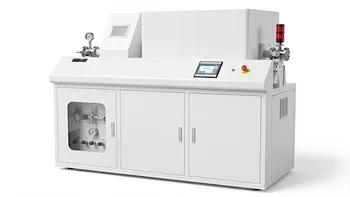
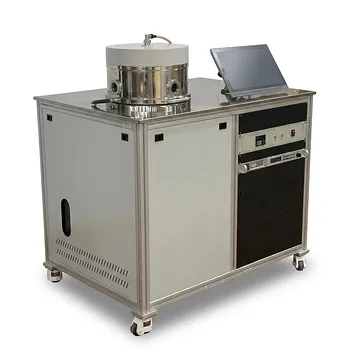
Industrial muffle furnaces are the primary instruments for inducing and controlling the phase transitions of titanium dioxide (TiO2) nanoparticles, providing the precise thermal energy required to reorganize their atomic structure. These furnaces facilitate the critical shift from amorphous precursors to the anatase phase and, subsequently, the transition from anatase to the more thermodynamically stable rutile phase by maintaining stable temperatures between 400°C and 1000°C.
The muffle furnace acts as a controlled thermal reactor that dictates the final crystalline structure, purity, and photocatalytic efficiency of TiO2 nanoparticles through precise management of calcination temperatures and isothermal durations.
Driving Crystalline Transformation
Converting Amorphous Precursors to Anatase
In the initial stages of synthesis, such as the sol-gel process, TiO2 often exists in an amorphous state with no defined crystal structure. The muffle furnace provides the high-temperature environment—typically around 300°C to 500°C—necessary to initiate crystallization into the anatase phase. This phase is highly valued in industrial applications for its superior photocatalytic activity and surface area.
Managing the Anatase-to-Rutile Transition
As temperatures increase beyond 600°C, the furnace facilitates the secondary transition from anatase to the rutile phase. This process requires precise isothermal durations, sometimes lasting up to 24 hours, to ensure complete crystal reorganization. The stability of the muffle furnace allows for a controlled heating rate (e.g., 20°C/min) which prevents structural collapse and ensures high-purity single-phase materials.
Purification and Structural Stabilization
Removal of Organic Impurities and Solvents
Synthesized nanoparticles often contain residual organic precursors, moisture, and solvents that can degrade performance. The furnace facilitates calcination and pyrolysis, effectively evaporating these contaminants to leave behind a pure inorganic framework. Removing these residues is essential for applications like anti-fouling coatings and high-performance solar cells.
Regulation of Morphology and Surface Defects
Thermal treatment in a muffle furnace allows for the "healing" of surface defects and the growth of nanoparticle crystals to a desired size. By adjusting the annealing temperature, technicians can regulate the defect states on the nanoparticle surface, which directly impacts chemical reactivity. This structural stabilization ensures the material maintains its integrity during long-term industrial use.
Understanding the Trade-offs
Temperature vs. Particle Size
While higher temperatures in a muffle furnace promote the transition to the stable rutile phase, they also trigger grain growth. Excessive heat can cause nanoparticles to sinter together, reducing the total surface area and potentially lowering photocatalytic efficiency. Achieving a specific phase without losing "nano" properties requires a delicate balance between temperature and time.
Phase Purity vs. Processing Time
Rapid heating may lead to an incomplete phase transition or a mixed-phase (anatase/rutile) structure. While mixed phases are sometimes desirable for specific catalytic applications, achieving a 100% pure phase requires long isothermal holds. These extended heating cycles increase energy consumption and production timelines, representing a significant operational trade-off.
How to Apply This to Your Project
Selection of Furnace Parameters
- If your primary focus is high photocatalytic activity: Target a calcination temperature between 450°C and 550°C to maximize the presence of the anatase phase while removing organics.
- If your primary focus is thermodynamic stability or pigments: Utilize higher temperatures (above 800°C) and longer soak times to ensure a complete transition to the rutile phase.
- If your primary focus is dye-sensitized solar cells (DSSCs): Use a moderate sintering temperature of approximately 450°C to eliminate residues while maintaining a high-porosity anatase structure.
- If your primary focus is minimizing grain growth: Employ slower heating rates and shorter isothermal durations to prevent the nanoparticles from agglomerating.
By mastering the thermal profile of an industrial muffle furnace, you can precisely engineer the crystalline phase and performance characteristics of titanium dioxide nanoparticles to meet specific technical requirements.
Summary Table:
| Phase Transition | Temperature Range | Key Characteristics | Common Applications |
|---|---|---|---|
| Amorphous to Anatase | 300°C - 550°C | High photocatalytic activity, high surface area | Solar cells, anti-fouling coatings |
| Anatase to Rutile | 600°C - 1000°C | Thermodynamic stability, high refractive index | Pigments, high-temp ceramics |
| Purification Stage | Varies | Removal of organic residues & solvents | High-purity inorganic frameworks |
| Structural Healing | Annealing Temps | Regulation of surface defects & grain size | Specialized chemical reactivity |
Elevate Your Nanomaterial Synthesis with KINTEK Precision
Achieving the perfect crystalline phase requires absolute thermal control. KINTEK specializes in high-performance laboratory equipment, providing the precision needed for critical TiO2 phase transitions.
Whether you are scaling up production or conducting delicate research, our comprehensive range of high-temperature furnaces—including muffle, tube, rotary, vacuum, CVD, and atmosphere furnaces—are engineered for stability and uniformity. We offer fully customizable solutions tailored to your unique laboratory requirements.
Ready to optimize your calcination and annealing processes?
Contact KINTEK today to discuss your project!
References
- Pamela Santos-Aguilar, Flavio F. Contreras‐Torres. Synthesis and Characterization of Rutile TiO<sub>2</sub> Nanoparticles for the Toxicological Effect on the H9c2 Cell Line from Rats. DOI: 10.1021/acsomega.3c01771
This article is also based on technical information from Kintek Furnace Knowledge Base .
Related Products
- High Temperature Muffle Oven Furnace for Laboratory Debinding and Pre Sintering
- Laboratory Muffle Oven Furnace with Bottom Lifting
- 1200℃ Muffle Oven Furnace for Laboratory
- 1400℃ Muffle Oven Furnace for Laboratory
- 1800℃ High Temperature Muffle Oven Furnace for Laboratory
People Also Ask
- What thermal phenomena occur during polymer binder burnout in ceramic green bodies? Lab Furnace Guide
- Why is controlled heat treatment in a muffle furnace necessary for calcined clay? Achieve Optimal Pozzolanic Activity
- What role does a high-temperature muffle furnace play in STFO synthesis? Achieve Pure Perovskite Results
- How does a high-temperature muffle furnace facilitate the formation of LaNbxAl1−xO3+δ perovskite structures? Key Roles
- What role does a high-temperature muffle furnace play in the multi-stage synthesis of Li0.5MnFe1.5O4? Key to Pure Spinel