The mechanism is a direct, field-induced dielectric breakdown of the insulating surface oxide layer, which is catalyzed by the very current that initially sees it as a barrier.
In electric-field-assisted sintering equipment like Spark Plasma Sintering (SPS), high-current pulses and strong electric fields do not simply heat the powder—they polarize the dielectric oxide film. This polarization creates oxygen vacancies that act as charge trap sites. Once the accumulated charge reaches a critical threshold, the oxide layer undergoes dielectric breakdown, migrating oxygen away from the particle contacts and allowing direct metal-to-metal necks to form instantly. This is not just thermal activation; it is an electro-physical event that literally removes the barrier.
The core takeaway: Field-assisted sintering overcomes surface oxide barriers not by melting them with heat, but by using electric fields to electrochemically destabilize and rupture the oxide layer through dielectric breakdown. Introducing a reducing agent like carbon then lowers the temperature at which the remaining oxide is reduced, completing the cleanup in a single thermal step. The result is oxide-free metallic bonding at temperatures and times dramatically lower than conventional sintering allows.
Understanding the Oxide Barrier Challenge
Before diving into the mechanism, it is crucial to appreciate what these oxides represent and why heat alone is not enough.
The Nature of Surface Oxides on Metallic Powders
Even under careful storage, most metallic powders spontaneously form a thin, continuous, and adherent oxide skin.
This layer—often just a few nanometers thick—is a ceramic-like dielectric. It acts as both a thermal insulator and a mass-transport barrier, effectively sealing the reactive metal surface from the outside world.
Why Conventional Sintering Fails
In traditional, radiatively heated furnaces, you must first reduce or disrupt this oxide before bonding can begin.
The process relies on slow, bulk heating to reach temperatures where the oxide may thermally decompose or be reduced by atmospheric gases. For many metals, these temperatures are impractically high, often near the melting point, leading to grain growth, energy waste, and lengthy cycle times.
The Field-Assisted Breakdown Mechanism
The fundamental difference lies in how the equipment interacts with the oxide at a particle-to-particle contact point.
Polarization and Oxygen Vacancy Creation
When the first electric pulse hits the powder compact, the current is forced to find a path. The highest resistance is at the point contacts where oxide meets oxide.
The intense local electric field polarizes this dielectric oxide layer. This polarization distorts the oxide’s crystal lattice, creating oxygen vacancies—empty sites where an oxygen atom should be. These vacancies instantly become deep charge traps, capturing and accumulating electrons at the interface.
Dielectric Breakdown and Oxygen Migration
The charge accumulation at these trap sites continues until it exceeds the critical breakdown strength of the oxide.
At this threshold, the oxide layer suffers a catastrophic dielectric breakdown. The event is not just a crack; it is an electro-chemical disruption that actively migrates oxygen ions away from the junction. With the insulating barrier gone, a direct, clean metallic neck is established between the particles instantly, allowing massive current flow and the onset of rapid sintering.
The Role of Reducing Agents (Carbon)
While the electric field clears the primary contact points, a second mechanism often works in tandem to clean the remaining free surfaces.
In SPS systems, carbon from graphite tooling (dies, punches, foils) diffuses into the sample at high temperature. For metals that can dissolve carbon, like nickel or iron, this carbon acts as a powerful in-situ reducing agent. It chemically reduces any residual surface oxide films, allowing you to produce a fully dense, oxide-free compact from starting powders that were not perfectly clean—all in one thermal cycle.
Beyond Breakdown: Supplementary Mechanisms at Play
Dielectric breakdown is the primary initiator, but other field-assisted phenomena sustain and accelerate the process.
Localized Joule Heating and Micro-Discharges
Once the oxide barrier is breached at a contact, current concentrates fiercely through that nascent metallic neck. This causes intense, localized Joule heating that can reach temperatures far exceeding the average furnace setpoint.
Surrounding oxide may also experience micro-discharges or a plasma-like state, mechanically and thermally disrupting remaining barrier films. This sequence—breakdown, neck formation, localized superheating—propagates chain-reaction-like through the powder bed.
Electromigration as an Accelerant
At the high current densities achieved (often >1000 A/cm²), electromigration becomes a significant mass-transport mechanism. The momentum transfer from the electron wind to metal ions drives directional atomic diffusion, creating hillocks and voids.
This is a non-thermal driving force that enhances atomic mobility beyond what diffusion alone can offer, pulling atoms into the sintering neck at a vastly accelerated rate.
Vacuum and Atmosphere Effects
The environment amplifies everything. Conducting the process in a high vacuum or a reducing gas atmosphere (like hydrogen or forming gas) lowers the thermodynamic stability of the oxide.
Even before breakdown, the vacuum shifts the chemical equilibrium to favor oxide dissociation. Combined with the field effect, this ensures that once oxygen is freed by breakdown, it is efficiently pumped away and cannot re-oxidize the fresh metal surfaces.
Understanding the Trade-offs
This powerful mechanism is not without its boundaries and demands careful control.
- Oxide Thickness Limit: Dielectric breakdown is a voltage-driven event. For very thick oxide layers (e.g., heavily oxidized scrap), the required field strength may not be achievable without arcing or sample damage, making pre-cleaning necessary.
- Carbon Contamination: While carbon acts as a reducing agent, its diffusion into the final compact may be detrimental for alloys that require ultra-low carbon content to maintain corrosion resistance or ductility.
- Process Homogeneity: The cascade of micro-breakdowns can lead to localized hot spots. Without uniform pressure and pulse control, this can cause microstructural inhomogeneity in large or complex-shaped parts.
- Tool Doping: Reliance on graphite tooling for reduction means the carbon source is finite and changes with tool age. Process stability requires monitoring tool condition to ensure consistent reducing action.
Making the Right Choice for Your Application
The pathway you choose to leverage this mechanism depends entirely on your primary goal.
- If your primary focus is recycling reactive metal scrap: Use SPS with high current pulses and uniaxial pressure. The dielectric breakdown of thick, persistent oxides on chip surfaces will enable direct solid-state welding, achieving >99% density without melting.
- If your primary focus is producing ultra-clean, nanostructured compacts: Design a process around a high-vacuum SPS furnace with precisely controlled carbon tooling. The combination of field-induced breakdown and in-situ carbon reduction will yield oxide-free interfaces while suppressing grain growth.
- If your primary focus is synthesizing novel nitrides or oxynitrides: Introduce nitrogen during the pulsed discharge stage. Let the same dielectric breakdown that cleans the surface also initiate rapid gas-solid exothermic reactions to create metastable phases directly on the particle surfaces.
A field-assisted sintering furnace does not simply apply heat; it orchestrates a sequence of electro-physical events that break the oxide barrier at a fundamental level, giving you control over cleanliness and bonding far beyond the reach of traditional thermal methods.
Summary Table:
| Mechanism / Phenomenon | Driving Force / Process | Impact on Oxide & Sintering |
|---|---|---|
| Dielectric Breakdown | Field-induced polarization & oxygen vacancy buildup | Electrochemically destabilizes & ruptures insulating oxide films |
| In-Situ Carbon Reduction | Diffusion of carbon from tooling at high temp | Chemically reduces remaining residual oxides |
| Localized Joule Heating | Extreme current concentration at particle necks | Superheats contact points to trigger micro-discharges |
| Electromigration | Momentum transfer from high-density current flow | Accelerates mass transport and atomic diffusion beyond thermal limits |
Advance Your Sintering & Materials Research with KINTEK
Overcoming complex oxide barriers and achieving high-density compacts requires precise, high-performance thermal processing equipment. KINTEK specializes in premium laboratory equipment and customizable high-temperature furnaces—including vacuum, atmosphere, tube, muffle, CVD, rotary, dental, and induction melting furnaces—tailored to meet the rigorous demands of modern metallurgy and advanced scientific research.
Whether you are optimizing field-assisted sintering techniques, synthesizing novel phases, or upgrading your lab capabilities, our engineering team is here to deliver reliable solutions built for your exact specifications.
Contact KINTEK Today to Consult with Our Furnace Experts
Related Products
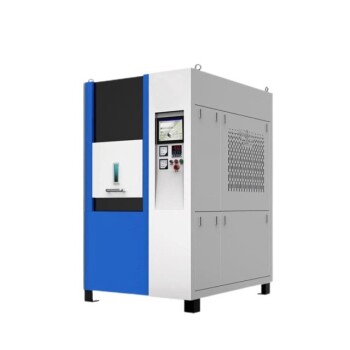
- Spark Plasma Sintering SPS Furnace
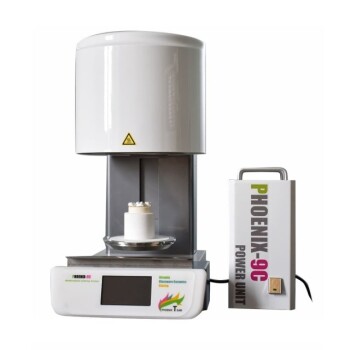
- High Temperature Muffle Oven Furnace for Laboratory Debinding and Pre Sintering
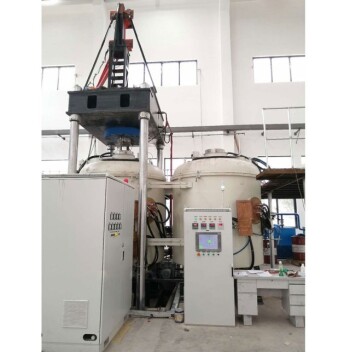
- 2200 ℃ Tungsten Vacuum Heat Treat and Sintering Furnace
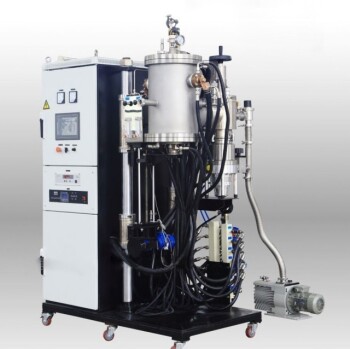
- Vacuum Heat Treat Sintering Furnace Molybdenum Wire Vacuum Sintering Furnace
- 2200 ℃ Graphite Vacuum Heat Treat Furnace
People Also Ask
- Why is it necessary to maintain a high vacuum environment during the SPS of SiC? Key to High-Density Ceramics
- How does the heating mechanism of Spark Plasma Sintering (SPS) function? Enhance TiC/SiC Composite Fabrication
- What are the technical advantages of using an SPS sintering furnace? Elevate Al2O3-TiC Material Performance
- What are the advantages of Spark Plasma Sintering (SPS)? Achieve Superior Microstructures
- What are the steps in the discharge plasma sintering process? Master Fast, High-Density Material Consolidation