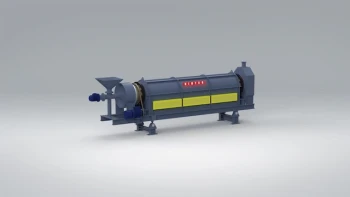
Industrial-grade high-temperature muffle furnaces are the primary thermal reactors used to transform raw apricot kernels into high-performance activated carbon. These furnaces provide a precisely controlled environment—often reaching up to 900°C—to facilitate pyrolysis, while a constant flow of inert gas (such as nitrogen) prevents the carbon from combusting. This combination ensures that volatile components are driven off, leaving behind a stable, highly porous carbon skeleton.
Core Takeaway: The muffle furnace serves as the engine for thermochemical conversion, providing the extreme heat and oxygen-free atmosphere required to reorganize biomass into a high-surface-area carbon matrix without losing the material to oxidation.
The Role of Precise Thermal Decomposition
Facilitating Pyrolysis and Carbonization
The muffle furnace provides the activation energy necessary for pyrolysis, the chemical decomposition of organic materials through heat. In apricot kernel processing, this involves heating the material—often impregnated with agents like potassium hydroxide (KOH)—to drive out non-carbon elements.
Volatilization of Non-Carbon Components
As the furnace reaches temperatures between 400°C and 900°C, it triggers the removal of volatile components such as moisture, gasses, and tars. This process is essential for stripping away the complex organic structure of the apricot kernel to reveal the foundational carbon atoms.
Regulating Pore Size Distribution
Precise temperature control within the furnace is the primary factor in determining the pore size distribution of the final product. Consistent heat ensures that the internal structure is etched uniformly, which directly dictates the adsorption performance and efficiency of the activated carbon.
The Critical Function of Inert Gas Flow
Preventing Oxidative Combustion
Without an inert gas flow, the high temperatures inside the furnace would cause the carbonized material to react with oxygen and burn into ash. Nitrogen flow creates an anaerobic environment, protecting the carbon skeleton from being consumed by flame during the high-heat phase.
Creating an Oxygen-Deficient Environment
The gas flow maintains a stable, oxygen-limited atmosphere within the furnace chamber. This environment allows the raw biomass to undergo "carbonization" (retaining carbon) rather than "incineration" (destroying carbon), which is vital for maximizing the yield of the final adsorbent.
Assisting in Dehydration and Degassing
The continuous flow of inert gas helps to sweep away the byproducts of decomposition, such as water vapor and displaced gasses. This ensures that the reactions within the muffle furnace proceed efficiently and that the carbon surface remains free of re-deposited impurities.
Understanding the Trade-offs and Pitfalls
Temperature Overshoot and Structural Collapse
While higher temperatures generally increase porosity, exceeding the optimal thermal threshold can lead to structural collapse of the carbon pores. If the muffle furnace is not calibrated correctly, the delicate internal architecture of the activated carbon may melt or shrink, significantly reducing its surface area.
Yield vs. Porosity Balance
There is an inherent trade-off between the duration of the heat treatment and the final carbon yield. Extended residence time in the muffle furnace will produce a more "active" carbon with more pores, but it also results in a lower total volume of finished material as more matter is volatilized.
Gas Flow Consistency
Inconsistent inert gas flow can lead to localized oxidation, where portions of the sample are lost to combustion while others remain under-processed. Maintaining a uniform, constant flow is just as critical as maintaining a uniform temperature for industrial-grade consistency.
How to Optimize Your Carbonization Process
Recommendations for Technical Success
Effective carbonization requires balancing chemical impregnation with the furnace's thermal profile to achieve the desired adsorption characteristics.
- If your primary focus is Maximum Surface Area: Utilize higher temperatures (near 900°C) with potassium hydroxide (KOH) impregnation to aggressively etch the carbon framework.
- If your primary focus is High Material Yield: Maintain lower carbonization temperatures (around 400°C–500°C) to preserve more of the carbon skeleton while removing only the most volatile components.
- If your primary focus is Pore Size Uniformity: Ensure the muffle furnace is programmed for a gradual "ramp-up" in temperature to allow for even degassing and dehydration across the entire sample.
By mastering the intersection of precise thermal control and atmospheric shielding, you can transform agricultural waste into a high-value industrial adsorbent.
Summary Table:
| Component | Primary Function | Impact on Quality |
|---|---|---|
| High Temperature | Facilitates pyrolysis & volatilization | Reorganizes biomass into a stable carbon skeleton. |
| Inert Gas Flow | Creates anaerobic/oxygen-free environment | Prevents oxidative combustion and protects carbon yield. |
| Thermal Control | Regulates pore size distribution | Dictates the final adsorption efficiency and surface area. |
| Gas Sweeping | Removes decomposition byproducts | Keeps the carbon surface free of re-deposited impurities. |
Elevate Your Material Research with KINTEK
Precision is the difference between high-quality activated carbon and wasted material. KINTEK specializes in high-performance laboratory equipment, providing a comprehensive range of high-temperature furnaces—including muffle, tube, rotary, vacuum, CVD, and atmosphere furnaces—engineered to meet the rigorous demands of carbonization and pyrolysis.
Whether you require precise atmosphere control for oxygen-sensitive processes or customizable heating profiles for uniform pore distribution, our expert team is ready to design a solution for your unique laboratory needs.
Ready to optimize your carbonization yield? Contact KINTEK today to find the perfect furnace for your application!
References
- Tabinda Ahmad, Amel Y. Ahmed. Utilization of Multivariate Optimization for Preconcentration and Determination of Lead in Different Water and Food Samples Using Functionalized Activated Carbon. DOI: 10.3390/w15213750
This article is also based on technical information from Kintek Furnace Knowledge Base .
Related Products
- 1700℃ High Temperature Muffle Oven Furnace for Laboratory
- High Temperature Muffle Oven Furnace for Laboratory Debinding and Pre Sintering
- 1800℃ High Temperature Muffle Oven Furnace for Laboratory
- 1200℃ Muffle Oven Furnace for Laboratory
- 1400℃ Muffle Oven Furnace for Laboratory
People Also Ask
- What is the primary function of a high-temperature laboratory muffle furnace in chemical synthesis? Achieve Precision.
- How does a high-temperature laboratory muffle furnace affect material properties? Transform Anodic Oxide Films Fast
- What role does a muffle furnace play in BCZY712 electrolyte powder production? Achieve Perfect Phase Purity
- What role does a muffle furnace play in converting rice husk to ash? Achieve High-Purity Biogenic Silica Isolation
- What is the role of a high-temperature muffle furnace in guava leaf carbonization? Master Precise Pyrolysis Control