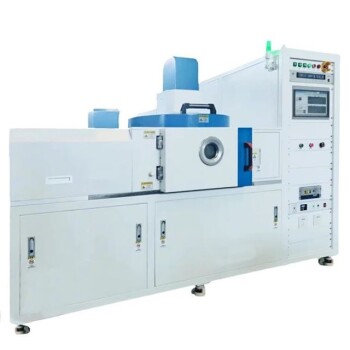
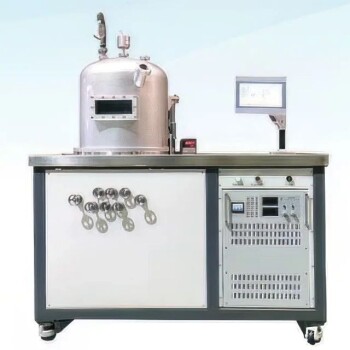
The Chemical Vapor Deposition (CVD) system serves as the foundational reactor for synthesizing the high-quality carbon nanotubes (CNTs) required to form high-performance fibers. By controlling the thermal decomposition of precursor gases on a substrate, the CVD system facilitates the growth of vertically aligned carbon nanotube (VACNT) arrays. These arrays are the essential "raw material" whose purity and alignment directly determine the electrical and mechanical properties of the final spun fiber.
The CVD system is a precision instrument that transforms gaseous precursors into solid, directionally grown nanotubes by regulating temperature fields and chemical atmospheres. Its primary role is to ensure the spinnability and structural integrity of the CNTs, which serves as the critical prerequisite for fiber fabrication.
The CVD System as a Core Synthesis Reactor
Thermal Decomposition of Precursors
The CVD system provides the high-temperature environment—typically between 700 °C and 900 °C—necessary to break down carbon-rich gases like methane or acetylene. This thermal energy allows carbon atoms to dissociate from the gas phase and begin the transition into a solid state.
Controlled Directional Growth
By utilizing a silicon substrate and specific catalysts, the system promotes the growth of multi-walled carbon nanotubes in a vertical orientation. This directional growth is vital for creating "forests" or arrays that can be effectively harvested for fiber production.
Atmosphere and Gas Regulation
The system manages a complex mix of gases, including hydrogen and ammonia, to maintain the ideal reaction chemistry. This precise control over the atmosphere prevents unwanted soot formation and ensures the nanotubes reach the necessary length and purity.
Influencing Fiber Quality and Processability
Ensuring Dry-Spinnability
For CNTs to be converted into fibers, they must be spinnable, meaning they can be pulled from the array in a continuous web. The CVD system achieves this by fine-tuning the morphology and density of the nanotubes through precise temperature field management.
Determining Electrical Properties
The crystallinity and graphitization degree of the nanotubes are direct results of the CVD process conditions. High-quality growth leads to nanotubes with fewer structural defects, which translates to superior electrical conductivity in the resulting fibers.
Facilitating Nitrogen Doping
The CVD environment allows for the functionalization of nanotubes during the growth phase, such as nitrogen doping. By regulating the flow of nitrogen-containing precursors, the system can alter the distribution of pyridinic and pyrrolic nitrogen sites, tailoring the fiber's chemical reactivity.
Understanding the Trade-offs
Temperature vs. Catalyst Stability
While higher temperatures can increase the diffusion rate of carbon atoms, they also risk the agglomeration or deactivation of catalyst particles. Finding the "sweet spot" is critical, as overheating can lead to thicker, less flexible nanotubes that are difficult to spin into high-strength fibers.
Growth Rate vs. Structural Purity
Rapid growth cycles may increase yield but often result in a higher concentration of amorphous carbon and structural defects. These impurities can act as stress concentrators, significantly reducing the mechanical toughness of the final fiber.
System Complexity and Scalability
Maintaining a perfectly uniform temperature field across a large substrate is technically challenging. Inconsistencies in the CVD environment lead to non-uniform nanotube heights, which creates weak points during the fiber spinning process.
Applying CVD Capabilities to Your Project
Recommendations for Research and Production
- If your primary focus is maximizing electrical conductivity: Prioritize a CVD setup with a high-temperature horizontal tube furnace to maximize the graphitization degree and minimize structural defects.
- If your primary focus is high-volume fiber spinning: Focus on optimizing the gas flow rates and catalyst density to ensure the growth of tall, highly aligned VACNT arrays that support continuous dry spinning.
- If your primary focus is aerospace or thermal management: Utilize the CVD system to deposit functional coatings like silicon carbide (SiC) or pyrolytic carbon onto existing fibers to enhance oxidation resistance and fill surface micro-cracks.
By mastering the precise thermal and chemical variables within the CVD system, you can engineer carbon nanotube fibers that meet the rigorous demands of next-generation material science.
Summary Table:
| CVD Process Variable | Role in Fiber Preparation | Key Outcome |
|---|---|---|
| Thermal Decomposition | Breaks down precursors (700-900°C) | Dissociates carbon atoms for growth |
| Directional Growth | Facilitates VACNT array formation | Essential for dry-spinning fibers |
| Gas Regulation | Manages H2, NH3, and carbon source | Prevents soot and ensures purity |
| Temperature Field | Regulates crystallinity/graphitization | Determines electrical conductivity |
Precision Control for Advanced Carbon Nanotube Synthesis
Unlock the full potential of your CNT fiber research with KINTEK’s specialized high-temperature furnace solutions. As experts in laboratory equipment, KINTEK offers a comprehensive range of CVD, tube, vacuum, and atmosphere furnaces—all fully customizable to meet the rigorous demands of vertically aligned nanotube growth. Whether your goal is maximizing electrical conductivity or ensuring continuous dry-spinning, our systems provide the uniform temperature fields and atmosphere stability essential for high-performance materials.
Consult with a KINTEK specialist today to design a system tailored to your unique research goals!
References
- Sunwoo Lee, Young-Taek Lim. Near-zero temperature coefficient of resistance of hybrid resistor fabricated with carbon nanotube and metal alloy. DOI: 10.1038/s41598-019-44182-7
This article is also based on technical information from Kintek Furnace Knowledge Base .
Related Products
- 915MHz MPCVD Diamond Machine Microwave Plasma Chemical Vapor Deposition System Reactor
- Custom Made Versatile CVD Tube Furnace Chemical Vapor Deposition CVD Equipment Machine
- RF PECVD System Radio Frequency Plasma Enhanced Chemical Vapor Deposition
- MPCVD Machine System Reactor Bell-jar Resonator for Lab and Diamond Growth
- HFCVD Machine System Equipment for Drawing Die Nano Diamond Coating
People Also Ask
- What factors influence the quality of diamond deposition in the MPCVD method? Master the Critical Parameters for High-Quality Diamond Growth
- What is the MPCVD method and why is it considered effective for diamond deposition? Superior Purity & High Growth Rates
- What is the purpose of a microwave plasma chemical vapor deposition system? Grow High-Purity Diamonds and Advanced Materials
- What are some key features and benefits of the microwave plasma chemical vapor deposition system? Achieve Unmatched Material Synthesis
- What is the basic principle of operation for the microwave plasma chemical vapor deposition system? Unlock High-Purity Material Growth