Reducing the particle size of raw materials is the single most powerful kinetic lever you can pull when performing thermal processing in a high-temperature laboratory furnace. The densification and neck-growth rates during sintering do not just increase—they scale inversely with particle radius, typically following a dependence of (1/a^3) for lattice diffusion and (1/a^4) for grain-boundary diffusion. This means a ten-fold reduction in particle diameter can slash the required sintering temperature by several hundred degrees Celsius, or collapse the isothermal hold time needed to reach full density by orders of magnitude.
The core kinetic effect is a massive acceleration of mass transport driven by shorter diffusion distances and a geometrically amplified capillary pressure. Finer particles translate directly into faster densification at lower temperatures or shorter soak times — but this benefit comes with critical trade-offs in powder handling, green-body shrinkage, and contamination risk that must be managed through precise furnace control.
The Kinetic Scaling Laws Behind the Acceleration
To understand the practical impact on furnace operation, you must first grasp the fundamental scaling relationships.
The Inverse Power-Law Dependence
All solid-state sintering kinetics are governed by diffusion distances that scale with particle size. When the dominant mechanism is lattice (volume) diffusion, the densification rate (\dot{\varepsilon}) scales as (\dot{\varepsilon} \propto 1/a^3). For grain-boundary diffusion, the sensitivity is even stronger, following (\dot{\varepsilon} \propto 1/a^4).
This is not a linear effect. Halving the particle radius can increase the densification rate by a factor of 8 (for (m=3)) or 16 (for (m=4)).
Herring’s Scaling Law and Isothermal Time
Herring’s scaling law translates this into a practical timeline: the time (t) required to achieve a given degree of neck growth or densification scales with particle diameter (D) as (t \propto D^m), where (m) is 3 or 4 depending on the diffusion mechanism.
Thus, moving from a 10 µm powder to a 1 µm powder can reduce the necessary soak time by a factor of 1,000 to 10,000 — turning hours into minutes.
The Thermodynamic Driving Force Amplifier
At the nanoscale, the Gibbs‑Thomson effect magnifies the driving force. The vapor pressure and vacancy concentration at a curved surface increase exponentially as particle radius decreases. This creates an overwhelming thermodynamic push toward neck growth and pore elimination, far beyond what capillary pressure alone would suggest for coarser powders.
How Particle Size Reduction Transforms Thermal Processing
These kinetic shifts directly change how you operate a high-temperature laboratory furnace.
Dramatically Lower Sintering Temperatures
The most immediately valuable consequence is the ability to achieve full density at significantly reduced peak temperatures. For example:
- Zinc oxide (ZnO): Reducing particle size from a few microns to the nanoscale lowers the required sintering temperature from approximately 1200 °C to around 750 °C.
- Yttria‑stabilized zirconia (YSZ): Nanocrystalline YSZ begins sintering approximately 200 °C lower than its microcrystalline counterpart.
- Titania (TiO₂): Nanosized titania can fully densify at temperatures up to 400 °C lower than conventional powders.
Truncated Dwell Times and Faster Cycles
When you cannot or do not wish to lower the temperature, the same kinetics allow you to slash the isothermal hold time. This shortens the overall furnace cycle, boosts throughput, and reduces energy consumption per batch.
Preserved Microstructure Through Limited Grain Growth
Grain coarsening is thermally activated and time-dependent. By processing at a lower temperature or for a shorter time, you keep the grain size small — which is often critical for the mechanical, optical, or electrical properties of the final ceramic or metal part.
Practical Impact on Furnace Operation
Translating the powder choice into a successful firing protocol requires aligning the furnace’s capabilities with the material’s behavior.
Adjusting Heating Profiles and Ramp Rates
Because nanosized powders can begin sintering at far lower onset temperatures, the traditional ramp‑and‑hold programs used for coarse powders become inadequate. You must design a multi‑step profile that initiates densification early, avoids runaway exotherms, and holds at a reduced peak temperature.
Exploiting Atmospheric Control
The massive specific surface area of fine powders makes them highly reactive — not only for sintering but also for unwanted oxidation, reduction, or contamination. Furnaces equipped with vacuum, inert gas, or reducing‑atmosphere capabilities become essential to protect powder surfaces and achieve repeatable results.
Accommodating Enhanced Shrinkage
A compact made from fine, high‑surface‑area particles will have a lower green density and, consequently, exhibit greater total volumetric shrinkage upon firing. This must be accounted for in component design and tooling to avoid dimensional inaccuracies or cracking.
Understanding the Trade‑offs
Despite the dramatic kinetic advantages, using finer powders introduces challenges that, if ignored, will undo the benefits.
Agglomeration Negates the Size Effect
The kinetic scaling laws assume a uniform, well‑dispersed particle assembly. If nanoparticles form hard agglomerates that behave like larger particles, the effective diffusion distance becomes the agglomerate size — erasing the intended acceleration. Proper de‑agglomeration and dispersion become non‑negotiable steps before thermal processing.
Handling and Health Risks
Nanopowders pose inhalation hazards and can be pyrophoric. Laboratory furnaces must be integrated into a safety protocol that includes sealed handling, fume extraction, and protective equipment.
Contamination and Surface Impurities
A high surface‑area‑to‑volume ratio makes the powder extremely sensitive to adsorbed moisture and organic contaminants. Without careful atmosphere control and clean handling, these impurities can lead to bloating, discoloration, or incomplete densification during firing.
Diminishing Returns Below a Critical Size
Below approximately 20 nm, the melting point depression becomes so pronounced that the sintering window can collapse entirely into a narrow temperature range where grain growth overtakes densification. Ultra‑fine particles demand extraordinarily precise temperature uniformity and control.
Making the Right Choice for Your Goal
The optimal particle size depends entirely on what you need to achieve with your high‑temperature furnace process.
- If your primary focus is maximizing densification rate: Select the finest, well‑dispersed powder you can reliably handle. Even a reduction from 10 µm to 1 µm can boost the sintering rate by an order of magnitude.
- If your primary focus is lowering the sintering temperature to protect volatile components: Use nanopowders with a nominal size below 100 nm. This can drop the peak temperature by 200–400 °C for many oxide ceramics, preventing thermal decomposition.
- If your primary focus is minimizing grain growth to preserve nanostructured properties: Pair a fine starting powder with a precisely controlled, time‑truncated heating profile at a reduced soak temperature. The kinetic acceleration lets you achieve density before significant coarsening can occur.
- If your primary focus is reliable, batch‑to‑batch consistency: Avoid pushing the lower size limit if agglomeration control is questionable. A slightly coarser, but well‑dispersed powder often out‑performs a nominally finer but agglomerated one.
Leveraging the kinetic power of reduced particle size transforms your high‑temperature furnace from a simple heating device into a precision tool — use it wisely, and you control both density and microstructure with a degree of freedom that coarse powders can never offer.
Summary Table:
| Parameter / Mechanism | Coarse Powder (Micro-scale) | Fine / Nanopowder | Practical Furnace Impact |
|---|---|---|---|
| Diffusion Rate (Kinetics) | Baseline rate ($1/a^3$ or $1/a^4$) | Up to $10,000\times$ faster mass transport | Dramatically truncates required soak/dwell times |
| Sintering Onset Temperature | High baseline (e.g., 1200°C for ZnO) | Reduced by 200°C to 400°C | Saves energy and reduces thermal stress on equipment |
| Thermodynamic Driving Force | Standard capillary pressure | Amplified Gibbs-Thomson effect | Rapid neck growth and aggressive early densification |
| Key Operational Risks | Minimal agglomeration impact | High shrinkage, sensitivity to impurities | Requires precise ramp rates and clean atmospheric control |
Maximize Your Material Densification with Precision Furnace Technology
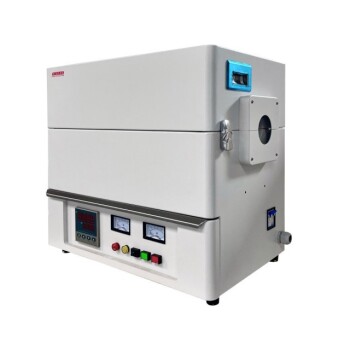
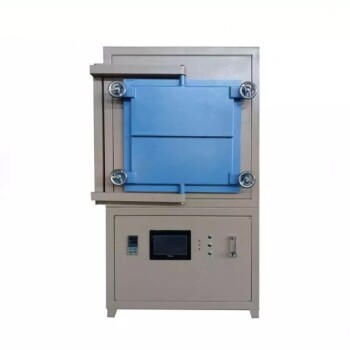
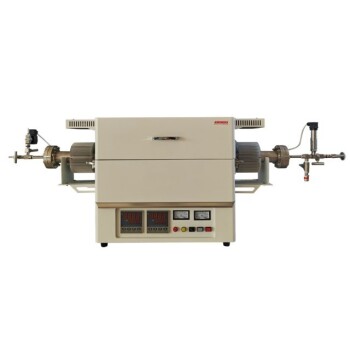
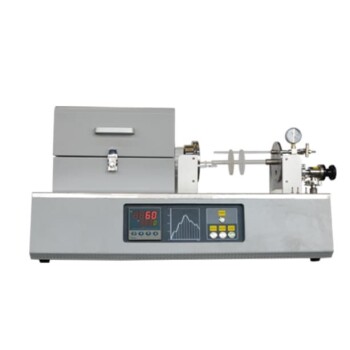
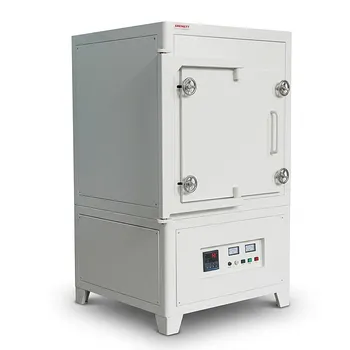
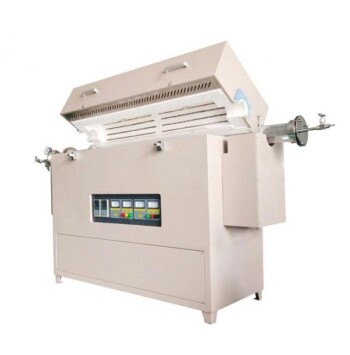
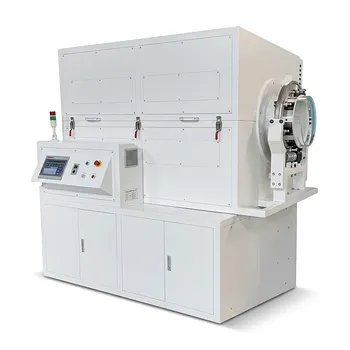
Handling fine powders and fast sintering kinetics requires exceptional thermal uniformity and precise atmosphere control. KINTEK specializes in advanced laboratory equipment and consumables, offering a comprehensive range of high-temperature furnaces—including muffle, tube, rotary, vacuum, atmosphere, CVD, and induction melting furnaces—all fully customizable to meet your unique research and production needs.
Whether you are lowering sintering temperatures for nanopowders or preventing uninhibited grain growth, our engineering experts are here to support your breakthroughs.
Contact KINTEK today to customize your high-temperature furnace solution!
Related Products
- 1400℃ High Temperature Laboratory Tube Furnace with Alumina Tube
- 1700℃ High Temperature Laboratory Tube Furnace with Alumina Tube
- 1800℃ High Temperature Muffle Oven Furnace for Laboratory
- 1700℃ High Temperature Muffle Oven Furnace for Laboratory
- 1200℃ Muffle Oven Furnace for Laboratory
People Also Ask
- How does zone-melting in tube furnaces synthesize bismuth micro-wires? Master Single-Crystal Thermoelectric Growth
- How are high-temp tube furnaces used to measure diffusion coefficients per Fick's law? Master Precision Annealing
- How do high-temperature laboratory tube furnaces ensure environmental stability? Precision Thermal Reduction Tips
- How are high-temperature laboratory tube furnaces applied in long-term vacuum homogenization heat treatments for intermetallic samples?
- How are high-temperature tube furnaces applied in testing ceramic-supported alloy membranes? Insights