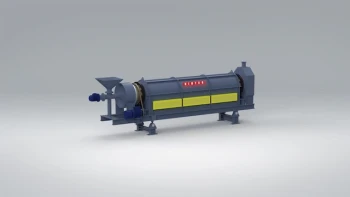
The tube furnace serves as a high-precision thermal reactor that facilitates the pyrolysis of pine cone biomass within a strictly controlled, oxygen-free environment. By maintaining a continuous flow of inert gas—typically nitrogen—it enables the thermal decomposition of organic matter, effectively removing volatile components and non-carbon elements to produce a carbon-rich intermediate. This primary carbonization stage is the critical first step in establishing the foundational pore structure required for subsequent chemical activation.
Core Takeaway: The tube furnace provides the essential inert atmosphere and precise temperature control needed to transform raw pine cone material into a stable, carbon-rich skeleton while preventing oxidative combustion.
Maintaining the Inert Atmosphere
Preventing Oxidative Ablation
The primary role of the tube furnace is to provide an oxygen-free environment through the introduction of high-purity nitrogen or argon. Without this protective atmosphere, the pine cone material would undergo oxidative combustion (burning) at high temperatures rather than carbonization.
Facilitating Gaseous Removal
A continuous flow of inert gas does more than just exclude oxygen; it also carries away the volatile organic compounds released during heating. This prevents unwanted secondary reactions between the released gases and the solid carbon, ensuring a cleaner carbonization process.
Driving Thermal and Chemical Transformation
Execution of Pyrolysis
Inside the furnace, the pine cone biomass undergoes pyrolysis, a thermochemical decomposition process. The furnace provides the high temperatures—often around 773 K (500 °C) to 800 °C—necessary to break down complex organic polymers like cellulose and lignin.
Devolatilization and Polycondensation
The heat within the tube furnace triggers devolatilization, where non-carbon elements are expelled. Simultaneously, thermal polycondensation reactions occur, which help organize the remaining carbon atoms into a more stable, conductive skeleton.
Establishing the Structural Foundation
Precursor for Pore Development
While the final high-surface-area pores are often created during a later activation stage, the tube furnace establishes the initial pore structure. The removal of volatile matter leaves behind a "skeletal" framework that dictates how effective the subsequent chemical etching will be.
Ensuring Structural Stability
Precise control over the heating rate (e.g., 5 °C to 80 °C per minute) and the duration of the constant temperature phase is vital. The tube furnace ensures uniform heat distribution, which prevents the carbon structure from collapsing and maintains the structural stability of the pine cone precursors.
Understanding the Trade-offs
Heating Rate vs. Pore Integrity
While faster heating rates can increase throughput, they may cause rapid gas evolution that can physically damage the delicate carbon framework. Conversely, excessively slow heating may lead to a dense carbon structure that is difficult to activate later.
Gas Flow Management
Insufficient nitrogen flow can allow volatile "tar" to settle back onto the carbon surface, clogging the nascent pores. However, an excessively high flow rate can lead to unnecessary cooling of the furnace tube, requiring more energy to maintain the target carbonization temperature.
How to Apply This to Your Project
Making the Right Choice for Your Goal
To achieve the best results when carbonizing pine cone biomass, your approach should vary based on your specific requirements:
- If your primary focus is high specific surface area: Prioritize a steady, moderate heating rate and a high nitrogen flow to ensure all volatiles are removed without collapsing the pore walls.
- If your primary focus is structural stability and yield: Focus on maintaining a strictly controlled peak temperature (around 500-600 °C) to maximize carbon retention while ensuring the material is fully devolatilized.
- If your primary focus is process efficiency: Utilize a horizontal tube furnace with programmable heating cycles to automate the transition from ramp-up to the isothermal soaking phase.
By precisely controlling the thermal and atmospheric conditions of the primary carbonization stage, the tube furnace ensures the raw pine cone is successfully converted into a high-quality carbon precursor ready for activation.
Summary Table:
| Process Stage | Core Function | Key Parameters |
|---|---|---|
| Inert Atmosphere | Prevents oxidation; removes volatile gases | Nitrogen/Argon flow |
| Pyrolysis | Thermal decomposition of organic matter | 500°C - 800°C |
| Structural Design | Establishes initial pore framework | Heating rate (5-80°C/min) |
| Devolatilization | Expels non-carbon elements for purity | Isothermal soaking time |
Elevate Your Materials Research with KINTEK
Achieving the perfect carbonized skeleton requires more than just heat; it requires absolute precision and atmospheric control. At KINTEK, we specialize in high-performance laboratory equipment, including customizable tube furnaces, muffle furnaces, and vacuum systems designed specifically for biomass pyrolysis and advanced materials science.
Why choose KINTEK?
- Precise Atmosphere Control: Ensure zero oxygen interference for clean carbonization.
- Customizable Thermal Profiles: Perfect your heating rates (5-80°C/min) and isothermal soaking stages.
- Comprehensive Range: From dental and dental furnaces to CVD, rotary, and induction melting systems, we cater to every high-temp need.
Whether you are developing activated carbon or exploring thin-film deposition, our expert team is ready to provide the right tools tailored to your unique research goals.
Contact KINTEK Today to find the ideal furnace solution for your laboratory!
References
- Saheed O. Sanni, Vusumzi Emmanuel Pakade. Removal of tetracycline from the aquatic environment using activated carbon: A comparative study of adsorption performance based on the activator agents. DOI: 10.1016/j.heliyon.2024.e34637
This article is also based on technical information from Kintek Furnace Knowledge Base .
Related Products
- Slide PECVD Tube Furnace with Liquid Gasifier PECVD Machine
- Vertical Laboratory Quartz Tube Furnace Tubular Furnace
- Laboratory Quartz Tube Furnace RTP Heating Tubular Furnace
- Custom Made Versatile CVD Tube Furnace Chemical Vapor Deposition CVD Equipment Machine
- Multi Heating Zones CVD Tube Furnace Machine for Chemical Vapor Deposition Equipment
People Also Ask
- What are the main advantages of PECVD tube furnaces compared to CVD tube furnaces? Lower Temp, Faster Deposition, and More
- What is plasma in the context of PECVD? Unlock Low-Temperature Thin Film Deposition
- What are the typical conditions for plasma-enhanced CVD processes? Achieve Low-Temperature Thin Film Deposition
- What plasma source is used in PE-CVD tube furnaces? Unlock Low-Temperature, High-Quality Deposition
- What are the advantages of using a tube furnace CVD system for Cu(111)/graphene? Superior Scalability and Quality