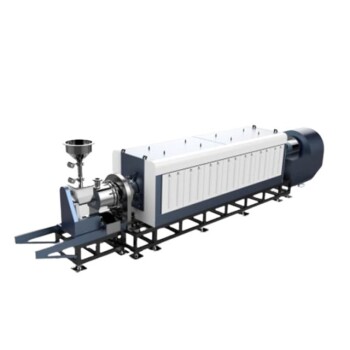
In the synthesis of biomass-derived catalysts, the high-temperature muffle furnace acts as the primary thermal processing unit for chemical transformation and purification. It provides a stable, controlled environment to remove organic matter through oxidative incineration and calcination. This process converts raw agricultural waste or precursors into high-purity ash, metal oxides, or stabilized biochars that serve as the active sites for catalytic reactions.
The muffle furnace is indispensable for transforming inert biomass into active catalysts by facilitating the complete removal of organic fractions and the thermal activation of inorganic precursors. It ensures the formation of porous, stable, and chemically active structures necessary for industrial applications like pyrolysis, transesterification, and bio-oil upgrading.
Fundamental Thermochemical Transformations
Organic Removal and Ashing
The furnace provides the high-intensity thermal energy required for the complete combustion of biomass powders, such as rice husk or plant waste. By heating materials to temperatures often exceeding 1000 K, the furnace facilitates the removal of volatile organic compounds and lignocellulosic tissues. This results in high-purity ash that serves as a low-cost, effective catalyst.
Activation of Catalytic Sites
Beyond simple cleaning, the muffle furnace drives the chemical decomposition of inorganic precursors into active catalytic phases. For instance, it provides the heat necessary to convert calcium carbonate into highly active calcium oxide (CaO) or transform potassium elements into potassium oxide (K2O) crystals. These metal oxides are critical for creating the alkaline environment needed for reactions like transesterification.
Torrefaction and Biochar Production
In lower temperature ranges (200°C to 300°C), the furnace is used for torrefaction to induce dehydration and decarboxylation. This process partially degrades complex structures to create torrefied biochar with a high fixed carbon content. This biochar can then serve as a robust support material for further catalyst loading.
Structural Engineering and Refinement
Developing Porosity and Surface Area
The furnace is used to remove organic templates (such as TPAOH or F127) that are trapped within zeolite or mesoporous frameworks during synthesis. By precisely controlling the air atmosphere and temperature, the furnace burns off these templates to release interconnected pore channels. This step is vital for ensuring that the final catalyst has a high surface area for molecular interaction.
Stabilizing Crystalline Structures
High-temperature environments are required to stabilize the skeletal structure of composite catalytic materials. The furnace allows for the controlled growth of crystalline phases, ensuring the catalyst remains stable under the harsh conditions of industrial reactors. This thermal treatment prevents the structure from collapsing during repeated usage cycles.
Pretreatment and Regeneration
A muffle furnace is frequently employed to pre-treat raw bottom ash by removing unburned carbon residues that interfere with activity. Furthermore, it is the primary tool for catalyst regeneration, where it is used to burn off accumulated coke or impurities. This process clears blocked pores and re-exposes contaminated active sites, extending the functional life of the catalyst.
Understanding the Trade-offs
The Risk of Sintering
While high temperatures are necessary for activation, excessive heat can lead to sintering, where active particles fuse together. This reduces the total active surface area and can significantly diminish the catalyst's effectiveness. Finding the precise "holding temperature" is a critical balance between complete activation and structural degradation.
Energy Intensity vs. Purity
Achieving high-purity ash or complete oxide conversion requires maintaining high temperatures for extended periods, often several hours. This makes the preparation phase energy-intensive, which can impact the overall economic profile of producing "low-cost" biomass catalysts. Researchers must optimize the duration to ensure sufficient purity without unnecessary energy expenditure.
Atmospheric Influence
The presence or absence of oxygen in the furnace chamber fundamentally changes the outcome. While an oxidative atmosphere is required for ashing and removing organic templates, it may be undesirable for certain carbon-based supports that require inert conditions. Users must ensure the furnace atmosphere is compatible with the specific chemical goals of the catalyst design.
Optimizing Furnace Use for Catalyst Preparation
How to Apply This to Your Project
To achieve the best results when preparing biomass-derived catalysts, tailor your furnace settings to the specific chemical transformation required by your target reaction.
- If your primary focus is Maximum Surface Area: Use a precise heating ramp (e.g., 1–5°C/min) to remove organic templates slowly, preventing the collapse of the internal pore framework.
- If your primary focus is Producing Solid Base Catalysts: Maintain temperatures between 700°C and 900°C to ensure the complete conversion of carbonates into highly active metal oxides like CaO.
- If your primary focus is Catalyst Reuse: Utilize a regeneration burn at approximately 550°C to clear carbonaceous coke without inducing thermal sintering of the active sites.
By mastering the thermal environment of the muffle furnace, you can effectively transform common agricultural waste into a high-performance, sustainable catalytic tool.
Summary Table:
| Process | Key Catalytic Outcome | Typical Thermal Range |
|---|---|---|
| Ashing / Calcination | Conversion to active metal oxides (e.g., CaO, K2O) | High (>700°C) |
| Torrefaction | Creation of carbon-rich biochar supports | Low (200°C - 300°C) |
| Template Removal | Development of porous, high-surface-area structures | Moderate (400°C - 600°C) |
| Regeneration | Removal of coke and recovery of active sites | Moderate (~550°C) |
| Stabilization | Formation of stable crystalline phases | Variable (High) |
Elevate Your Catalyst Synthesis with KINTEK Precision
Achieving the perfect balance between activation and structural integrity requires precise thermal control. KINTEK specializes in high-performance laboratory equipment, offering a comprehensive range of muffle, tube, rotary, vacuum, and CVD furnaces tailored for biomass transformation and advanced material research.
Whether you are scaling up biochar production or engineering mesoporous catalysts, our customizable high-temperature solutions ensure uniform heating and atmospheric purity. Contact KINTEK today to discover how our expertise can optimize your lab's efficiency and catalyst yield!
References
- Wusana Agung Wibowo, Arief Budiman. Modified Koufopanos' Mechanism in the Kinetics of in-situ Catalytic Pyrolysis of Co-pelletized Rice Husks and Ash. DOI: 10.3311/ppch.36920
This article is also based on technical information from Kintek Furnace Knowledge Base .
Related Products
- 1700℃ High Temperature Muffle Oven Furnace for Laboratory
- 1800℃ High Temperature Muffle Oven Furnace for Laboratory
- 1200℃ Muffle Oven Furnace for Laboratory
- 1400℃ Muffle Oven Furnace for Laboratory
- High Temperature Muffle Oven Furnace for Laboratory Debinding and Pre Sintering
People Also Ask
- What is the primary function of a high-temperature laboratory muffle furnace in chemical synthesis? Achieve Precision.
- How does a high-temperature laboratory muffle furnace affect material properties? Transform Anodic Oxide Films Fast
- What role does a muffle furnace play in BCZY712 electrolyte powder production? Achieve Perfect Phase Purity
- What role does a muffle furnace play in converting rice husk to ash? Achieve High-Purity Biogenic Silica Isolation
- What role does a muffle furnace play in sintering photocathodes? Enhance Electrode Conductivity & Catalytic Activity