
A vacuum tube furnace provides three critical conditions for copper-based brazing: a high-precision thermal environment, an oxygen-free atmosphere, and a programmable heating and cooling cycle. These synchronized conditions allow the copper filler metal to melt, flow, and bond with the substrate without the interference of oxidation or the need for corrosive chemical fluxes.
Core Takeaway: The vacuum tube furnace acts as a controlled reaction chamber that eliminates oxygen and maintains extreme temperature uniformity. This ensures that the copper-based filler metal achieves perfect wetting and atomic diffusion, resulting in high-strength, leak-free joints suitable for critical industrial applications.
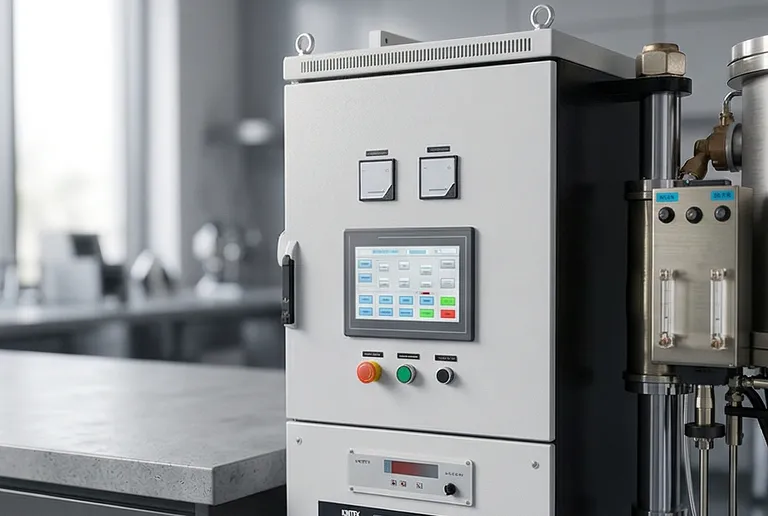
Precision Thermal Management
High-Temperature Stability and Control
The furnace provides a precisely controlled high-temperature environment, typically ranging from 680°C to 1150°C depending on the specific filler metal.
This environment must exceed the liquidus temperature of the brazing material to ensure it flows correctly into the joint.
Temperature Uniformity
Advanced systems offer precision temperature uniformity, often within ±5°C, managed by PLC-controlled heating elements.
Uniform distribution is vital to prevent thermal distortion in complex or thin-walled assemblies, ensuring that all parts of the joint reach the reactive state simultaneously.
Programmable Heating and Cooling Cycles
Programmable controls allow for specific phases of heating, insulation (holding), and cooling.
Holding the parts at the brazing temperature for approximately 10 minutes facilitates the necessary interfacial reactions before a controlled descent to the solidus temperature stabilizes the joint.
Atmosphere and Oxidation Control
Elimination of Oxygen
The furnace creates a high-vacuum environment, often reaching levels of ≤ 5∙10⁻⁵ mbar, to remove air from the chamber.
By eliminating oxygen, the system prevents the formation of surface oxides on the copper base metal, which would otherwise block the filler metal from bonding.
Flux-Free Joining
Because the vacuum environment prevents oxidation naturally, the process does not require chemical fluxes.
This results in exceptionally clean joints without the risk of porosity or corrosion caused by flux residues, which is essential for high-reliability sectors like aerospace.
Inert Gas Protection
Some processes utilize inert gas protection, such as argon, as an alternative or supplement to a pure vacuum.
This controlled atmosphere protects both the copper filler and the steel substrate from high-temperature degradation while maintaining the purity of the metallurgical reaction.
Facilitating Metallurgical Integrity
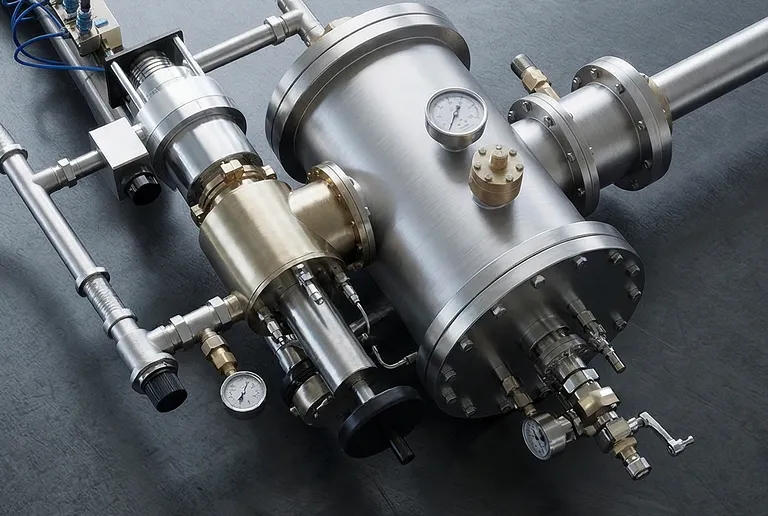
Atomic Diffusion and Interfacial Reactions
The vacuum furnace provides the kinetic energy required for atomic diffusion between the filler and the base metal.
This process ensures that the filler metal doesn't just sit on the surface but creates a permanent metallurgical bond with the substrate.
Enhanced Wetting and Flow
Under vacuum conditions, the surface tension of the molten copper filler is reduced, improving its wetting quality.
This allows the material to penetrate deep into complex joints through capillary action, ensuring a leak-free seal in intricate assemblies.
Understanding the Trade-offs
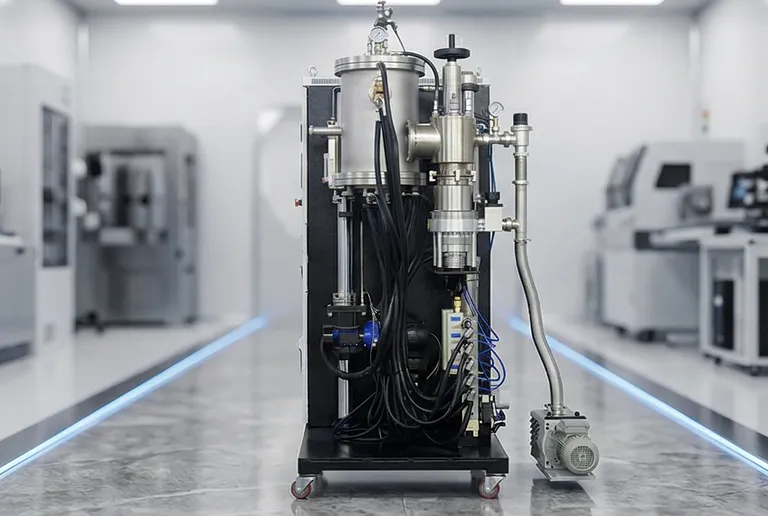
Thermal Distortion and Cycle Times
Rapid heating of thin-walled components can lead to permanent warping or structural weakening.
While vacuum brazing produces the highest quality joints, the slow cooling cycles required to maintain joint integrity can limit overall production throughput compared to atmospheric methods.
Material Volatility
High-vacuum environments can cause certain alloying elements with high vapor pressures (like zinc) to evaporate or "boil off."
Engineers must carefully match the vacuum level and temperature to the specific chemistry of the copper-based filler to avoid changing the alloy's properties during the cycle.
Applying This to Your Project
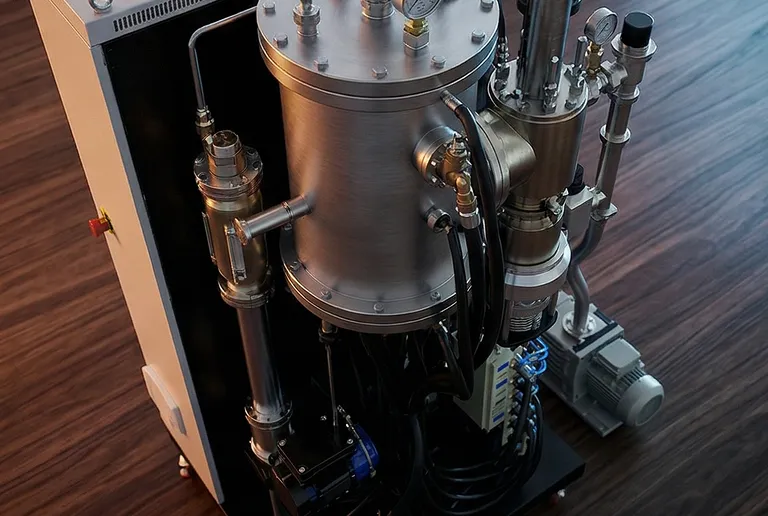
When selecting a vacuum tube furnace for copper brazing, your choice should be driven by the complexity and performance requirements of your final assembly.
- If your primary focus is aerospace or medical components: Prioritize high-vacuum levels (≤ 5∙10⁻⁵ mbar) to ensure flux-free, high-purity joints with zero porosity.
- If your primary focus is high-volume steel-to-copper joining: Use a furnace with programmable PLC controls to synchronize the brazing process with quenching and hardening cycles for maximum efficiency.
- If your primary focus is delicate, thin-walled assemblies: Look for systems offering load-sensitive heating rates and precision temperature uniformity of ±5°C to prevent thermal distortion.
By mastering these core environmental conditions, you can produce joints that meet the most rigorous mechanical and vacuum-tightness standards.
Summary Table:
| Core Condition | Parameter Specification | Impact on Brazing Process |
|---|---|---|
| Temperature Range | 680°C to 1150°C | Exceeds liquidus point for optimal filler flow |
| Vacuum Level | ≤ 5∙10⁻⁵ mbar | Eliminates oxidation and removes need for flux |
| Thermal Uniformity | ±5°C | Prevents thermal distortion in complex parts |
| Atmosphere Control | High Vacuum / Inert Gas | Ensures clean, leak-free, and high-purity joints |
| Process Control | Programmable PLC Cycles | Manages diffusion and cooling for joint integrity |
Elevate Your Brazing Precision with KINTEK
Achieve superior metallurgical integrity and flux-free joints with KINTEK’s industry-leading thermal solutions. Whether you are in aerospace, medical manufacturing, or advanced research, our customizable high-temperature furnaces are engineered to meet the most rigorous standards.
Our Comprehensive Range Includes:
- Vacuum & Tube Furnaces (Optimized for brazing and CVD)
- Muffle & Atmosphere Furnaces
- Rotary & Induction Melting Furnaces
- Specialized Dental & Laboratory High-Temp Systems
Don't compromise on joint strength or material purity. Contact our technical experts today to design a furnace solution tailored to your unique copper-based brazing requirements and laboratory needs.
References
- A. J. Sulaiman H., Tadashi Ariga. Effect of copper based filler composition on the strength of brazed joint. DOI: 10.15282/jmes.13.2.2019.22.0419
This article is also based on technical information from Kintek Furnace Knowledge Base .
Related Products
- Vacuum Hot Press Furnace Machine Heated Vacuum Press Tube Furnace
- Vacuum Sealed Continuous Working Rotary Tube Furnace Rotating Tube Furnace
- High Pressure Laboratory Vacuum Tube Furnace
- Laboratory Vacuum Tilt Rotary Tube Furnace Rotating Tube Furnace
- Magnesium Extraction and Purification Condensing Tube Furnace
People Also Ask
- Why use Vacuum Hot Press (VHP) for ZnS Ceramics? Achieve Superior IR Transparency and Mechanical Strength
- What safety features are incorporated in vacuum hot press furnaces? Ensure Operator and Equipment Protection
- What are the benefits of the vacuum environment system in a vacuum hot press furnace? Unlock High-Density Sintering
- How does a vacuum hot press furnace promote densification in the manufacturing of graphite flake/copper composites? Achieve Superior Composite Materials
- Which process parameters must be optimized for specific materials in a vacuum hot press furnace? Achieve Optimal Density and Microstructure



















