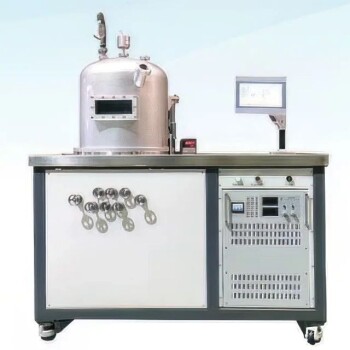
The primary temperature advantage of Cathodic Arc Deposition (CAD) is its ability to operate effectively within a significantly lower range of 200 °C to 300 °C. Unlike traditional Chemical Vapor Deposition (CVD), which generally requires much higher thermal inputs, CAD allows for the deposition of high-performance films without subjecting the substrate to extreme heat.
By maintaining a processing environment between 200 and 300 °C, CAD effectively decouples surface hardening from bulk heating. This ensures that the application of a wear-resistant coating does not come at the cost of degrading the underlying material's structural integrity.
The Critical Importance of Low-Temperature Processing
The ability to coat materials at lower temperatures is not merely a matter of energy efficiency; it is often a strict metallurgical requirement.
Preserving Microstructural Integrity
Many high-performance engineering materials, such as Austempered Ductile Iron (ADI), rely on a specific microstructure to deliver their mechanical properties.
When these materials are exposed to the high temperatures typical of CVD, their microstructure can suffer from thermal degradation. This leads to a fundamental decline in the material's original strength and toughness.
Preventing Mechanical Property Loss
CAD avoids this degradation entirely. Because the process stays within the 200–300 °C window, the substrate remains stable.
For ADI specifically, this means the base material retains its ductility and fatigue strength. You get the benefit of the coating without "annealing out" the properties of the substrate.
Synergistic Performance
The result of this low-temperature approach is a composite system that functions better as a whole.
You achieve significant improvements in surface hardness and wear resistance via the CrAlSiN film. Simultaneously, you maintain the robust mechanical properties of the base material, creating a part that is both tough internally and hard externally.
Understanding the Trade-offs
While CAD offers superior temperature control, it is important to understand where traditional CVD fits into the engineering landscape to ensure you are making an objective comparison.
Where CVD Excels
CVD is often favored for its non-line of sight capabilities. It can coat internal surfaces and complex geometries that line-of-sight processes like CAD might miss.
Additionally, CVD is widely recognized for its versatility in depositing a broad range of materials (metals, ceramics, polymers) and its cost-effectiveness in mass production scenarios.
The Thermal Limitation
However, these benefits come with a thermal penalty. The high deposition rates and chemical reactions involved in CVD generally require heat levels that exceed the tempering limits of many substrates.
If your substrate cannot withstand these temperatures, the high purity and uniformity of a CVD coating are irrelevant because the part itself will be compromised.
Making the Right Choice for Your Goal
Selecting between CAD and CVD depends entirely on the thermal stability of your substrate and the geometry of your part.
- If your primary focus is preserving the mechanical properties of heat-sensitive substrates (like ADI): Prioritize Cathodic Arc Deposition (CAD) to ensure the coating improves surface hardness without degrading the core microstructure.
- If your primary focus is coating complex internal geometries or maximizing mass-production economy: Evaluate Chemical Vapor Deposition (CVD), but only if the substrate material can withstand the higher processing temperatures without compromising its integrity.
Ultimately, for temperature-sensitive applications requiring CrAlSiN films, CAD provides the necessary surface protection while respecting the metallurgical limits of the substrate.
Summary Table:
| Feature | Cathodic Arc Deposition (CAD) | Chemical Vapor Deposition (CVD) |
|---|---|---|
| Deposition Temp | Low (200 °C – 300 °C) | High (Typically > 600 °C) |
| Substrate Impact | Preserves microstructural integrity | Risk of thermal degradation/annealing |
| Surface Hardness | High (Excellent for CrAlSiN) | High (Uniform and pure) |
| Coating Type | Line-of-sight | Non-line-of-sight (Internal surfaces) |
| Best Use Case | Heat-sensitive materials like ADI | Complex geometries & mass production |
Maximize Material Performance with KINTEK
Don't compromise your substrate's structural integrity for surface hardness. KINTEK provides expert-driven solutions for precision coating and thermal processing. Backed by industry-leading R&D and manufacturing, we offer a comprehensive range of Muffle, Tube, Rotary, Vacuum, and CVD systems, all fully customizable to your specific engineering requirements.
Whether you are coating heat-sensitive ADI or complex industrial components, our team ensures you have the right equipment to achieve superior results.
Ready to optimize your deposition process?
References
- Cheng‐Hsun Hsu, Z. Chang. Improvement in Surface Hardness and Wear Resistance of ADI via Arc-Deposited CrAlSiN Multilayer Films. DOI: 10.3390/ma18092107
This article is also based on technical information from Kintek Furnace Knowledge Base .
Related Products
- HFCVD Machine System Equipment for Drawing Die Nano Diamond Coating
- Multi Heating Zones CVD Tube Furnace Machine for Chemical Vapor Deposition Equipment
- Custom Made Versatile CVD Tube Furnace Chemical Vapor Deposition CVD Equipment Machine
People Also Ask
- What is Hot-filament Chemical Vapor Deposition (HFCVD)? Achieve High-Quality Thin Films with Precision Control
- What are the equipment for chemical vapor deposition? A Guide to the 5 Essential Components
- What is the significance of the vacuum pressure control system in the CVD coating process for powders?
- What is the function of high-purity Argon (Ar) gas during CVD? Optimize Your Thin Film Uniformity and Purity
- What are the advantages of using Chemical Vapor Deposition (CVD) for coating turbine blades? Enhance Life & Performance