
At its core, maintaining a dental furnace involves a disciplined routine of cleaning, inspection, and calibration. The key practices include regularly cleaning the firing chamber and heating elements, checking all components for signs of wear and tear, performing periodic temperature calibrations, and immediately replacing any parts that are damaged or degraded.
The goal of furnace maintenance is not simply to prevent failure. It is to guarantee the precision and consistency of every restoration, protecting your quality of work and the longevity of your most critical equipment.
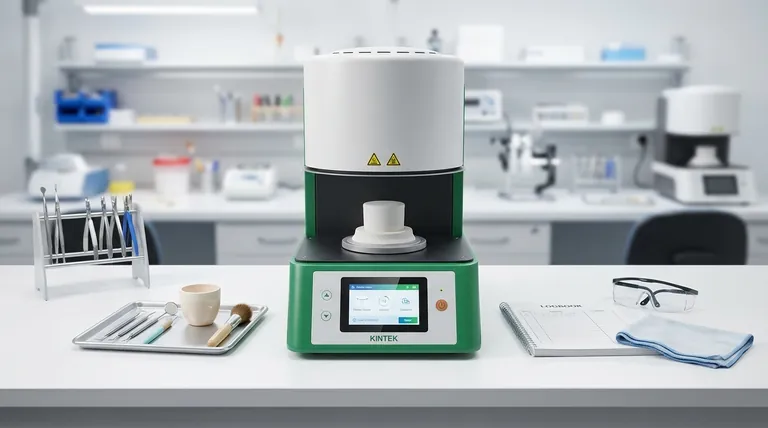
Why Consistent Maintenance is Non-Negotiable
A dental furnace is a precision instrument. Neglecting its upkeep introduces variables that directly compromise the quality of your restorations, leading to issues with fit, shade, and strength. A structured maintenance plan eliminates these variables.
The Impact on Sintering Quality
Dirty or corroded heating elements create inconsistent heat distribution within the chamber. This can result in incomplete or uneven sintering of zirconia and other materials, weakening the final restoration.
Contaminants left in the chamber from previous cycles can also become embedded in or stain new restorations during firing, leading to aesthetic failures and costly remakes.
Extending the Lifespan of Your Furnace
Routine maintenance allows you to catch minor issues before they become major failures. A frayed wire, a cracked insulator, or a degrading thermocouple are all small problems that can cascade into expensive repairs and significant downtime if ignored.
Proactive care extends the life of critical components like heating elements, which are often the most expensive parts to replace.
A Practical Maintenance Schedule
Adopt a schedule to ensure no task is overlooked. While your manufacturer's guidelines are the ultimate authority, this cadence serves as a reliable framework for most dental labs.
Daily Tasks (Less than 5 minutes)
Before starting the first cycle of the day, perform a quick visual inspection. Look for any debris in the firing chamber and ensure the door or lift mechanism operates smoothly. This simple check can prevent catastrophic failures.
Weekly Tasks (15-20 minutes)
Perform a more thorough cleaning of the furnace chamber. Use a soft, dedicated brush to gently sweep out any dust or particles. Avoid using compressed air, which can drive abrasive particles into the insulation or heating elements.
Run a designated cleaning or "purge" cycle if your furnace has one. This high-temperature cycle helps burn off trace contaminants that brushing alone cannot remove.
Monthly Tasks (30-45 minutes)
Conduct a detailed inspection of the key components. Look closely at the heating elements for any discoloration, sagging, or cracking. Check the thermocouple for signs of wear or fraying.
Examine the muffle (the insulation lining the chamber) for any cracks or crumbling. Small cracks can grow and severely impact the furnace's ability to hold a stable temperature.
Finally, keep a maintenance log. Documenting all cleaning, inspections, and any issues found is invaluable for troubleshooting and tracking the equipment's health over time.
Understanding the Risks and Trade-offs
Proper maintenance is a balance. Being too aggressive can cause damage, while being too passive leads to poor results.
The Risk of Improper Cleaning
Never use chemical cleaners or solvents inside the furnace chamber. These can release fumes that contaminate restorations and permanently damage the heating elements and insulation. Use only the tools and methods recommended by the manufacturer.
The Consequence of Skipped Calibration
A furnace that is off by even a few degrees can ruin a restoration. Materials like zirconia and lithium disilicate have very specific sintering and glazing temperature requirements. Inaccurate temperatures lead to incorrect shades, poor translucency, and reduced flexural strength. Temperature calibration should be performed quarterly or semi-annually, or anytime you notice inconsistent results.
When to Perform Service vs. When to Call a Technician
Daily and weekly cleaning are tasks every operator should perform. However, replacing components like heating elements or thermocouples, and performing temperature calibration, often requires a trained technician. Attempting complex repairs without proper knowledge can void your warranty and cause further damage.
Making the Right Choice for Your Goal
Your maintenance strategy should align with your lab's specific priorities.
- If your primary focus is clinical quality and consistency: Make temperature calibration and weekly purge cycles your highest priority.
- If your primary focus is maximizing equipment lifespan: Emphasize detailed monthly inspections and proactive replacement of worn components before they fail.
- If you are running a high-volume production lab: A daily cleaning routine and a meticulous maintenance log are essential to prevent cross-contamination and manage downtime.
Treating your furnace maintenance as an integral part of your quality control process is the best investment you can make in your lab's success.
Summary Table:
| Maintenance Task | Frequency | Key Actions |
|---|---|---|
| Daily Inspection | Daily | Visual check for debris, ensure door/lift mechanism smooth operation |
| Weekly Cleaning | Weekly | Thorough chamber cleaning with soft brush, run purge cycle if available |
| Monthly Check | Monthly | Inspect heating elements, thermocouple, muffle; log maintenance |
| Temperature Calibration | Quarterly/Semi-annually | Calibrate to ensure accurate sintering and glazing temperatures |
Ensure your dental lab operates at peak performance with KINTEK's advanced high-temperature furnace solutions. Leveraging exceptional R&D and in-house manufacturing, we offer Muffle, Tube, Rotary Furnaces, Vacuum & Atmosphere Furnaces, and CVD/PECVD Systems, all with strong deep customization to meet your unique needs. Contact us today to discuss how our reliable equipment and support can enhance your precision and efficiency!
Visual Guide

Related Products
- Dental Porcelain Zirconia Sintering Ceramic Vacuum Press Furnace
- Vacuum Dental Porcelain Sintering Furnace for Dental Laboratories
- Chairside Dental Porcelain Zirconia Sintering Furnace with Transformer for Ceramic Restorations
- High Temperature Muffle Oven Furnace for Laboratory Debinding and Pre Sintering
- 1200℃ Muffle Oven Furnace for Laboratory
People Also Ask
- What factors determine the quality of sintered zirconia restorations? Master Material, Equipment, and Technique
- How do conventional vs rapid sintering in dental furnaces affect zirconia? Optimize Efficiency Without Sacrificing Strength
- What is the purpose of dental sintering furnaces? Transform Zirconia into Durable, High-Quality Dental Restorations
- What precautions should be taken when sintering zirconia in the Fast Slow Dental Sintering Furnace? Master Key Steps for Perfect Results
- What temperature range is used for sintering zirconia ceramics? Achieve Optimal Strength and Translucency



















