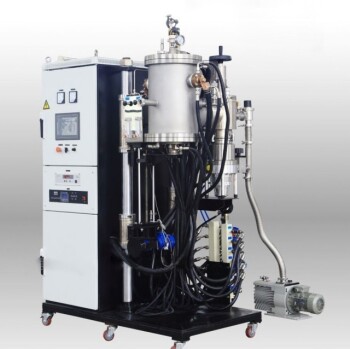
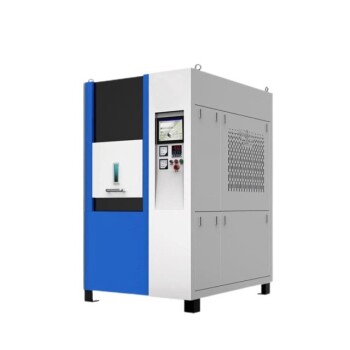
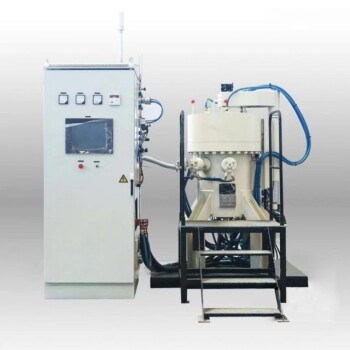
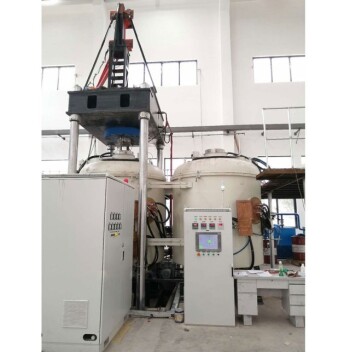
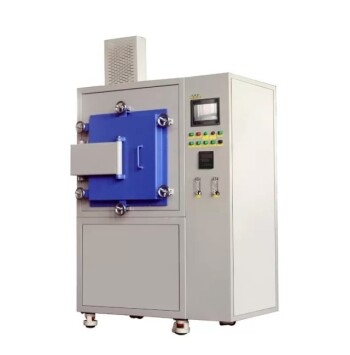
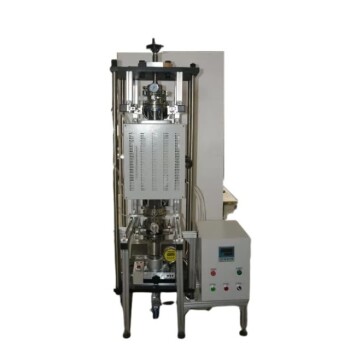
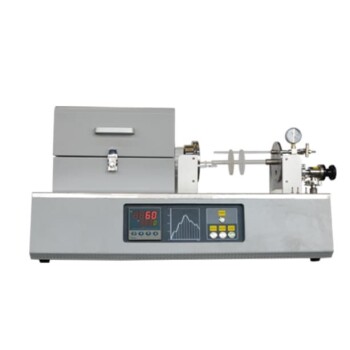
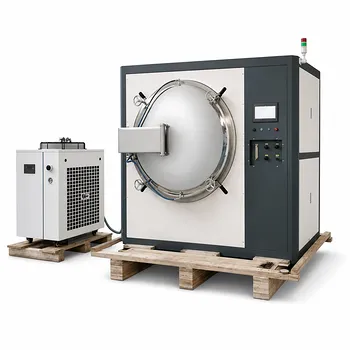
Eliminating costly vacuum infrastructure is just the beginning. The primary processing advantage of thermal sintering furnaces for particle-based ceramic thin films over vacuum-based deposition equipment is their ability to densify coatings deposited from simple, aqueous suspensions in ordinary air atmospheres, completely bypassing the need for high-vacuum chambers, expensive pumping systems, and inert gas handling. This translates into dramatically lower capital and operational costs, simplified workflows, and inherent scalability without sacrificing the ability to engineer tailored microstructures for functional applications.
For ceramic thin films formed by colloidal methods like dip coating or electrophoretic deposition, thermal sintering furnaces offer the most direct and cost-effective densification route. They replace the complexity of vacuum deposition with a simple heat treatment in air, delivering functional oxide and non-oxide coatings at a fraction of the equipment cost and with greater geometric flexibility.
The Simplicity of Atmospheric Thermal Sintering
Colloidal processing paired with furnace sintering transforms particle-based green layers into fully functional ceramic coatings using only thermal energy in controlled air. Unlike vacuum-based deposition equipment, which mechanically or physically transports atoms or particles in a rarefied environment, the furnace approach leverages the natural surface energy of packed nanoparticles.
Eliminating Vacuum and Inert Gas Requirements
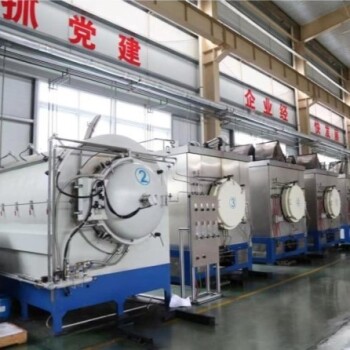
The most immediate advantage is the elimination of high-vacuum apparatus. Thermal sintering furnaces operate at ambient pressure, removing the need for vacuum chambers, roughing pumps, and high-vacuum gauges. This drastically reduces both initial investment and ongoing maintenance.
For many oxide coatings, sintering in air is not only sufficient but desirable. The atmospheric oxygen helps maintain stoichiometry and can even assist in burn-out of organic binders from aqueous suspensions, whereas a vacuum would introduce unwanted reduction or require costly gas backfilling.
Unconstrained Substrate Geometry
Particle-based deposition followed by furnace sintering does not require line-of-sight like many physical vapor deposition (PVD) methods. Dip coating and electrophoretic deposition can coat complex-shaped substrates, and the subsequent furnace treatment densifies the coating uniformly, regardless of part curvature. Vacuum systems often struggle with shadowing effects and non-uniform thickness on intricate geometries.
Cost and Scalability Advantages
The financial case for thermal sintering furnaces stems from shifting the densification step from a vacuum-bound process to a robust, air-atmosphere tool.
Drastically Lower Equipment Costs
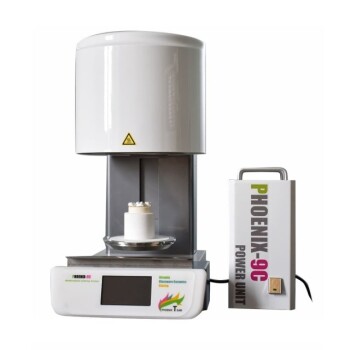
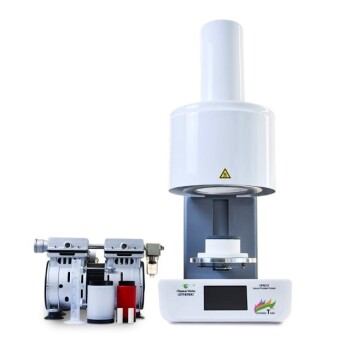
A laboratory tube or box furnace capable of reaching sintering temperatures (often as low as 800–1200 °C for many ceramic films) costs a fraction of a vacuum-based physical vapor deposition system or a vacuum slip-casting setup. Facilities do not need cleanroom infrastructure, high-purity gas lines, or advanced vacuum maintenance protocols.
Operational Simplicity and High Throughput
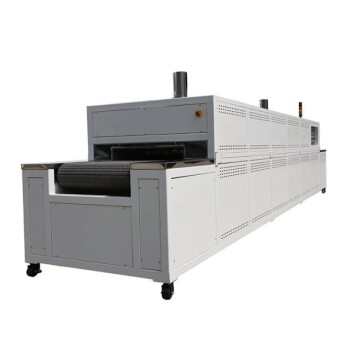
Loading a furnace with multiple coated substrates requires no pump-down cycles or degassing steps. This simplifies operator training and shrinks cycle times between batches. The process aligns well with continuous or semi-continuous manufacturing, where conveyor furnaces can sinter parts in flowing air, directly scaling from laboratory to production without a fundamental redesign.
Tailored Microstructural Control
The primary reference highlights that thermal sintering produces tailored microstructural and functional characteristics. This is not a compromise; it is a distinct advantage rooted in the physics of particle densification.
Gradient-Density and Porous Films
Particle-based sintering naturally leaves residual porosity that can be precisely tuned by adjusting temperature and dwell time. For applications like solid oxide fuel cell (SOFC) electrolytes, a controlled degree of porosity or a dense/porous gradient is essential. Vacuum-deposited films tend toward full density, making it harder to engineer such hierarchical structures without additional etches.
Fine Grain Size at Moderate Temperatures
Sintering at relatively low firing temperatures preserves a fine-grained microstructure because the driving force for densification comes from high surface curvature in nanoparticles, not from extreme thermal energy. This is particularly valuable for wear-resistant coatings where hardness scales with grain refinement. Unlike vacuum-based methods that may require high substrate temperatures during growth, the furnace decouples deposition and densification, avoiding thermal mismatch stresses.
Understanding the Trade‑offs
To be objective, there are scenarios where vacuum-based equipment retains clear advantages. Recognizing these limits informs the right technology choice.
Where Vacuum Deposition Excels
Vacuum furnaces and PVD offer superior atmosphere purity for materials that oxidize even at moderate temperatures. When sintering non-oxide ceramics (e.g., carbides, nitrides) or metals, the ability to pull a high vacuum and backfill with argon prevents surface degradation and yields a cleaner, brighter surface finish.
Hot pressing combines heat and uniaxial pressure to achieve near-theoretical density at lower temperatures and shorter times, suppressing grain growth in ways that pressureless furnace sintering cannot match. For dense, high-strength ceramic targets or wear parts, this extra driving force is critical.
However, these methods come with a significant cost premium and often require simpler substrate shapes due to chamber constraints. For the aqueous-derived thin films described in the primary reference, they represent over-engineering a problem that a simple muffle furnace can solve.
Making the Right Choice for Your Coating Goal
Your selection ultimately depends on what you prioritize in your ceramic thin film process. Consider these goal-specific guides:
- If your primary focus is minimizing capital and process complexity: Choose atmospheric thermal sintering. It eliminates vacuum hardware and inert gas, directly lowering upfront and operational costs while delivering functional films.
- If your primary focus is coating complex, non-line-of-sight geometries: Adopt a colloidal deposition and furnace sintering route. Dip coating or electrophoretic deposition paired with air sintering is far more forgiving of substrate topology than vacuum-based PVD.
- If your primary focus is engineering tailored porosity or graded microstructures for energy devices: Lean on furnace sintering. The particle-based route allows you to tune density and grain size simply through firing profiles, without the full-densification bias of vacuum methods.
- If your primary focus is achieving the ultimate density and surface finish on non-oxide ceramics: Reconsider vacuum sintering or hot pressing. When the material chemistry demands an oxygen-free environment or when near-zero porosity is non-negotiable, the added complexity is justified.
The power of a thermal sintering furnace lies in its elegant simplicity—using nothing more than controlled heat, it transforms a water‑based, particle‑laden coating into a high‑performance ceramic film, without the cost and constraints of vacuum.
Summary Table:
| Feature / Parameter | Thermal Sintering Furnaces | Vacuum-Based Deposition Equipment |
|---|---|---|
| Atmosphere & Pressure | Ambient / Ordinary Air | High Vacuum & Inert Gases Required |
| Equipment & Operational Cost | Significantly Lower | High Capital & Maintenance Costs |
| Substrate Geometry | Uniform coating on complex 3D shapes | Restricted by line-of-sight & shadowing |
| Microstructure Engineering | Easy control over porosity & gradients | Strong bias toward full density |
| Throughput & Scalability | High (continuous/batch without pump-down) | Low (limited by vacuum pump cycles) |
Ready to optimize your ceramic coating process and reduce operational costs? KINTEK specializes in high-performance laboratory equipment and consumables, offering a comprehensive range of high-temperature furnaces—including muffle, tube, atmosphere, vacuum, CVD, and custom-engineered systems tailored to your exact process requirements. Upgrade your lab's thermal processing capabilities with reliable, cost-effective solutions. Contact KINTEK today to discuss your application with our high-temp equipment experts!
Related Products
- Vacuum Heat Treat Sintering Furnace Molybdenum Wire Vacuum Sintering Furnace
- Small Vacuum Heat Treat and Tungsten Wire Sintering Furnace
- Vacuum Heat Treat Sintering Furnace with Pressure for Vacuum Sintering
- Spark Plasma Sintering SPS Furnace
- 9MPa Air Pressure Vacuum Heat Treat and Sintering Furnace
People Also Ask
- What are the main structural components of a vacuum sintering furnace? Unlock Precision in High-Temperature Processing
- How does vacuum sintering improve dimensional tolerances? Achieve Uniform Shrinkage and Precision
- What is the purpose of setting a mid-temperature dwell stage? Eliminate Defects in Vacuum Sintering
- What are the key components of a vacuum sintering furnace? Essential Parts for Precision Material Processing
- How does vacuum sintering contribute to cost reduction in material processing? Lower Expenses with Superior Parts