Reaction sintering’s core advantage is collapsing ceramic powder synthesis and densification into a single furnace cycle. This eliminates the separate, energy-intensive calcination and milling steps, slashing total processing time and cost. However, its central technical limitation is that the massive energy released by the chemical reaction can create anisotropic, bridging microstructures that actively work against the densification needed to achieve a fully solid, pore-free component.
The challenge of reaction sintering is a race between two powerful forces: the rapid formation of new phases and the slow diffusion of atoms to eliminate porosity. The key advantages—radical process efficiency and superior interface bonding—are only unlocked when densification outpaces or keeps perfect pace with the chemical reaction itself.
Unpacking the Core Advantage: Process Efficiency
The most immediate benefit of reaction sintering is an economic and logistical one, stemming from a dramatically simplified workflow in high-temperature processing.
Eliminating Unit Operations
In conventional ceramic processing, you start with raw powders, calcine them to form the desired compound, and then mill the resultant cake back into a fine powder before finally shaping and sintering it. Reaction sintering bypasses these two intermediary stages entirely.
By firing a shaped compact of reactant powders in a high-temperature furnace, you perform chemical synthesis and part formation simultaneously. This consolidation of steps translates directly to reduced energy consumption, lower capital equipment requirements, and faster cycle times.
The Fundamental Technical Limitation: A Race Against Microstructure
The very heart of the process also creates its greatest challenge. The driving force for the chemical reaction is an order of magnitude greater than the gentle reduction of surface energy that drives conventional sintering.
When Reaction Outpaces Densification
The reaction between your starting powders releases significant energy and can form new phases with complex, anisotropic crystal structures. A classic example is the growth of plate-like calcium hexa-aluminate (CA6) phases during reactions with calcium oxide and alumina.
These plate-like crystals grow rapidly and interlock to form a rigid, porous skeleton that replicates the original green body's porosity. This bridging effect pins the microstructure in place, preventing the subsequent elimination of pores and making it exceptionally difficult to achieve high final density.
The Volumetric Change Problem
Reactions that involve substantial volumetric expansion or contraction impose additional stresses. If not managed by a precise thermal cycle in your high-temperature furnace, these stresses can nucleate cracks or generate a network of porosity that is thermodynamically stable and impossible to close through longer soaking times alone.
Critical Process Control Parameters
Successfully navigating the reaction-densification race requires orchestrating a complex interplay of material and furnace variables.
The Primacy of Heating Rate
The heating rate is your primary lever to tip the balance in favor of densification. The goal is to drive the system past low-temperature reaction zones before the problematic, low-density microstructure becomes permanent.
Rapid heating rates, often achievable with advanced systems, can surge the compact to a temperature where the reaction occurs concurrently with final-stage sintering. However, this is not a simple solution because of the low thermal conductivity of ceramic green bodies, which creates a fundamental constraint when using traditional radiant furnaces.
Thermal Gradients: A Physical Constraint
A green powder compact is an excellent thermal insulator. When you apply an aggressive heating rate, the surface heats much faster than the core. For components thicker than 10 mm, this thermal gradient generates differential expansion that can easily exceed the green strength of the material, causing warping or catastrophic fracture.
This is the practical ceiling on heating rates, even before the chemical kinetics of the reaction are considered. It forces a compromise between the ideal temperature profile for densification and the physical survival of the component.
Particle Size and Packing
Finer starting powders increase the total surface energy and the number of inter-particle necks available for mass transport. A well-dispersed, densely packed green compact shifts the starting line in the densification race.
It provides a shorter diffusion path for pore elimination, allowing the sintering mechanism to compete more effectively against the rapid phase formation driven by the reaction's energy.
Understanding the Trade-offs
Exploiting the advantages of reaction sintering demands an honest acknowledgment of its pitfalls and the advanced solutions required to overcome them.
The Furnace as a Strategic Asset
The choice of a high-temperature furnace directly determines the viability of a reaction sintering process. A standard box furnace with slow, radiant heating may be wholly unsuitable, leading to a fully reacted but highly porous body. Advanced techniques like spark plasma sintering (SPS) use pulsed electric currents to generate localized heating at inter-particle contacts.
This field-assisted method intensifies mass transport at the exact locations needed for pore closure, enabling simultaneous synthesis and rapid densification that handily outperforms conventional sintering of pre-reacted powders.
The Risk of Chemical Inhomogeneity
When a reaction is incomplete or proceeds unevenly throughout the compact, you are left with a component containing compositional gradients on a micro- or macro-scale. These local variations in chemistry are a direct threat to mechanical integrity and performance.
An incomplete solid-state reaction can leave behind islands of unreacted starting material with completely different thermal expansion coefficients, acting as pre-existing flaws in the final ceramic.
The Atmosphere Imperative
A high-temperature atmosphere furnace gives you environmental control that is just as critical as temperature control. A precisely managed gas environment can facilitate the outgassing of volatile impurities during controlled, intermediate temperature holds.
This prevents gas entrapment that would otherwise lead to bloating or internal porosity after the surface pores have sealed shut during the final ramp to peak temperature.
Making the Right Choice for Your Process
Your specific material system and performance goals will dictate the best approach to managing the reaction-densification balance.
- If your primary focus is maximizing process speed and energy efficiency: Look to systems with minimal volumetric change and compatible phase growth. Pairing these chemistries with field-assisted furnaces like SPS can deliver final densities exceeding 95% in a fraction of the conventional cycle time.
- If your primary focus is achieving full density in complex, multiphase ceramics: You must prioritize control. Utilize fine, high-purity powders, design a multi-step heating cycle in an atmosphere furnace with intermediate dwells for outgassing, and accept slower rates to outmaneuver the formation of bridging microstructures like plate-like CA6.
- If your primary focus is superior mechanical strength through interface design: Leverage the in-situ nature of reaction sintering. The clean, coherent interfaces formed when the reinforcing phase directly nucleates from the matrix create a bond strength unattainable by simply mixing and melting. Your key metric here is controlling the reaction so it completes precisely within the matrix’s consolidation window.
By redefining your process not as a simple heat treatment but as a managed chemical event, you can harness the extraordinary energy of a reaction to build materials rather than letting it destroy your component's integrity.
Summary Table:
| Aspect | Core Detail | Impact / Key Consideration |
|---|---|---|
| Primary Advantage | Collapses synthesis & densification into one furnace cycle | Cuts energy use, eliminates calcination/milling, lowers costs |
| Main Limitation | Rapid exothermic reactions create anisotropic microstructures | Bridging phases (e.g., CA6) trap pores and limit final density |
| Heating Control | Balancing rapid heating against thermal gradients | Prevents microstructural pinning, but rates are constrained by green body thermal stress |
| Atmosphere & SPS | Advanced atmosphere control & field-assisted heating | Enables essential outgassing, prevents bloating, and drives >95% final density |
Master Reaction Sintering with KINTEK’s Advanced Furnace Technology
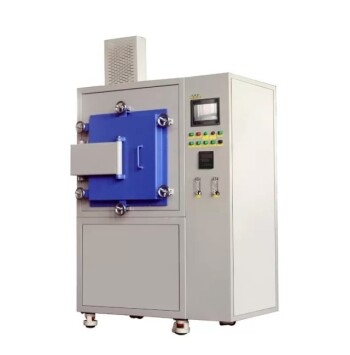
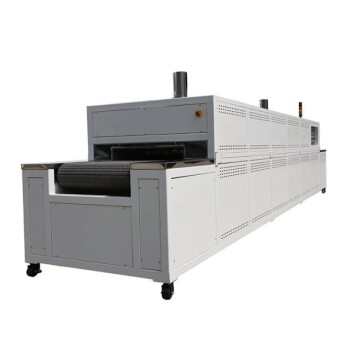
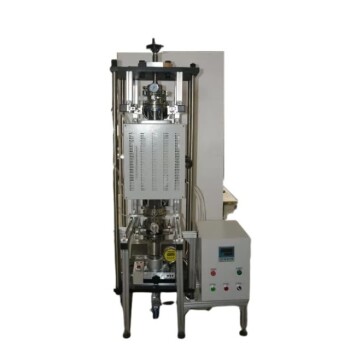
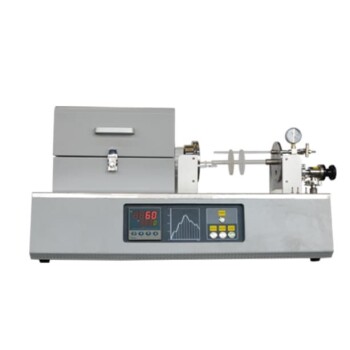
Overcoming the delicate balance between rapid reaction kinetics and pore elimination requires uncompromising thermal precision. KINTEK specializes in high-performance laboratory equipment, offering a comprehensive range of customizable high-temperature furnaces—including atmosphere, vacuum, muffle, tube, CVD, and induction heating systems—designed to give you exact control over heating rates, atmosphere purity, and temperature uniformity.
Whether you are scaling technical ceramics, synthesizing novel multiphase composites, or preventing thermal gradient cracking in complex green bodies, KINTEK provides tailored thermal solutions built for your exact research and production goals.
Take control of your densification process—contact KINTEK today to consult with our high-temp furnace experts!
Related Products
- Vacuum Heat Treat Sintering Furnace with Pressure for Vacuum Sintering
- Vacuum Heat Treat Sintering Furnace Molybdenum Wire Vacuum Sintering Furnace
- Spark Plasma Sintering SPS Furnace
- 9MPa Air Pressure Vacuum Heat Treat and Sintering Furnace
- Small Vacuum Heat Treat and Tungsten Wire Sintering Furnace
People Also Ask
- How does vacuum heat treating affect the grain structure of metal alloys? Achieve Precise Microstructure Control
- What are the benefits of using vacuum heat treating furnaces for metal alloys? Achieve Superior Metal Properties and Performance
- What is one of the most important uses of vacuum heat treating furnaces in aerospace? Achieve Superior Strength in Aircraft Alloys
- What are the key components of a vacuum sintering furnace? Essential Parts for Precision Material Processing
- What is the purpose of setting a mid-temperature dwell stage? Eliminate Defects in Vacuum Sintering