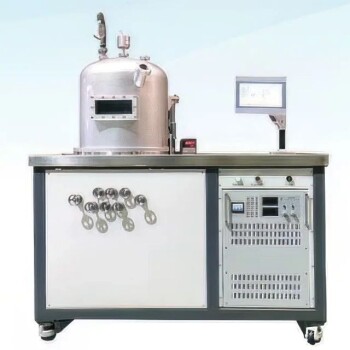
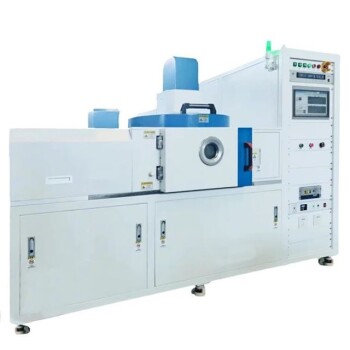
The equipment for Isothermal Chemical Vapor Infiltration (ICVI) must provide exceptionally high temperature field uniformity and precise control over reaction gas partial pressures. These systems are designed to facilitate the slow, deep penetration of carbon source gases into the pores of carbon fiber preforms. By maintaining a stable environment, the equipment enables the in-situ deposition of pyrolytic carbon, resulting in a high-density material with a robust electronic conduction network.
The core requirement for ICVI equipment is the ability to maintain a perfectly stable, "isothermal" environment that prevents premature surface sealing. This precision allows precursor gases to migrate into the deepest pores of a preform before reacting, which is essential for creating high-performance C/C composite anodes.
Critical Thermal Management Systems
Maintaining the Isothermal Environment
The primary challenge in ICVI is ensuring the entire carbon fiber preform remains at a constant temperature. If thermal gradients exist, the carbon source gas will deposit unevenly, typically clogging the outer surface and leaving the core porous.
The heating system must be engineered to provide extreme uniformity across the entire reaction zone. This usually requires advanced multi-zone heating elements and sophisticated insulation to prevent cold spots.
Precision Temperature Control
Because the chemical reaction is highly sensitive to heat, the equipment must utilize high-accuracy sensors and PID controllers. Even minor fluctuations can alter the structure of the pyrolytic carbon being deposited.
Consistent temperatures ensure that the deposition rate remains slow enough to allow gas to reach the center of the material. This creates a uniform density throughout the composite.
Gas Dynamics and Pressure Regulation
Reaction Gas Partial Pressure Control
The equipment must accurately manage the partial pressure of the carbon source gases. This is achieved through a combination of high-precision mass flow controllers and sensitive vacuum pumping systems.
Controlling the concentration of the precursor gas is vital for managing the kinetics of the reaction. If the partial pressure is too high, the gas reacts too quickly on the fiber surface rather than penetrating deep into the preform.
Deep Pore Penetration Mechanisms
The vacuum system in an ICVI reactor must maintain a specific pressure threshold that balances gas transport and reaction speed. Lower pressures generally facilitate better gas diffusion into the dense "deep pores" of the carbon fiber matrix.
This slow infiltration process is the mechanism that builds the electronic conduction network. Without precise pressure regulation, the resulting anode material would lack the structural integrity needed for high-capacity applications.
Understanding the Trade-offs
Process Speed vs. Material Density
The most significant trade-off in ICVI is the extremely long processing time. To achieve high density and uniformity, the deposition must occur at a very slow rate, often taking hundreds of hours.
Attempting to speed up the process by increasing temperature or pressure usually leads to surface crusting. This seals the internal pores and prevents the material from reaching its maximum theoretical density.
Equipment Complexity vs. Reliability
The need for high-temperature uniformity and gas precision makes ICVI reactors technically complex and expensive. Maintaining these systems requires rigorous calibration of sensors and frequent cleaning of the vacuum lines to prevent carbon buildup.
While simpler CVD systems exist, they cannot match the internal structural quality produced by a true isothermal process. The trade-off is a higher capital investment for a superior end product.
Making the Right Choice for Your Goal
To successfully implement ICVI for C/C composite production, your equipment strategy should align with your specific performance targets.
- If your primary focus is high-density electronic networks: Prioritize equipment with multi-zone heating to ensure the highest possible temperature uniformity across the reaction chamber.
- If your primary focus is industrial scalability: Invest in advanced vacuum control systems that can maintain precise partial pressures across larger batches of preforms.
- If your primary focus is material purity: Ensure the reactor chamber is constructed from high-grade graphite or specialized alloys that do not outgas or contaminate the pyrolytic carbon deposition.
By mastering the balance of thermal stability and gas kinetics, ICVI equipment provides the most reliable pathway to high-performance carbon-based anode materials.
Summary Table:
| Feature | Equipment Requirement | Impact on C/C Composite Quality |
|---|---|---|
| Thermal Stability | Multi-zone heating & advanced insulation | Ensures uniform density and prevents premature surface sealing. |
| Pressure Control | Precision mass flow controllers & vacuum pumps | Enables deep pore penetration and manages reaction kinetics. |
| Temperature Precision | High-accuracy PID controllers & sensors | Guarantees stable in-situ deposition of high-quality pyrolytic carbon. |
| Chamber Integrity | High-grade graphite or specialized alloys | Prevents outgassing and ensures maximum purity of the anode material. |
Elevate Your C/C Composite Production with KINTEK Precision
Achieving the perfect isothermal environment for high-performance anode materials requires uncompromising equipment precision. KINTEK specializes in advanced laboratory and industrial high-temperature solutions, offering a comprehensive range of customizable CVD, vacuum, and atmosphere furnaces designed to meet the rigorous demands of ICVI processes.
Whether you are scaling industrial production or conducting cutting-edge research, our systems provide the extreme thermal uniformity and gas dynamics control necessary for superior material density.
Ready to optimize your infiltration process? Contact our experts today to find the perfect furnace for your unique requirements!
References
- Rujie He. Research progress of carbon-based anode materials for lithium-ion batteries. DOI: 10.56028/aetr.12.1.776.2024
This article is also based on technical information from Kintek Furnace Knowledge Base .
Related Products
- HFCVD Machine System Equipment for Drawing Die Nano Diamond Coating
- Cylindrical Resonator MPCVD Machine System for Lab Diamond Growth
- Custom Made Versatile CVD Tube Furnace Chemical Vapor Deposition CVD Equipment Machine
- Multi Heating Zones CVD Tube Furnace Machine for Chemical Vapor Deposition Equipment
- RF PECVD System Radio Frequency Plasma Enhanced Chemical Vapor Deposition
People Also Ask
- What is Hot-filament Chemical Vapor Deposition (HFCVD)? Achieve High-Quality Thin Films with Precision Control
- What are the equipment for chemical vapor deposition? A Guide to the 5 Essential Components
- What is the significance of the vacuum pressure control system in the CVD coating process for powders?
- What is the function of high-purity Argon (Ar) gas during CVD? Optimize Your Thin Film Uniformity and Purity
- What are the advantages of using Chemical Vapor Deposition (CVD) for coating turbine blades? Enhance Life & Performance