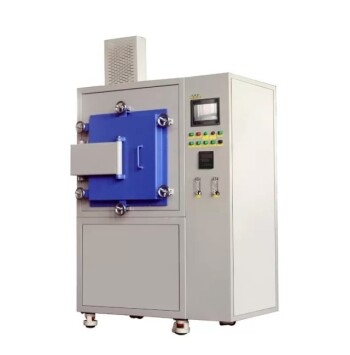
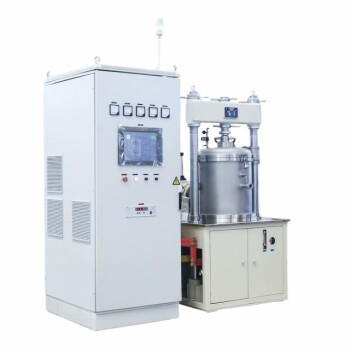
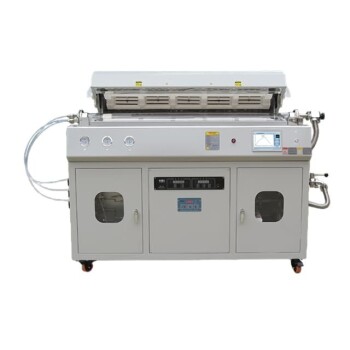
When developing ceramic densification protocols, the first and most cost-effective route is always a conventional high-temperature atmosphere furnace. It relies solely on controlled thermal energy—without external mechanical force—to drive solid-state or liquid-phase diffusion that eliminates pores. Should that method fail to reach target densities or produce excessive grain growth, pressure sintering (hot pressing, hot isostatic pressing) introduces an additional driving force that accelerates densification relative to coarsening, making it the necessary upgrade for hard-to-sinter advanced ceramics.
The decision is a function of your ceramic’s intrinsic diffusivity and the microstructural quality required. Exhaust the possibilities of a conventional furnace first by optimizing temperature profiles and atmosphere chemistry; switch to a pressure-assisted system only when that thermal-only approach cannot overcome kinetic barriers or when near-theoretical density and grain-size control are non-negotiable.
How Ceramic Densification Works: Driving Forces and Mechanisms
Sintering transforms a powder compact into a dense, strong body by reducing surface energy. The process is driven by capillary pressures that try to eliminate solid‑vapor interfaces.
The Role of Sintering Atmosphere in Final Density
The atmosphere inside the furnace can make or break final-stage sintering. As pores close, gas becomes trapped; if that gas diffuses rapidly through the lattice or grain boundaries—hydrogen in certain oxides, for example—it escapes and full density is achieved. In contrast, slowly diffusing or inert gases create an internal pressure that counteracts the capillary shrinkage force, halting densification well before theoretical density. For fine powders (initial pore radius under a few microns), 1‑atm inert gases typically still permit densities above 99.8%, but large pores or high gas pressures demand vacuum furnaces or pressure‑assisted sintering to remove the lingering porosity.
Grain Growth vs. Densification: The Critical Balance
Mass transport mechanisms compete. Boundary and lattice diffusion shrink pores and increase density, while vapor‑phase transport (evaporation‑condensation) coarsens grains without any densification. The sintering atmosphere dictates which dominates. For instance, 0.2 µm titania sintered at 1200°C in air reaches 76% density with a 1 µm grain size; switch to an HCl‑containing atmosphere and the grain size explodes to 6 µm while density stays at a virtually un‑densified 45%. Selecting the right gas mixture is therefore essential to suppress coarsening and drive actual shrinkage.
When Conventional Atmosphere Furnaces Are the Right Choice
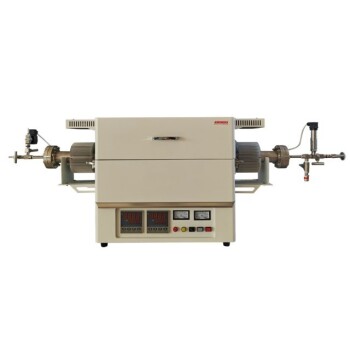
A standard high‑temperature tube or box furnace is the workhorse of ceramic processing because it delivers precision, flexibility, and low complexity.
Thermal‑Only Driving Force and Operational Simplicity
Conventional pressureless sintering requires no external mechanical pressing during heating, which dramatically reduces equipment cost and process complexity. By simply programming a ramp‑soak temperature schedule, researchers can carefully balance diffusion rates to favor densification over grain growth. This approach works excellently for most technical ceramics where atomic mobility is sufficient at moderate temperatures.
Controlling Atmosphere to Prevent Porosity From Trapped Gases
A major strength of high‑quality laboratory furnaces is atmosphere management. Flowing a fast‑diffusing gas like hydrogen or helium can carry away entrapped gases, enabling complete pore closure for translucent alumina or high‑strength structural parts. Additionally, tuning oxygen partial pressure or using inert blankets prevents unwanted phase decomposition, oxidation of multivalent cations, and vapor‑transport coarsening—giving researchers a wide chemical toolbox without the mechanical confinement of a press.
When Pressureless Sintering Falls Short: The Need for External Force
Situations arise where thermal energy alone cannot deliver the required microstructural outcome, even with perfect atmosphere control.
Low Atomic Mobility and Rapid Grain Coarsening
Covalently bonded ceramics (e.g., silicon carbide) or ultra‑fine nanosuspensions often exhibit intrinsically low diffusion rates. To reach high density, the temperature must be pushed so high that rapid grain growth overtakes densification. The result is a coarse‑grained body with residual intra‑granular porosity—or a “stuck” microstructure where grain boundary‑pore separation prevents further shrinkage.
Vapor‑Phase Transport and Pore Trapping
As the supplementary example showed, certain atmospheres or high vapor‑pressure constituents shift transport toward non‑densifying mechanisms. When that happens, porosity is redistributed as large, stable bubbles while grains grow unchecked. A conventional furnace cannot overcome this because the driving force is purely capillary; an external pressure is needed to collapse the pores by a mechanism like power‑law creep or plastic flow.
Pressure Sintering: Hot Pressing and Its Advantages
Applying mechanical pressure during heating adds a powerful new variable that transforms what is possible.
How Mechanical Pressure Enhances Densification
Hot pressing superimposes uniaxial pressure (typically 20‑50 MPa) on the thermal cycle. This creates an extra driving force for pore shrinkage that is independent of capillary forces. As a result, pores can be eliminated even when gas is trapped or when diffusion is sluggish, because the applied pressure directly squeezes material into voids via diffusional creep and grain‑boundary sliding.
Lower Temperatures, Finer Microstructures
Because the pressure adds to the driving force, the required sintering temperature can often be reduced by 100‑300°C. Lowering the temperature dramatically slows grain growth, enabling the same density to be reached with a much finer grain size. This is the primary reason pressure sintering is essential for nanostructured ceramics or ultra‑high‑purity components where every grain counts.
Understanding the Trade‑offs
Pressure‑assisted methods are superior for many demanding applications, but they carry meaningful drawbacks that make them inappropriate for every project.
Cost, Complexity, and Equipment Availability
Hot presses and especially hot isostatic presses (HIP) are orders of magnitude more expensive than a tube furnace. The tooling—graphite or refractory metal dies—wears out, limits sample geometry, and can introduce contamination (carbon, tungsten). Cycle times are often longer per batch, and the presses require significant maintenance compared to the simplicity of a standard high‑temperature furnace.
Atmosphere Compatibility in Pressurized Systems
Containment of high‑pressure atmospheres complicates gas chemistry. Many hot pressing setups are limited to inert gases (argon) or vacuum; introducing reactive or reducing gases is difficult and can degrade the heating elements and die materials. In contrast, a conventional tube furnace easily handles hydrogen, forming gas, or halide‑containing environments, giving it a decisive advantage when atmosphere‑dependent doping or phase control is required.
Making the Right Choice for Your Research
Select the method that directly addresses your project’s most pressing constraint. Use these guidelines to map your goal to the appropriate equipment.
- If your primary focus is routine densification of well‑studied ceramics under a tight budget: Start with a conventional high‑temperature atmosphere furnace. Optimize the heating schedule and use a fast‑diffusing atmosphere—you will likely surpass 95% density at minimal cost.
- If your primary focus is reaching near‑theoretical density for transparent or high‑strength applications: Move to hot pressing or HIP. The extra mechanical driving force eliminates the last few percent of porosity that pressureless methods frequently leave behind.
- If your primary focus is preserving an ultrafine or nanoscale grain size: Pressure sintering allows densification at significantly lower temperatures, suppressing grain growth. Be sure to select a die material and pressure level that do not induce deformation beyond your target.
- If your primary focus is processing novel, oxygen‑sensitive, or atmosphere‑reactive compounds: A conventional tube furnace with precise gas control offers the widest chemical flexibility. Many pressure‑assisted systems cannot safely handle the reactive atmospheres these materials require.
Whenever possible, exhaust the simple path first—a well‑designed atmosphere furnace run with the right gas chemistry and thermal profile often achieves more than enough density; if it doesn’t, the leap to pressure sintering is justified and will deliver the ultimate microstructural control you need.
Summary Table:
| Feature / Consideration | Conventional Atmosphere Furnace | Pressure Sintering (Hot Pressing / HIP) |
|---|---|---|
| Primary Driving Force | Thermal energy & capillary pressure | Thermal energy + external mechanical pressure |
| Grain Size Control | Moderate (risk of coarsening at high temp) | Superior (lower temp suppresses grain growth) |
| Atmosphere Flexibility | High (handles H2, inert, reactive, halides) | Limited (mostly inert gases or vacuum) |
| Geometry Capabilities | Complex 3D shapes and bulk components | Simple shapes (pellets, disks, constrained by dies) |
| Equipment & Tooling Cost | Low to moderate; simple operation | High capital cost; expensive die wear |
| Best For | Routine technical ceramics, reactive gas work | Nanosuspensions, hard-to-sinter oxides, ultra-density |
Optimizing your ceramic densification protocol requires precise thermal and atmosphere control. KINTEK specializes in premium laboratory equipment and consumables, offering a comprehensive range of high-temperature furnaces—including atmosphere, tube, muffle, vacuum, CVD, and customizable systems designed for advanced material research. Whether you need standard atmosphere tuning or specialized high-temp processing, our technical experts are here to help. Contact KINTEK today to find your ideal furnace solution!
Related Products
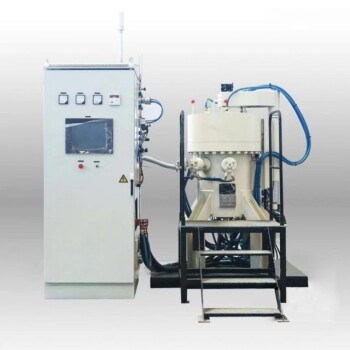
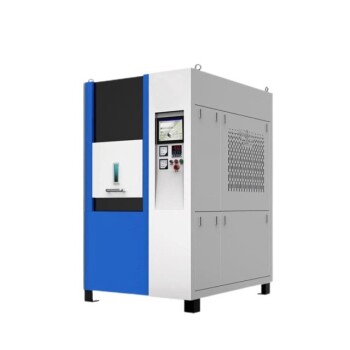
- 9MPa Air Pressure Vacuum Heat Treat and Sintering Furnace
- Vacuum Heat Treat Sintering Furnace with Pressure for Vacuum Sintering
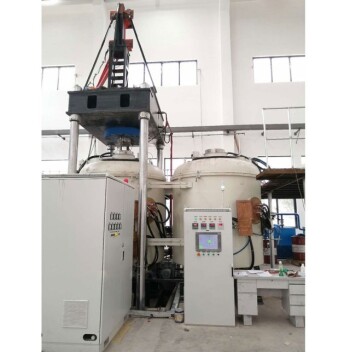
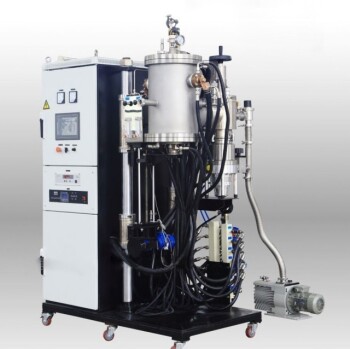
- 600T Vacuum Induction Hot Press Vacuum Heat Treat and Sintering Furnace
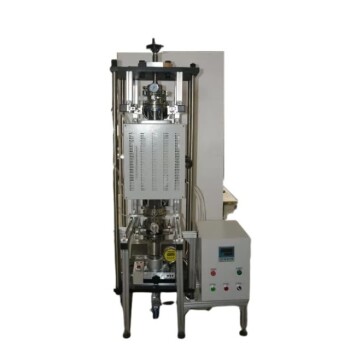
- Vacuum Hot Press Furnace Machine Heated Vacuum Press Tube Furnace
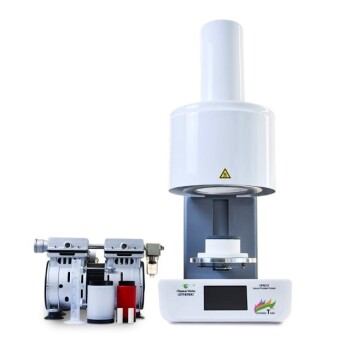
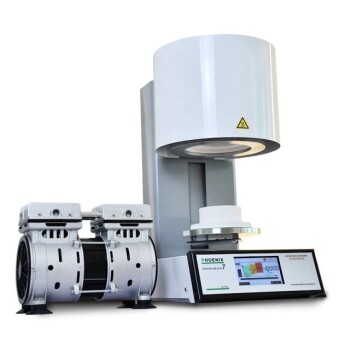
- Dental Porcelain Zirconia Sintering Ceramic Vacuum Press Furnace
People Also Ask
- What are the key features of vacuum pressure sintering furnaces? Unlock High-Purity, Dense Materials
- What materials can be processed using vacuum pressure sintering furnaces? Unlock High-Performance Material Densification
- What safety features are integrated into vacuum pressure sintering furnaces? Ensure Operator and Equipment Protection
- What are the key components of a vacuum pressure sintering furnace? Essential Systems for High-Performance Materials
- What are the main technical parameters of vacuum pressure sintering furnaces? Key Specs for Advanced Materials