The type of acid electrolyte used to anodize aluminum directly dictates whether a porous anodic alumina membrane will buckle into a curled tube or remain perfectly flat when heated in a laboratory furnace. Membranes formed in phosphoric acid incorporate phosphate anions unevenly across their thickness, causing differential sintering that destroys planarity above 700 °C and closes surface pores. Membranes formed in sulfuric acid avoid this chemical asymmetry, retaining flat, dimensionally stable, open-pore architectures up to 1000 °C.
The electrolyte is not just a processing detail—it imprints a permanent chemical gradient inside the amorphous alumina. That gradient controls the membrane’s fate in the furnace: phosphoric-acid-derived films curl and densify, while sulfuric-acid-derived films stay flat and porous. Understanding this link lets you pick the right electrolyte for high-temperature ceramic membrane applications.
Why the Electrolyte Becomes Part of the Membrane
The anodization process does more than grow pores; it chemically incorporates electrolyte anions directly into the alumina walls. These trapped species shape the membrane’s thermal personality.
Phosphate Incorporation Creates a Built‑in Stress Gradient
During anodization in phosphoric acid (H₃PO₄), phosphate entities ($PO_4^{3-}$) become embedded in the pore walls. Crucially, their distribution is asymmetric across the membrane thickness—higher near the basal (anode) face, lower near the barrier layer side. This non‑uniform chemistry creates an internal tension gradient.
Sulfate Ions Lead to a Structurally Homogeneous Oxide
When sulfuric acid (H₂SO₄) is the electrolyte, the incorporated sulfate groups do not produce the same thickness‑dependent asymmetry. The resulting oxide is chemically more uniform, so heating does not generate the strong directional stresses that plague phosphate‑containing membranes.
How Planarity Fails or is Preserved During Furnace Heating
Phosphoric‑Acid‑Derived Membranes: Buckling and Pore Closure
Above 700 °C, the asymmetric phosphate distribution triggers differential sintering. The phosphate‑rich regions densify at a different rate than phosphate‑lean regions, creating mechanical tension that curls flat membrane discs into tubular shapes. Simultaneously, surface sintering closes the 100–200 nm basal pore openings, rendering the membrane useless for filtration or templating. This distortion is irreversible and begins well before the onset of bulk crystallization.
Sulfuric‑Acid‑Derived Membranes: Flatness and Open Pores
Sulfuric‑acid‑based membranes experience no loss of planarity up to at least 1000 °C. Even as they release $SO_2$ and $O_2$ during multi‑stage weight loss, and despite significant exothermic crystallization events, the original flat geometry is maintained. The pore structure stays open up to 800 °C, and the membrane suffers no overall shrinkage through 1000 °C. This dimensional stability is a direct consequence of the absence of a built‑in composition gradient.
Thermal Stability and Phase Transformations
Electrolyte‑Dependent Crystallization Temperatures
The temperature at which the as‑formed X‑ray‑amorphous alumina transforms into crystalline transition phases is electrolyte‑specific:
- Phosphoric acid membranes: ~850 °C
- Oxalic acid membranes: ~900 °C
- Sulfuric acid membranes: ~970 °C
These sharp exothermic events are the first step in a cascade that eventually leads to stable α‑Al₂O₃ (corundum) above 1200 °C. The higher crystallization temperature of sulfuric‑acid‑derived membranes gives them a wider thermal window in which the amorphous structure remains intact.
Sintering and Pore Evolution
Above 850 °C for phosphate‑laden membranes, the appearance of AlPO₄ cristobalite alongside θ‑Al₂O₃ accelerates densification. This secondary phase further drives pore closure and warping. In contrast, sulfuric‑acid membranes undergo a cleaner transition to γ‑Al₂O₃ without the abrupt pore collapse, making them suitable for controlled calcination to achieve chemical resistance (e.g., for subsequent plating baths).
Understanding the Trade‑offs
While the primary reference highlights a clear winner for thermal planarity, the choice of electrolyte always involves compromises.
- Phosphoric acid produces larger initial pore diameters (typically 100–200 nm) that are attractive for gas separation templates, but the severe curling and pore closure above 700 °C limit its high‑temperature utility unless the membrane is physically restrained or chemically modified.
- Sulfuric acid yields smaller pores (often 10–30 nm), but its planarity retention and dimensional stability up to 1000 °C make it the only viable choice for free‑standing ceramic membranes that must survive furnace cycles unchanged.
- Oxalic acid, despite having an intermediate crystallization temperature, is not noted for planarity retention in the references; its behavior may resemble sulfuric acid more than phosphoric, but lack of explicit data means it demands caution for flat high‑temperature parts.
Researchers must also consider that sulfuric‑acid membranes release sulfur‑containing gases during heating, which may require adequate furnace ventilation, but this does not compromise their shape.
Making the Right Choice for Your Laboratory Furnace Process
- If your primary focus is a flat, crack‑free membrane for high‑temperature gas separation or templating above 700 °C: Choose sulfuric acid as the electrolyte. Its homogeneous chemistry ensures planarity and pore openness up to 1000 °C.
- If your application requires larger pores and you can mechanically constrain the membrane or operate below 700 °C: Phosphoric acid may be acceptable, but you must accept the risk of buckling and basal pore closure at higher temperatures.
- If you need to precisely control the amorphous‑to‑γ phase transition for chemical resistance without sacrificing shape: Use sulfuric acid membranes and ramp to ~890 °C; the higher crystallization onset (970 °C) grants a forgiving process window.
- If you are sintering the alumina to full α‑phase ceramic (above 1200 °C): Electrolyte‑induced planarity differences become moot only if you can support the membrane during densification, but sulfuric acid still offers the best chance of retaining geometry through the transition.
The furnace does not treat all anodic alumina equally. The electrolyte you choose during synthesis writes the thermal story of your membrane—decide which story you need before the first ramp.
Summary Table:
| Feature / Property | Phosphoric Acid (H₃PO₄) | Sulfuric Acid (H₂SO₄) | Oxalic Acid (H₂C₂O₄) |
|---|---|---|---|
| Anion Distribution | Asymmetric (creates stress gradient) | Homogeneous | Intermediate |
| Crystallization Onset | ~850 °C | ~970 °C | ~900 °C |
| Planarity (> 700 °C) | Severe curling & buckling | Retains perfectly flat geometry | Intermediate / Caution required |
| Pore Opening Status | Basal pores close (100–200 nm) | Pores remain open up to 800 °C | Retains moderate pore structure |
| Dimensional Stability | Irreversible densification & distortion | Zero overall shrinkage up to 1000 °C | Moderate dimensional control |
Achieve Precise Heat Treatment for Advanced Ceramic Membranes with KINTEK
Whether calcining sulfuric-acid-derived alumina membranes or developing novel porous materials, exact temperature accuracy and atmospheric control are essential to prevent warping and preserve microstructures. KINTEK specializes in premium laboratory equipment and high-temperature furnaces—including muffle, tube, vacuum, atmosphere, CVD, and custom heating systems tailored to your exact experimental demands.
Ready to optimize your ceramic calcination and thermal processing workflows? Contact KINTEK today to consult with our thermal engineering experts and find the perfect furnace for your laboratory!
Related Products
- Vacuum Dental Porcelain Sintering Furnace for Dental Laboratories
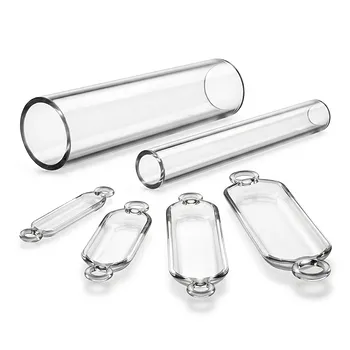
- High Purity Quartz Tube and Quartz Boat for Laboratory Furnaces
- High Temperature Muffle Oven Furnace for Laboratory Debinding and Pre Sintering
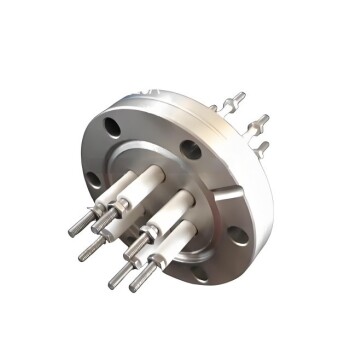
- CF KF Flange Vacuum Electrode Feedthrough Lead Sealing Assembly for Vacuum Systems
- Multi Heating Zones CVD Tube Furnace Machine for Chemical Vapor Deposition Equipment
People Also Ask
- What is the purpose of dental sintering furnaces? Transform Zirconia into Durable, High-Quality Dental Restorations
- How does a dental vacuum porcelain furnace maintain restoration quality? Precision Sintering for Superior Esthetics
- What is a dental sintering furnace and what is its purpose? Achieve High-Strength Dental Restorations
- What economic benefits does using a dental sintering furnace offer? Boost Profits with Faster, Automated Dental Lab Workflows
- What are the main advantages of a dental sintering furnace? Boost Quality, Efficiency, and Profits