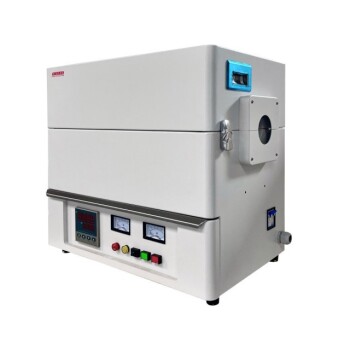
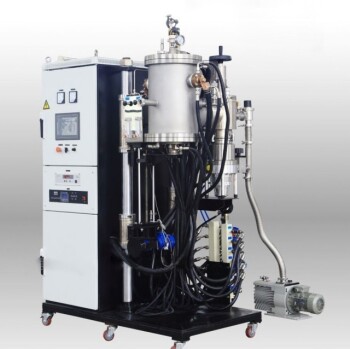
Precise thermal management is the direct control lever that determines whether you synthesize a clean, protected magnetic nanoparticle or a messy mixture of unencapsulated metal and unwanted carbon debris. When decomposing organometallic precursors like ferrocene, maintaining a strictly controlled, lower temperature—specifically around 400°C—suppresses excessive iron core growth. This precise control ensures the liberated carbon atoms are available in the correct quantity and at the right time to form a protective shell directly on the metal surface, rather than nucleating into separate unwanted structures.
The core challenge is kinetic balance. If the furnace temperature is too high, the iron nuclei grow too quickly and become too large, creating a surplus of carbon that cannot be integrated onto the core. This excess carbon self-assembles into separate, contaminating nanostructures like tubes or spheres. Failure to control this thermal threshold is the root cause of synthesis failure, turning a potential core-shell product into a non-uniform mixture. Mastering the 400°C threshold is what fundamentally enables the synthesis of a uniform, carbon-encapsulated product.
Why "Hotter" Fails and "Just Right" Succeeds
The difference between success and failure in this synthesis lies in understanding the non-linear relationship between temperature, nucleation, and carbon solubility. It is not simply a matter of reaction rate; it is about a critical physical equilibrium threshold.
The Hot-Furnace Failure Mode: Uncontrolled Growth and Phase Separation
When the synthesis temperature is allowed to drift higher, two destructive processes occur simultaneously. First, the iron nuclei grow through rapid particle coalescence and atomic addition.
The critical failure point is reached when the iron core diameter expands beyond a specific equilibrium limit. A larger core presents a smaller surface-to-volume ratio, and crucially, its surface can no longer effectively catalyze the organization of all available carbon atoms into a coherent shell.
This creates a carbon surplus. The carbon atoms that cannot find a place on the core's surface are forced to nucleate independently. The result is a non-uniform product: some particles might have partial shells, but much of the carbon forms separate, hollow spheres or nanotubes, contaminating the magnetic nanoparticles you intended to create.
The 400°C Success Formula: Kinetic Suppression
A precisely controlled 400°C environment in your laboratory atmosphere furnace is not just a "low" temperature; it is an optimized thermal window. At this temperature, the precursor decomposes completely, but the kinetic energy imparted to the iron atoms is insufficient to drive rapid, large-scale nucleus growth.
This kinetic suppression holds the iron cores to a critical size—specifically under 50 nm. By keeping the metallic nucleus small, the surface area remains high relative to the volume.
This state achieves a precise stoichiometric and spatial balance. The amount of liberated carbon perfectly matches the available catalytic surface area of the iron nanoparticle. Carbon atoms organize into a protective graphitic shell directly on the iron template, and no excess carbon remains to form separate phases. The furnace's role is to enforce this exact thermal equilibrium.
Understanding the Critical Trade-offs
Achieving this ideal 400°C balance is a delicate act with significant risks. You must understand these trade-offs to reliably operate the synthesis.
-
The Nucleation vs. Decomposition Cliff: There is a razor-thin margin of error. Even a brief temperature overshoot can push iron nuclei past the point of no return, triggering rapid growth and the carbon surplus failure mode. Conversely, a temperature just slightly too low may fail to fully decompose the ferrocene precursor, leaving unreacted material and no nanoparticles at all. Your furnace's controller must have minimal overshoot and excellent set-point stability.
-
The Size-Property Paradox: The small particle size that enables encapsulation (under 50 nm) also makes these particles inherently thermodynamically unstable. They have a massive driving force to sinter and coarsen. You are fighting a constant battle against particle growth, not just during the initial nucleation, but throughout the process. The furnace must provide absolute thermal uniformity to prevent a "hot spot" from triggering localized sintering that ruins the batch.
A Universal Principle in Nanomaterials: The Furnace as a Morphology Switch
This thermal sensitivity in the iron-carbon system is a single example of a much broader, fundamental principle. In any nanomaterial synthesis or processing step, your furnace is the tool that dictates atomic mobility.
Whether you are controlling abnormal grain growth in ceramics by managing interface roughening transitions, or preventing recrystallization in nanostructured powders during sintering, temperature defines what is kinetically possible. The furnace switches growth mechanisms between interface-reaction control and diffusion control. This concept applies identically to your iron nanoparticles: 400°C restricts the system to a useful, shell-forming reaction pathway, while a higher temperature switches it to a pathway dominated by rapid, uncontrolled core growth and independent carbon nucleation.
Making the Right Choice for Your Synthesis Goal
To apply this, you must choose your process parameters based on your ultimate objective for the nanoparticle system.
- If your primary focus is magnetic purity and oxidation resistance: Prioritize a strictly maintained 400°C process. This yields uniform carbon shells on sub-50nm cores, perfectly preserving the iron's magnetic properties while protecting it from environmental degradation. The shell quality is your top priority.
- If your primary focus is creating a multi-phase carbon-nanotube composite: Intentionally exploit the failure mode by operating at a higher temperature. This will force the growth of large iron particles and the independent nucleation of nanotubes or spheres, creating the mixed material you desire.
- If your primary focus is process scale-up and reproducibility: Recognize that your furnace's thermal gradient is your enemy. A multi-zone furnace with exceptional uniformity is non-negotiable to ensure that every particle in a large batch experiences the exact same critical thermal history, eliminating spatial variations that lead to product non-uniformity.
By understanding that temperature controls not just the rate but the fundamental physical pathway of particle formation, you transform the furnace from a simple heater into a precise tool for architecting matter at the nanoscale.
Summary Table:
| Process Parameter | High-Temperature Drift (>400°C) | Optimized Thermal Balance (400°C) |
|---|---|---|
| Iron Core Kinetics | Uncontrolled rapid growth (>50 nm) | Kinetic suppression (<50 nm core) |
| Carbon Balance | Surplus carbon; catalytic surface overload | Perfect stoichiometric & spatial match |
| Morphology Result | Non-uniform mixture, separate soot/nanotubes | Clean, uniform carbon-encapsulated core-shell |
| Furnace Requirement | Standard heating (risk of thermal overshoot) | Precision atmosphere furnace with minimal overshoot |
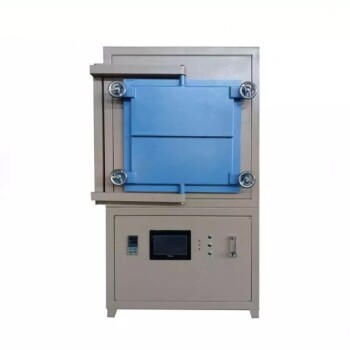
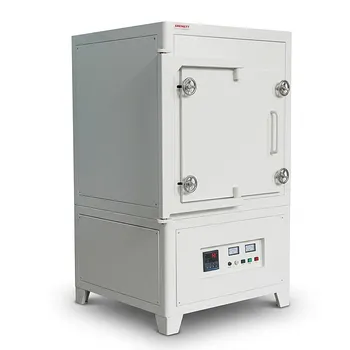
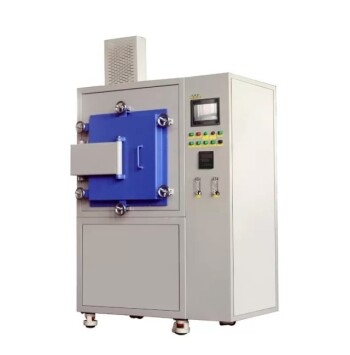
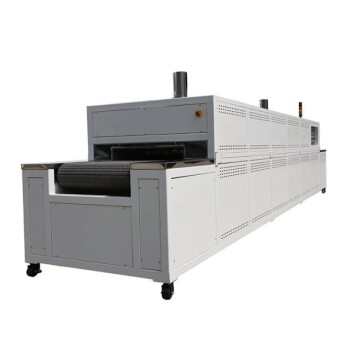
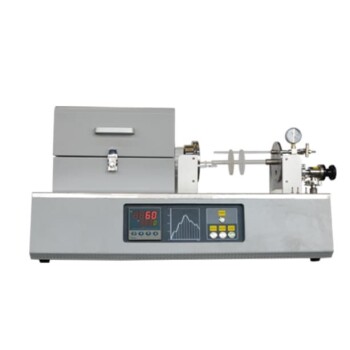
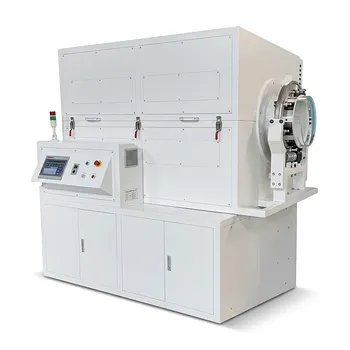
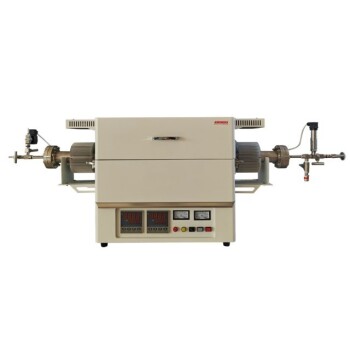
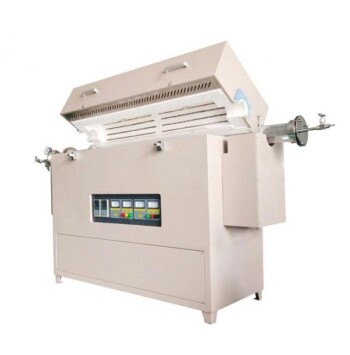
Master your nanoscale synthesis with KINTEK's high-precision laboratory atmosphere furnaces. Designed to eliminate thermal overshoot and deliver superior temperature uniformity across zones, our customizable high-temperature furnaces—including muffle, tube, and atmosphere systems—provide the razor-thin kinetic control required for perfect core-shell nanoparticle encapsulation. Don't let unwanted phase separation ruin your batch purity. Contact KINTEK today to consult with our high-temp equipment specialists and customize the ideal furnace for your research!
Related Products
- 1400℃ Controlled Inert Nitrogen Atmosphere Furnace
- Laboratory Muffle Oven Furnace with Bottom Lifting
- 1700℃ Controlled Inert Nitrogen Atmosphere Furnace
- 1200℃ Controlled Inert Nitrogen Atmosphere Furnace
- 1200℃ Muffle Oven Furnace for Laboratory
People Also Ask
- How does nitrogen atmosphere control in high-temperature furnaces prevent the decomposition of silicon nitride during sintering?
- How does oxygen partial pressure control affect ceramic sintering? Master Defect Chemistry
- Why is thorough binder burnout necessary before sintering advanced ceramics? Ensure Peak Density & Zero Defects
- Why is controlled-atmosphere heating required for functional ceramics and sensors? Master Defect Engineering
- How do controlled-atmosphere furnaces support polymer pyrolysis? Master SiC & Si3N4 Ceramic Conversion