Post-printing thermal heat treatment directly addresses void formation and high porosity in powder-bed 3D-printed ceramic composites by triggering sintering—a diffusion-driven process that fuses particles, collapses residual voids between layers, and strengthens interlayer bonds. Simply optimizing printing parameters reduces but rarely eliminates these defects; the application of precisely controlled high temperatures in a laboratory atmosphere furnace is what transforms a fragile green body into a dense, mechanically isotropic ceramic component.
While optimizing the layer-by-layer printing can minimize initial defects, only a high-temperature sintering step in a laboratory furnace can truly eliminate interlayer voids. The process relies on promoting atomic diffusion and grain growth to fully consolidate the material. However, achieving full density demands careful control of heating profiles and atmosphere to prevent new porosity from being trapped inside.
Understanding Void Formation in Powder-Bed Ceramic Printing
The challenge begins with the very nature of additive manufacturing for ceramics. In powder-bed processes, each fresh layer of powder is selectively bonded to the one below it, creating inherent weaknesses at the interfaces.
The Root Cause: Interlayer Adhesion Gaps
Voids originate primarily at the boundaries between consecutively deposited layers. Even with precise layer height control, microscopic gaps remain where powder particles do not fully fuse. These defects act as stress concentrators and dramatically reduce mechanical performance.
Why Printing Optimization Alone Is Not Enough
Adjusting the layer height can reduce the size of initial pores, but it cannot close them completely. The bonding between layers relies on partial melting or a binder, leaving behind a network of interconnected or isolated voids in the green part. Full consolidation requires a separate, bulk thermal process to heal the entire volume at once.
The Sintering Solution: How Heat Treatment Heals the Structure
Sintering is the critical phase transformation that converts a loosely bound powder compact into a solid, dense ceramic. The laboratory furnace provides the consistent, high-temperature environment needed to drive the necessary atomic movements.
Diffusion and Mass Transport Close the Voids
When the printed green body is heated to a high fraction of its melting point, atoms gain enough mobility to move across particle boundaries. Diffusion rearranges material from the particle interiors to the neck regions between particles, gradually filling in the voids. This process effectively eliminates the interlayer porosity that is the primary weakness of as-printed parts.
Grain Growth Strengthens Interlayer Bonding
As neck growth progresses, individual grains begin to merge and enlarge. This grain growth obliterates the original layer boundaries, creating a continuous, cohesive microstructure. The resulting bond is no longer just a mechanical interlock; it becomes a unified ceramic body with isotropic mechanical properties—equal strength in all directions, not preferentially along the print layers.
Why Laboratory Atmosphere Furnaces Are Essential
Not all heat sources are equal. A laboratory furnace—whether a muffle or tube type—offers the precise control and uniform energy delivery that complex ceramic geometries demand.
Controlled Temperature Ramps Prevent Defects
Rapid, uneven heating can cause differential shrinkage, leading to cracking or warping. Precise ramp rates ensure the entire part heats uniformly, allowing gases to escape from pores before they become sealed off. This strict control is essential to avoid creating trapped closed porosity, where a dense outer shell forms and prevents full internal densification.
Uniform Thermal Energy Breaks Down Weak Structures
In powder compacts, weak agglomerates of particles can impede uniform shrinkage. A laboratory furnace with excellent temperature uniformity ensures that every region of the component receives the same thermal energy input. This helps break down agglomerates and facilitates consistent grain boundary diffusion, leading to maximum final density.
Atmosphere Management Protects Material Integrity
While atmosphere furnaces can operate in air, many advanced systems allow for controlled or inert gas environments. For ceramics sensitive to oxidation or contamination, a controlled atmosphere prevents unwanted chemical reactions during high-temperature treatment. This preserves the desired phase composition and prevents surface degradation alongside the densification process.
Understanding the Trade-offs and Common Pitfalls
The sintering process is powerful, but it is not a magic fix. Applying it without awareness of its limitations can introduce new problems or fail to solve the original ones.
The Risk of Over-Sintering
Excessive temperature or overly long dwell times can cause exaggerated grain growth. While this may fully close pores, it often comes at the expense of fracture toughness, as large grains provide easy paths for crack propagation. The goal is a dense, fine-grained microstructure, and exceeding the optimal thermal profile sacrifices that balance.
The Agglomeration Trap
If the initial powder feedstock or the green body contains strong hard agglomerates, sintering can paradoxically lock in porosity. These agglomerates sinter ahead of the rest of the matrix, creating a rigid skeleton that resists further densification. The result is a permanently porous body where the voids are simply encased, not eliminated—emphasizing the need for well-dispersed starting powders and capable furnace control.
The Limits of Green Density
Sintering can only close a finite amount of porosity. If the as-printed green body has an excessively low packing density or extremely large interconnected channels, heat treatment alone may not achieve full densification. In such cases, it is a complement to, not a replacement for, optimal printing parameters.
Making the Right Choice for Your Application
The decision on how to apply thermal post-processing must align with your end-use requirements. The furnace’s capability and your process recipe are the final arbiters of success.
- If your primary focus is maximizing structural density: Prioritize a sintering cycle with a peak temperature high enough to promote rapid diffusion and a dwell time long enough for pore elimination, all within a calibrated laboratory muffle furnace.
- If your primary focus is maintaining fine microstructure and toughness: Opt for a lower peak temperature or shorter dwell time on the densification plateau to avoid runaway grain growth, leveraging the furnace’s precise control to arrest the process at the optimal point.
- If your primary focus is handling reactive or sensitive ceramics: Select a controlled-atmosphere tube furnace that can purge oxygen or maintain an inert gas blanket, preventing surface and bulk contamination during the thermal consolidation.
Your aim is not simply to apply heat, but to wield it as a precision tool that transforms layer-by-layer defects into a unified, high-performance ceramic component.
Summary Table:
| Heat Treatment Stage | Physical Mechanism | Impact on Ceramic Structure | Key Furnace Requirement |
|---|---|---|---|
| Initial Thermal Ramp | Gradual heating & outgassing | Prevents trapped gas & cracking | Precise ramp-rate control |
| Atomic Diffusion | Mass transport to neck regions | Fuses particles & collapses voids | Excellent thermal uniformity |
| Grain Growth Consolidation | Grain boundary merging | Obliterates layer lines for isotropic strength | Calibrated dwell time |
| Atmosphere Management | Inert gas purging / shielding | Prevents oxidation & unwanted phase changes | Gas-tight atmosphere control |
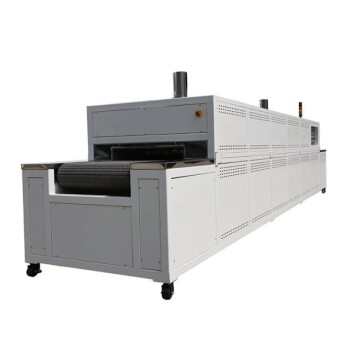
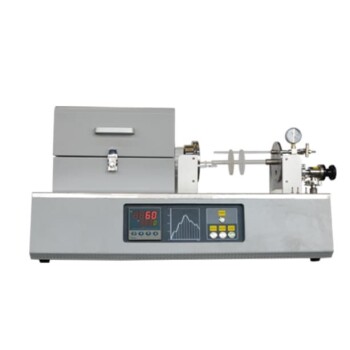
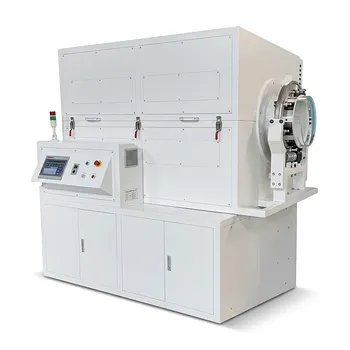
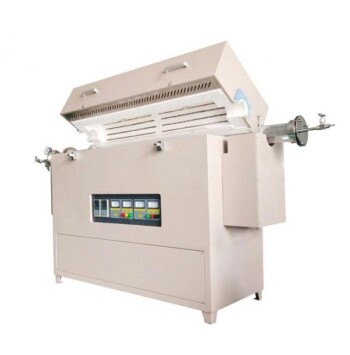
Ready to eliminate porosity and achieve full mechanical density in your 3D-printed ceramic components? KINTEK specializes in premium laboratory equipment and consumables, offering a comprehensive range of high-temperature furnaces—including muffle, tube, rotary, vacuum, CVD, and controlled-atmosphere furnaces—all customizable to your exact thermal processing needs. Whether you require precise ramp control, atmosphere purging, or uniform heating profiles, our technical experts are here to elevate your material performance. Contact KINTEK today to customize your furnace solution!
Related Products
- 1400℃ Controlled Inert Nitrogen Atmosphere Furnace
- Laboratory Muffle Oven Furnace with Bottom Lifting
- 1700℃ Controlled Inert Nitrogen Atmosphere Furnace
- 1200℃ Controlled Inert Nitrogen Atmosphere Furnace
- 1200℃ Muffle Oven Furnace for Laboratory
People Also Ask
- How does nitrogen atmosphere control in high-temperature furnaces prevent the decomposition of silicon nitride during sintering?
- How does oxygen partial pressure control affect ceramic sintering? Master Defect Chemistry
- Why is thorough binder burnout necessary before sintering advanced ceramics? Ensure Peak Density & Zero Defects
- Why is controlled-atmosphere heating required for functional ceramics and sensors? Master Defect Engineering
- How do controlled-atmosphere furnaces support polymer pyrolysis? Master SiC & Si3N4 Ceramic Conversion