The secret to lightning-fast sintering isn’t in the average temperature—it’s in the microscopic hotspots.
When an electric current passes through a compacted powder, it concentrates at the tiny contact points between particles. These inter-particle necks experience extreme localized Joule heating, creating temperatures that can be hundreds of degrees higher than the bulk specimen. This drives exponentially faster diffusion, plastic flow, and pore elimination, enabling powder shrinkage at lower overall furnace temperatures and in dramatically shorter times than conventional radiant heating ever could. The result is a densification process governed not by the bulk thermal energy of a furnace, but by the intense, targeted energy delivered exactly where it’s needed.
In field-assisted electric sintering, the key to speed lies in bypassing the slow, uniform heating of traditional furnaces. By generating localized hot spots at particle contacts, the process dramatically accelerates creep, lattice diffusion, and vacancy-driven pore shrinkage. This explanation unpacks the physics behind that acceleration and the trade-offs that come with it.
The Physics of Localized Contact Heating
Conventional sintering and field-assisted techniques operate on fundamentally different heating principles. Understanding this difference is critical to grasping why shrinkage rates can differ by orders of magnitude.
How Conventional Furnace Heating Limits Speed
Standard high-temperature furnaces rely on radiant heat from external heating elements. Energy transfers slowly and uniformly through the entire powder compact by conduction and radiation.
Heating rates are typically limited to 1–10°C/min. The entire compact must reach a high macroscopic temperature before atomic diffusion becomes fast enough to drive significant densification. This slow, bulk heating exposes the material to prolonged thermal soak times, often causing unwanted grain growth and coarse microstructures.
The Joule Heating Advantage in Electric Field-Assisted Sintering
In field-assisted techniques (like Spark Plasma Sintering or FAST), a high-intensity, low-voltage current flows directly through the die and/or the conductive powder.
The current path is not uniform. At the restricted contact necks between particles, resistance spikes—often due to surface oxide films and the simple geometric constriction. Ohm’s law pairs high resistance with high current density to produce intense, localized Joule heating. The primary reference confirms that these local temperatures can exceed the macroscopic average by hundreds of degrees.
Hotspots: Where the Magic Happens
These microscopic “hot spots” are not just warm regions. Supplementary evidence shows that electron scattering at dislocations, voids, and particle contacts further concentrates resistive heating.
The intense local energy input has two critical effects:
- It reduces the yield stress required for dislocation motion along slip planes, enabling plastic deformation at lower applied pressures.
- It elevates atomic lattice vibration energy, effectively putting diffusion mechanisms into overdrive at the exact locations where matter must move to grow necks.
This is the antithesis of the diffused, low-energy environment inside a conventional furnace.
Accelerated Mass Transport: Breaking the Diffusion Barrier
Localized heating doesn’t just warm the contacts; it fundamentally alters how atoms and vacancies move. The acceleration of shrinkage stems from several interconnected mechanisms.
Power-Law Creep and Explosive Neck Growth
Neck growth between particles is governed by power-law creep, where the shear strain rate is a strong function of temperature. Even a modest temperature rise in a conventional furnace would help, but the supra-elevated local temperatures at contact necks cause an exponential jump in strain rate.
The primary reference highlights that this localized temperature rise significantly increases both shear strain rate and lattice diffusion rate at the neck. With diffusion enhanced by orders of magnitude, the neck grows at a pace unattainable by simply raising the bulk furnace temperature.
Vacancy Gradients that Shrink the Right Pores
Conventional sintering often suffers from pore coarsening: large pores grow at the expense of smaller ones due to standard thermal diffusion kinetics.
Electric field-assisted sintering reverses this. Electric field concentration at pore interfaces creates localized temperature gradients near larger pores. These gradients generate a corresponding vacancy gradient that drives vacancy flow from large pores toward smaller pores. The result is the rapid elimination of large, detrimental pores rather than their growth. This yields a denser final structure in far less time.
The Extreme Driving Force of Pulsed Thermal Gradients
When rapid pulsed currents are used, the benefits intensify. Short pulse durations prevent the heat from redistributing away from the inter-particle boundary zones.
Supplementary references indicate that localized temperature gradients at contacts can exceed macroscopic gradients by 3 to 4 orders of magnitude, reaching up to 10⁶ K/m. These intense local gradients trigger two powerful mass transport mechanisms:
- Thermal diffusion (the Ludwig-Soret effect) , where atoms migrate along a temperature gradient.
- Non-uniform vacancy generation that creates an additive vacancy flux, directly enhancing grain-boundary diffusion and accelerating overall shrinkage.
Liquid-Assisted Rearrangement in Flash Sintering
In some systems, like oxide ceramics, localized heating can push contact temperatures past the material’s melting point. This triggers a phase transition to a liquid melt state.
When this happens, ionic electrical conductivity jumps by two to four orders of magnitude (as governed by Walden’s rule), concentrating current flow even more. The liquid bridges generate strong attractive capillary forces—estimated at around 27 MPa for 100 nm particles—that physically pull neighboring solid particles together. This liquid-assisted rearrangement allows operators to achieve rapid densification at much lower furnace onset temperatures.
The Counterintuitive Role of Heating Rate
The speed of heating itself becomes a powerful control variable in field-assisted systems, interacting with powder characteristics in ways that puzzle conventional wisdom.
From Hours to Minutes
FAST systems routinely achieve heating rates of 200–1000°C/min. This slashes sintering times from hours to mere minutes. Faster ramping suppresses surface diffusion mechanisms that coarsen the microstructure without densifying it, preserving a finer grain size while reaching full density.
Why Coarser Particles Can Shrink Faster
A surprising phenomenon emerges: under high heating rates, coarser powder particles (e.g., 75 µm) sometimes exhibit higher maximum shrinkage rates than finer particles (sub-50 µm).
This occurs because rapid thermal ramping delays pore tip spheroidization. In finer powders, pores quickly round up and become less effective at driving grain-boundary diffusion. Coarser particles, with slower spheroidization, maintain sharper pore tips that intensify grain-boundary diffusion during the critical early stages of sintering. This means researchers can strategically pair heating rate with initial particle size to maximize densification efficiency.
Understanding the Trade-offs and Pitfalls
While the acceleration is profound, the very mechanisms that enable extreme densification also introduce risks. A trusted technical assessment requires objectivity about these limitations.
Thermal Runaway and Uneven Control
The non-linear conductivity spike during liquid formation can lead to thermal runaway. Once a contact melts and conductivity soars, more current rushes in, generating even more heat. Without precise feedback control, this cascade can destroy the part or the tooling. It’s a double-edged sword that demands sophisticated power supplies.
The Risk of Anisotropic Shrinkage
The intense local gradients that drive fast shrinkage can also create non-uniform temperature fields across the entire compact. This leads to anisotropic shrinkage, where dimensional contraction occurs unevenly. Further anisotropy can arise from friction against the die, gravity, or compaction-flattened pores. Components requiring tight tolerances may need post-sintering machining or extremely careful die design.
Gas Entrapment and Swelling
The rapid heating and closure of porosity can trap gases inside the compact. If atmospheric control is inadequate or the powder contains volatile contaminants, gas-forming reactions (like carbon monoxide generation) can cause component swelling instead of shrinkage. The speed that enables densification can also seal off an escape path prematurely. Managing heating rate and vacuum/pressure cycles is critical to avoid this.
Making the Right Choice for Your Sintering Goal
The choice between conventional furnace heating and field-assisted localized heating is not about which is “better” in the abstract—it’s about which advantage aligns with your specific technical goal.
- If your primary focus is maximizing densification speed and throughput: Field-assisted sintering is unmatched. Localized Joule heating and rapid ramping cut cycle times from hours to minutes, directly answering the need for production efficiency.
- If your primary focus is preserving a nanostructure or metastable phase: Leverage the low bulk temperatures and short soak times of electric field-assisted methods. They achieve full density while dramatically suppressing grain growth, protecting the properties you engineered.
- If your primary focus is achieving extreme dimensional precision on large or complex parts: Proceed with caution. The anisotropic shrinkage risks in field-assisted systems are real. Highly uniform, multi-zone conventional furnaces may still be your best bet for maintaining strict tolerances without extensive post-processing.
- If your primary focus is consolidating a thermally sensitive or volatile material: The ability to target heat only at particle contacts makes FAST the likely winner. It can densify materials before significant decomposition or reaction occurs, provided atmosphere management is tightly controlled.
Localized contact heating doesn’t just add energy—it intelligently directs it to the exact points where matter must move, rewriting the rules of powder densification. By understanding the mechanisms, you gain the power to choose a sintering path that turns a simple powder into a precisely engineered component with unprecedented speed and control.
Summary Table:
| Feature / Mechanism | Conventional Furnace Heating | Field-Assisted Contact Heating |
|---|---|---|
| Heating Mechanism | External radiant & conductive heating | Direct localized Joule heating at particle necks |
| Heating Rate | Slow (1–10°C/min) | Rapid (200–1000°C/min) |
| Temperature Distribution | Uniform macroscopic heating | Extreme microscopic hotspots (100s°C > bulk) |
| Dominant Mass Transport | Standard lattice & surface diffusion | Accelerated power-law creep & high vacancy flux |
| Sintering Duration | Hours | Minutes |
| Microstructure Impact | Prolonged soak can cause grain growth | Rapid densification preserves fine/nano grains |
Maximize Sintering Precision and Efficiency with KINTEK
Whether you are researching cutting-edge electric field-assisted sintering or seeking reliable, high-uniformity bulk thermal processing, KINTEK delivers industry-leading high-temperature laboratory equipment engineered for your exact requirements.
Our Comprehensive Range of Customizable Furnaces Includes:
- Muffle & Tube Furnaces: High-precision thermal control for daily lab research
- Vacuum & Atmosphere Furnaces: Tightly controlled environments for sensitive materials
- CVD & Induction Melting Furnaces: Advanced solutions for specialized material synthesis
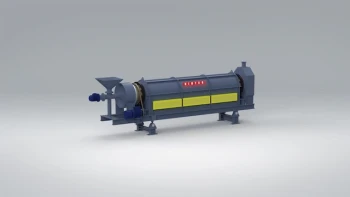
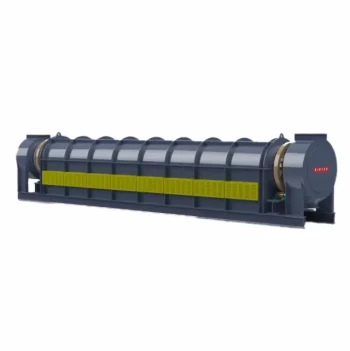
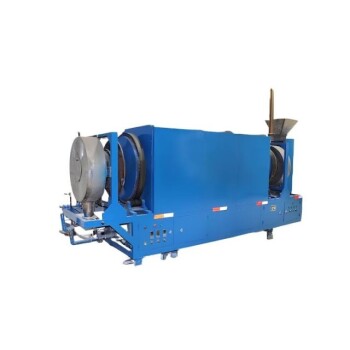
- Rotary & Dental Furnaces: High-throughput and application-tailored designs
Ready to upgrade your lab's thermal processing capabilities? Contact KINTEK today to consult with our high-temperature equipment experts and build the custom furnace solution your research deserves!
Related Products
- Spark Plasma Sintering SPS Furnace
- Vacuum Heat Treat Sintering Furnace with Pressure for Vacuum Sintering
- Small Vacuum Heat Treat and Tungsten Wire Sintering Furnace
- 600T Vacuum Induction Hot Press Vacuum Heat Treat and Sintering Furnace
- Vacuum Heat Treat Sintering Furnace Molybdenum Wire Vacuum Sintering Furnace
People Also Ask
- How does the heating mechanism of Spark Plasma Sintering (SPS) function? Enhance TiC/SiC Composite Fabrication
- Why is it necessary to maintain a high vacuum environment during the SPS of SiC? Key to High-Density Ceramics
- What are the technical advantages of using an SPS sintering furnace? Elevate Al2O3-TiC Material Performance
- What are the advantages of Spark Plasma Sintering (SPS)? Achieve Superior Microstructures
- What are the steps in the discharge plasma sintering process? Master Fast, High-Density Material Consolidation