Grain growth is a double-edged sword in high-temperature sintering. Its impact on mechanical properties depends entirely on whether it is controlled or allowed to run rampant. For advanced ceramics like silicon nitride, a moderate increase in grain size can actually enhance fracture toughness by promoting crack-deflection and bridging mechanisms. For sintered metals, however, the elastic modulus is governed primarily by residual porosity, and uncontrolled grain growth often traps pores, degrading stiffness rather than improving it.
The relationship is indirect but decisive: grain growth alters the size, shape, and location of pores—and these microstructural changes dictate final fracture toughness and elastic modulus. Precise thermal control in a high-temperature furnace is the only way to harness grain growth for better properties while avoiding the traps that lead to brittle, poorly densified components.
The Fundamental Link Between Microstructure and Performance
Grain size and porosity are not independent variables; they evolve together during the thermal treatment. Understanding how they couple is the first step to engineering reliable mechanical properties.
How Grain Size Drives Fracture Toughness in Ceramics
In brittle materials, fracture toughness often scales with the square root of grain size. This is particularly true for toughened ceramics like silicon nitride, where elongated, larger grains can bridge crack faces and dissipate energy.
The primary reference confirms that “fracture toughness scales directly with the square root of the grain size.” However, this benefit only materializes if the grains remain well‑bonded and free from internal porosity. Uncontrolled coarsening that traps pores inside grains eliminates the toughening effect and can drastically reduce toughness.
Why Elastic Modulus Is Governed by Density, Not Grain Size
Elastic modulus in sintered materials is a porosity‑sensitive property. The primary reference states that for sintered metals, “elastic modulus increases with higher fractional density,” and factors like pore shape and grain size distribution introduce scatter around this trend.
Grain size itself has a negligible direct effect on modulus. The real driver is the volume fraction and morphology of pores. A coarse‑grained but fully dense metal will have a similar modulus to a fine‑grained one of identical composition. The challenge is that grain growth during the final sintering stage often prevents achieving that full density.
The Kinetics of Grain Growth Inside a High-Temperature Furnace
To control the impact on toughness and modulus, you must understand how grain coarsening accelerates at the worst possible moment—when densification is almost complete.
Why Final‑Stage Sintering Is the Critical Control Point
Up to roughly 90% relative density, grain growth is restrained because pore boundaries pin the grain boundaries. As soon as open porosity converts to isolated closed pores (around 85–90% density), grain growth accelerates rapidly while densification slows.
This is the make‑or‑break window. Uncontrolled high temperatures or excessive hold times cause grain boundaries to sweep across closed pores, leaving intragranular porosity that is nearly impossible to eliminate. The result: a microstructure with large grains, trapped pores, and disappointing mechanical properties.
The Exponential Nature of Thermal Activation
Grain growth follows an Arrhenius‑type kinetic law, where the growth rate increases exponentially with temperature. Even small hot spots inside a furnace can create local regions of rapid coarsening.
The kinetic equation G^m = G_o^m + Kt shows that the driving force is proportional to the temperature‑dependent boundary mobility. Precise thermal uniformity is non‑negotiable—localized overheating leads to non‑uniform grain structures that degrade both toughness and stiffness unpredictably.
Normal Grain Growth vs. Abnormal Grain Growth
Normal grain growth maintains a unimodal size distribution and, if stopped in time, can yield a fine‑grained, fully dense ceramic with good toughness (e.g., fine‑grained SiC with grain sizes below 10 µm).
Abnormal grain growth creates a bimodal distribution, where a few large grains consume the fine matrix. These runaway grains often detach from pores, trapping them inside and preventing further densification. The supplementary references highlight that once initiated, the average size of abnormal grains grows linearly with time. For fracture toughness, this is a disaster—the trapped pores act as stress concentrators, overriding any potential bridging benefits.
Understanding the Trade-offs
No thermal cycle can maximize all properties simultaneously. Decision‑making requires accepting the inherent tensions.
The Density–Grain Size Dilemma
Higher temperatures speed densification but also accelerate grain growth. If you push the furnace to achieve 99.9% density, you risk ending up with grains an order of magnitude larger than desired. For ceramics, a slightly lower density with smaller grains may yield superior fracture toughness than a fully dense but coarse‑grained body full of internal pores.
When Additives Shift the Balance
The supplementary references on CdO‑Bi₂O₃ systems show that small amounts of sintering additives can trigger abnormal coarsening by enhancing grain‑boundary diffusion. In contrast, higher additive concentrations can retard growth by forming second‑phase pinning particles.
This means the same furnace profile can produce vastly different microstructures depending on composition. Without a process tailored to the specific material, achieving consistent toughness and modulus becomes a game of chance.
The Trap of Excessive Dwell Time
Longer hold times at sintering temperature promote coarsening, even if density has plateaued. The pores that remain after the initial rapid densification are unlikely to close further, but grain boundaries will keep migrating. Extending the soak simply trades more grain growth for no additional stiffness gain and potentially lower toughness.
Making the Right Choice for Your Goal
Your furnace recipe must align with the property that matters most to your application. Use these guardrails to guide your thermal processing strategy.
- If your primary focus is maximizing fracture toughness in a ceramic: Aim for a moderate grain size (often in the 5–15 µm range for materials like Si₃N₄) with a unimodal, pore‑free microstructure. Use a high‑temperature hold just long enough to convert closed pores into grain‑boundary junctions, then quench or rapidly cool to freeze the grain size before abnormal growth begins.
- If your primary focus is maximizing elastic modulus in a sintered metal: Prioritize maximum fractional density above all else. Use a furnace profile that ramps slowly through the final‑stage sintering window to allow complete pore closure without allowing grain boundaries to break away. A fully dense, fine‑grained structure will deliver the highest modulus.
- If your application demands both stiffness and toughness: Accept that a fine‑grained, near‑fully dense microstructure is the least‑bad compromise. Use precise temperature control (minimal overshoot), a carefully chosen additive system that pins boundaries without creating second‑phase brittleness, and a hold time just sufficient to reach closed porosity. For many technical ceramics, achieving 98–99% density with a grain size under 10 µm offers the best balance.
- If you are scaling from a lab furnace to production: Invest in a furnace with proven thermal uniformity and temperature accuracy (±2–3°C). The exponential sensitivity of grain growth to temperature means that a 10°C hot spot can derail a carefully designed profile, producing parts with unpredictable mechanical scatter.
Master the thermal profile, and you master the grain structure—and with it, the precise balance of fracture toughness and stiffness your product demands.
Summary Table:
| Material & Focus | Dominant Property Driver | Impact of Controlled Grain Growth | Risk of Uncontrolled Coarsening |
|---|---|---|---|
| Ceramics (Fracture Toughness) | Grain size & crack-bridging mechanisms | Increases toughness (proportional to square root of grain size) | Traps intragranular pores, creating stress points and lowering toughness |
| Sintered Metals (Elastic Modulus) | Fractional density & volume fraction of pores | Preserves density to maximize structural stiffness | Causes pore detachment, leaving trapped voids that degrade modulus |
Master Microstructure Control with KINTEK Sintering Solutions
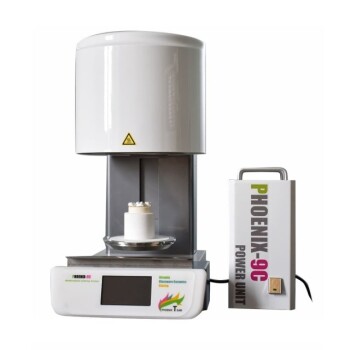
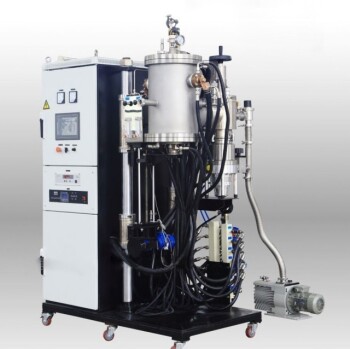
Achieving the perfect balance between high density, fracture toughness, and elastic modulus requires precision thermal accuracy. KINTEK specializes in premium laboratory equipment and high-temperature furnaces—including muffle, tube, rotary, vacuum, CVD, atmosphere, dental, and induction melting furnaces—all fully customizable to meet your exact material processing specifications.
Eliminate hot spots and runaway grain growth in your laboratory or production line. Contact KINTEK today to discover how our tailored thermal systems can improve your material consistency and performance.
Related Products
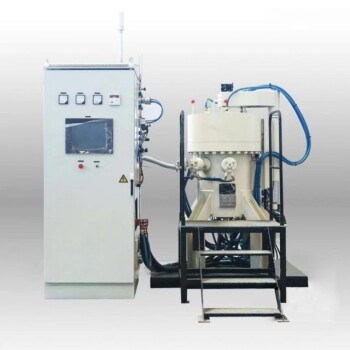
- 2200 ℃ Tungsten Vacuum Heat Treat and Sintering Furnace
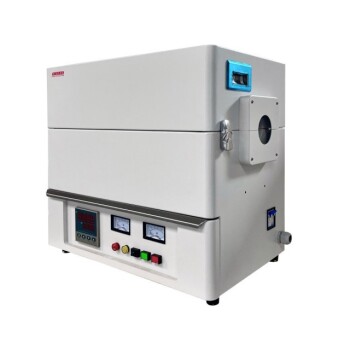
- High Temperature Muffle Oven Furnace for Laboratory Debinding and Pre Sintering
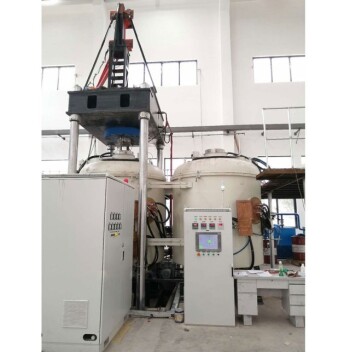
- 2200 ℃ Graphite Vacuum Heat Treat Furnace
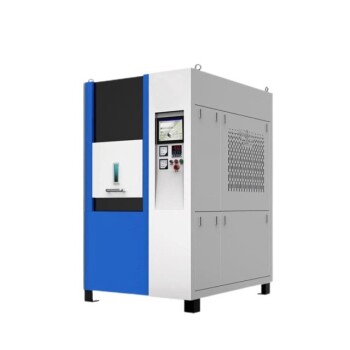
- Vacuum Heat Treat Sintering Furnace Molybdenum Wire Vacuum Sintering Furnace
- 1400℃ High Temperature Laboratory Tube Furnace with Alumina Tube
People Also Ask
- How does a tungsten-heated vacuum sintering furnace prepare (TbxY1-x)2O3 ceramics? Achieve 99%+ Density & Purity
- What wear-resistance enhancements are achieved by powder coating? The Role of Vacuum Sintering Furnaces
- How do compaction pressure and vacuum sintering optimize porous ceramics? Maximize Density & Toughness
- What role does a high-temperature vacuum sintering furnace play in the densification of WC-10(Ni, Ni/Co) alloys?
- How does high-temp vacuum sintering influence Y-TZP mechanical properties? Achieve Max Toughness