It’s all about microstructural engineering. Controlled high-temperature thermal processing transforms a thin surface layer of high-speed tool steel into an ultra-hard, wear-resistant shell. By subjecting the steel to rapid heating and equally rapid quenching, you lock in grain-refined, metastable structures like martensite or fine dendritic colonies—pushing surface microhardness to levels unattainable by conventional heat treatment alone.
The fundamental mechanism is the creation of a dense, fine-grained, non-equilibrium microstructure on the surface. This directly elevates microhardness (up to HV 1600) and dramatically slows down abrasive wear, but only when heating and cooling cycles are regulated with absolute precision.
How Controlled Heating Transforms the Surface
The surface of a tool steel sees an entirely different thermal history than the core. Mastering that difference is the key.
Rapid Austenitization and Instant Quenching
A high-power heat source—like a laser or induction coil—raises the surface to its austenitizing temperature in fractions of a second. The bulk material stays cold, acting as a massive heat sink. This produces a self-quenching effect that freezes the high-temperature phase into martensite before it can decompose.
Grain Refinement and Metastable Zones
The extreme cooling rate prevents crystal grains from growing. Instead, you get ultra-fine martensitic needles or even dendritic solidification patterns in the molten micro-layer. These structures are far from equilibrium, but they’re packed with internal stress and dislocation tangles that make plastic deformation incredibly difficult.
A Dramatic Leap in Microhardness
Standard through-hardening might deliver 60–65 HRC. This surface treatment can push local microhardness to HV 1600 (approximately 16,000 MPa). That’s a step-change in a material’s ability to resist indentation under load.
Why Wear Resistance Gets a Simultaneous Boost
Extreme surface hardness is only one piece of the puzzle. The refined microstructure also redefines how the surface interacts with abrasive particles.
How Martensite Defeats Abrasive Particles
Abrasive wear is essentially a micro-cutting process. A hard martensitic matrix directly blunts the tip of sliding grits, drastically reducing the volume of material ploughed out during every pass. The higher the hardness, the shallower the cut.
The Role of Microstructural Homogeneity
Fine, randomly oriented grains prevent a single wear scar from propagating along a weak crystallographic plane. Crack tips are constantly redirected at grain boundaries, which means material removal is slowed down, not just postponed.
Synergy with Surface Compressive Stresses
Rapid heating and quenching generally lock in compressive residual stresses at the surface. These act as a pre-load that must be overcome before a tensile crack can open, further improving resistance to erosive and fatigue-linked wear mechanisms.
The Crucial Role of Precise Temperature Control
These benefits are fragile. Lose control of the temperature cycle and the steel can emerge softer or full of cracks.
Avoiding the Overheating Trap
Too much heat, or holding at peak temperature for too long, causes grain coarsening and carbide dissolution. Both undermine the very mechanism that produces high hardness. Overheating turns a potentially HV 1600 surface back into something ordinary.
Preventing Surface Cracks and Distortion
High-speed steels are brittle. An unmanaged thermal gradient between the hot skin and the cold core creates tensile stresses that can initiate micro-cracks. Precise ramp rates and uniform heat distribution—only possible in well-calibrated laboratory-grade furnaces—keep these stresses below the fracture limit.
From Lab Precision to Production Repeatability
Modern high-temperature furnaces allow engineers to program exact heating profiles, dwell times, and gas quenching sequences. This removes guesswork and ensures that every tool gets the same surface microstructure, delivering consistent wear life across a whole batch.
Understanding the Trade-offs in Thermal Processing
No surface engineering solution is perfect. Acknowledging the limitations is what separates a reliable technical specification from a marketing claim.
The Hardness-Toughness Tension
Pushing microhardness to extreme values can push fracture toughness down. A very hard, fully martensitic layer may be vulnerable to impact or sudden overload. A mandatory post-treatment tempering cycle is needed to restore some ductility, but this must not sacrifice too much hardness.
A Thin Shell, Not a Bulk Transformation
The hardened zone is typically only microns to a few millimeters deep. Once that layer is worn through, the soft core is exposed. The component’s load-bearing capacity and maximum service life are therefore defined by the depth and quality of the treated zone, not by the peak hardness number.
Equipment Cost and Process Complexity
Achieving HV 1600 demands high-end temperature control, rapid cooling infrastructure, and skilled personnel. For many applications, a less extreme surface hardening route may deliver 90 % of the performance with far simpler logistics.
Making the Right Choice for Your Tooling Goal
Your application’s primary failure mode should dictate whether and how you use controlled high-temperature surface processing.
- If your primary focus is maximum abrasive wear life: push for the finest grain structure and highest surface hardness achievable in your steel, then pair it with a precise tempering cycle to avoid brittle failure.
- If your primary focus is impact resistance alongside wear performance: specify a slightly lower surface hardness and a deeper case depth, accepting that microhardness may stay closer to 900–1100 HV to preserve toughness.
- If your primary focus is process reliability in a production line: invest in a thermal processing setup with programmable cycles, real-time temperature monitoring, and reproducible quench control to eliminate batch-to-batch variation.
Mastering the heating and cooling cycle isn’t just about chasing a hardness number—it’s about engineering the exact microstructure that will outlast every abrasive challenge your tool faces.
Summary Table:
| Thermal Processing Stage | Key Microstructural Mechanism | Resulting Performance Benefit |
|---|---|---|
| Rapid Austenitization & Self-Quenching | Locks in ultra-fine martensite & metastable dendritic structures | Elevates surface microhardness up to HV 1600 |
| Grain Refinement & Homogeneity | Redirects crack tips at boundaries & blunts abrasive particles | Reduces micro-cutting wear rate and delays surface failure |
| Compressive Stress Lock-In | Generates surface compressive residual stresses | Inhibits tensile crack initiation from erosive or fatigue loads |
| Precise Temperature Control | Prevents carbide dissolution, grain coarsening & micro-cracking | Delivers crack-free components and repeatable batch consistency |
Elevate Your Metallurgy Precision with KINTEK High-Temperature Furnaces
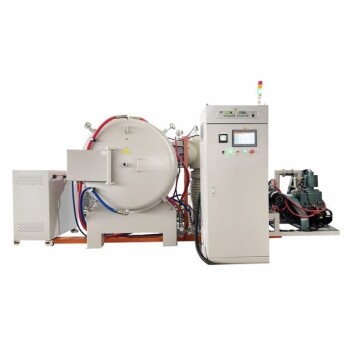
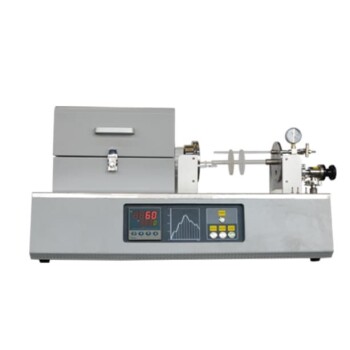
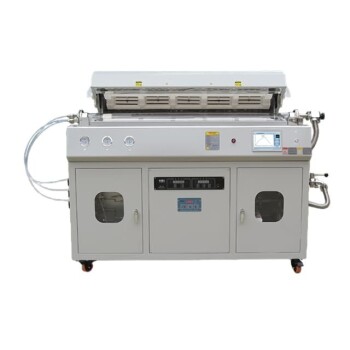
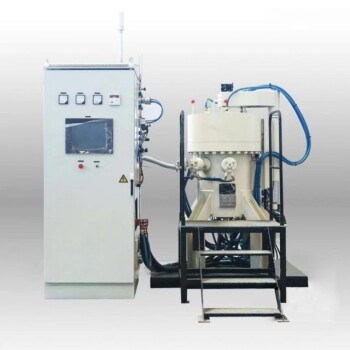
Achieving microhardness levels up to HV 1600 requires absolute thermal precision, exact ramp rates, and reliable atmosphere management. KINTEK offers a comprehensive range of advanced laboratory equipment and customizable high-temperature furnaces—including vacuum, atmosphere, tube, muffle, CVD, and induction melting systems—designed to meet the rigorous demands of tool steel engineering and material research.
Eliminate thermal distortion, prevent grain coarsening, and ensure process repeatability across every batch.
Ready to transform your thermal processing capabilities? Contact KINTEK today to consult with our technical experts and request a custom solution for your lab!
Related Products
- 1700℃ High Temperature Laboratory Tube Furnace with Alumina Tube
- 1400℃ High Temperature Laboratory Tube Furnace with Alumina Tube
- High Temperature Muffle Oven Furnace for Laboratory Debinding and Pre Sintering
- Molybdenum Vacuum Heat Treat Furnace
- 1200℃ Muffle Oven Furnace for Laboratory
People Also Ask
- How does zone-melting in tube furnaces synthesize bismuth micro-wires? Master Single-Crystal Thermoelectric Growth
- How do high-temperature laboratory tube furnaces ensure environmental stability? Precision Thermal Reduction Tips
- How are high-temp tube furnaces used to measure diffusion coefficients per Fick's law? Master Precision Annealing
- How are high-temperature laboratory tube furnaces applied in long-term vacuum homogenization heat treatments for intermetallic samples?
- How are high-temperature tube furnaces applied in testing ceramic-supported alloy membranes? Insights