Sieve classification is your first line of defense against unpredictable sintering behavior. By using ASTM E 11:87 standard mesh sieves to isolate a narrow, consistent particle size fraction from your raw ceramic powder—for example, passing material through a No. 325 sieve to cap particles at 45 µm—you create a compact with uniform packing density, predictable shrinkage, and an accelerated solid-state diffusion pathway. This directly translates to lower required furnace temperatures, shorter hold times, and a dramatic reduction in cracking or microstructural defects during heat treatment in a laboratory muffle or atmosphere furnace.
Ceramic powder classification via ASTM E 11:87 mesh sieves optimizes furnace heat treatment by establishing a known maximum particle size and uniform size distribution. This eliminates oversized grains that would otherwise cause differential sintering, localized stresses, and residual porosity, while the resulting high surface area of the fine fraction drives densification at reduced energy input. However, this optimization is only reliable for powders whose target size range remains firmly within the practical sieving limits—generally above 40 µm—beyond which dry sieving becomes inaccurate and alternative characterization methods are required.
The Role of Particle Size Uniformity in Sintering Optimization
The way powder particles pack together before you ever close the furnace door dictates nearly every thermal parameter that follows. When your compact contains a chaotic mix of large and small grains, the uneven pore network forces your furnace to compensate with higher temperatures, longer dwells, and a constant risk of warping. Consistent classification removes that chaos, providing a reproducible green body that responds predictably to heat.
How ASTM E 11:87 Mesh Sieves Define a Consistent Particle Fraction
The ASTM E 11:87 standard gives each sieve number an exact, traceable aperture dimension, removing guesswork. You know with certainty that material passing through a No. 100 sieve is smaller than 150 µm, while a No. 200 sieve restricts the population to particles under 75 µm, and a No. 325 sieve cuts off at 45 µm.
This series of calibrated wire mesh openings creates a simple, repeatable protocol that any technician can follow. Instead of relying on ambiguous visual estimates or supplier lot variability, you stack sieves to bracket your desired fraction—collecting the powder retained on a fine sieve while discarding coarser and ultra-fine tails. The result is a mid-range fraction with a tightly bounded maximum particle size that plugs directly into your existing lab furnace recipes.
The Link Between Uniform Fine Powders and Enhanced Sintering Kinetics
Once you’ve removed the coarse outliers, the entire compact enters the furnace with a dramatically larger total surface area per unit mass. That excess surface energy acts as a thermodynamic driving force for solid-state diffusion, meaning necks between particles begin to form at temperatures that would leave an unclassified powder largely inert.
The practical payoff is a furnace recipe that can run significantly cooler or with shorter isothermal hold times. Because every particle in the classified batch participates in densification on a similar thermal timeline, shrinkage becomes uniform across the compact, reducing the stress gradients that cause delamination or end-of-part cracking. In many cases, a powder that once demanded a 1400°C soak for 10 hours to reach 93% density can, after a simple sieving step to a consistent fine mesh, achieve comparable or better densification with a less aggressive thermal budget.
The Practical Limits of Dry Sieving for Ceramic Powder Preparation
Sieving looks effortless in a textbook but betrays you quickly when powders become too fine. The very characteristics that make sub-40 µm particles attractive for sintering—high surface area, strong interparticle forces—also cause them to clump together, blind the mesh, and resist clean classification. Acknowledging these limits is essential to avoid building an entire process on a flawed particle size measurement.
When Blinding and Agglomeration Undermine Classification Accuracy
Dry sieving faces severe operational limits when characterizing raw materials below 40 µm. As particle mass drops, van der Waals forces and electrostatic charges dominate, causing fine ceramic powders to form persistent agglomerates that act like single large particles during sieving. Instead of passing through the openings, they ride on top of the screen or wedge into the apertures, blinding the mesh and artificially inflating the apparent coarse fraction.
For advanced ceramic powders with primary particle sizes under 1 µm, sieving becomes entirely unfeasible. The powder simply sees a solid plate rather than a classifying screen. Any attempt to force it through with brushing or tapping introduces uncontrolled mechanical energy that breaks agglomerates unpredictably, giving you a false size distribution that does not reflect what will actually compact inside your die. Relying on such data leads to wildly inconsistent sintering outcomes.
Metal Contamination Risks and the Need for Purity
Brass or stainless steel sieve cloth inevitably wears as hard ceramic particles abrade the wires. Microscopic metal flakes then contaminate the very powder you are trying to purify, introducing sintering active elements that can form liquid phases, degrade dielectric properties, or discolor the final ceramic. When your laboratory goal is a high-purity oxide or non-oxide component, even trace metallic impurities from mesh wear are unacceptable and undermine the entire heat treatment sequence.
The problem intensifies with finer sieve meshes, where the wire diameter is smaller and mechanical integrity lower. A No. 325 sieve that has seen heavy use may no longer conform to ASTM E 11:87 tolerances and could be shedding nickel or copper into every batch without leaving visible signs of damage.
Understanding the Trade-offs: Sieving vs. Alternative Techniques
The decision to use mesh sieves or to adopt more sophisticated particle size analysis methods is not about which one is objectively “better”—it’s about matching the tool to the required information fidelity and the intrinsic limits of your powder.
Where Sieving Delivers Clear Value
For coarse starting materials (~1 µm and above in primary particle size, or agglomerated powders that can be broken down to that range), ASTM sieves provide a fast, low-capital method to strip out the tail of oversized grains that would otherwise ruin a furnace run. They require no liquid dispersants, no complex optical models, and no extensive operator training beyond proper stack assembly and tapping technique.
If your sintering goal is to densify a standard alumina or zirconia body to a relative density in the low- to mid-90% range, sieving to a No. 325 cutoff directly increases green body homogeneity and gives you a reproducible feedstock that aligns with existing furnace programs. The simplicity of the method also makes it ideal for training labs or educational settings where the principle of size-dependent sintering is more important than achieving ultimate density.
When You Must Move Beyond the Sieve Stack
As soon as your raw powder’s mean particle size drops below approximately 40 µm and you aim for near-full densification above 99%, sieving alone cannot provide the necessary classification resolution or accuracy. For chemically prepared submicron powders with narrow size distributions in the 0.1–0.4 µm range, alternative techniques such as laser light scattering or liquid sedimentation are mandatory to verify the precise particle size distribution before pressing.
These methods enable the furnace recipe optimizations that sieving cannot support. When you know with confidence that your compact consists of uniform 0.2 µm particles, you can ratchet the sintering temperature down by 350°C to 600°C compared to a coarse powder, shorten the soak to 1.5 hours, and still achieve >99% relative density while preserving a submicron grain structure. Attempting this with a powder only characterized by a No. 325 sieve pass would be a dangerous gamble, because you would have no insight into the fine tail that dominates the shrinkage behavior and the burn-out kinetics.
How to Apply This to Your Laboratory Furnace Workflow
The ASTM E 11:87 sieve scale is a powerful starting point for any ceramic powder preparation protocol, but its role must be calibrated to your specific material and performance targets.
If your primary focus is sintering standard oxide ceramics for general lab use: Use a stack of ASTM E 11:87 sieves to establish a reproducible upper size bound (typically No. 200 or No. 325), which will give you uniform packing, predictable shrinkage, and a straightforward furnace ramp without the complexity of submicron handling.
If your primary focus is achieving submicron grain microstructures with ultra-high final density: Start with a chemically synthesized powder in the 0.1–0.4 µm range and rely exclusively on laser light scattering or sedimentation for particle size quality control; dry sieving will not only fail but also risk contaminating your high-purity batch with metal debris.
If your primary focus is cost-effective process development with a range of raw materials: Use sieving for initial screening and coarse-chain quality checks, then cross-validate any critical fine powder with a reference technique before finalizing your furnace sintering schedule.
Treat the sieve not as the final authority on your powder, but as the reproducible gatekeeper that eliminates the coarse fraction—the most common source of sintering failure—while you reserve precision analytical methods for the fine particle domain that truly governs densification.
Summary Table:
| Optimization Factor | ASTM E 11:87 Dry Sieving | Advanced Submicron Analysis |
|---|---|---|
| Target Size Range | Particle sizes > 40 µm | Particle sizes < 40 µm (submicron) |
| Primary Sintering Benefit | Eliminates coarse grains; ensures uniform packing & shrinkage | Enables precise PSD control for >99% relative density |
| Furnace Impact | Lowers required soak times and eliminates cracking | Reduces sintering temps by 350°C–600°C |
| Key Limitations | Risk of screen blinding, agglomeration, & metal contamination | Requires complex liquid dispersants & advanced optical tools |
| Best Used For | General lab oxides, coarse raw materials, batch consistency | Ultra-high purity ceramics & fine-grained microstructures |
Master Your Ceramic Heat Treatment with KINTEK
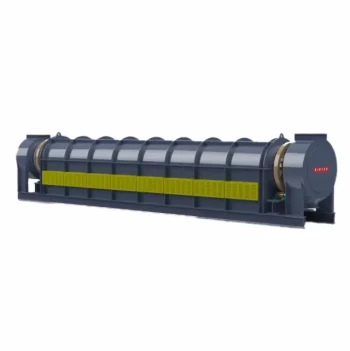
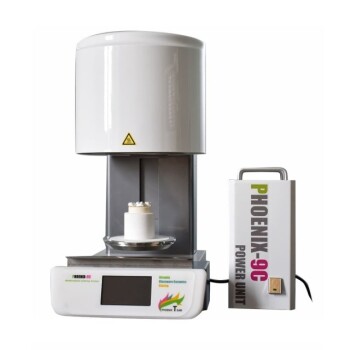
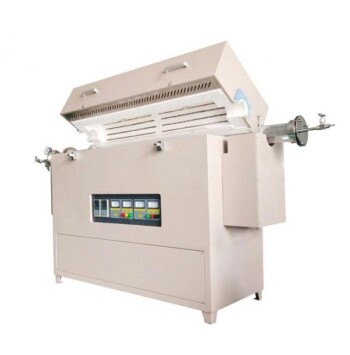
Optimizing your ceramic powder preparation is only half the equation—achieving flawless microstructures requires precise high-temperature thermal control. KINTEK specializes in premium laboratory equipment and consumables, offering a comprehensive range of high-temperature furnaces—including muffle, tube, rotary, vacuum, CVD, atmosphere, dental, and induction melting furnaces—all fully customizable to meet your unique research and manufacturing specifications.
Whether you need precise atmosphere control or rapid, uniform heating for your classified powders, our technical experts are ready to design the ideal thermal solution for your lab.
Contact KINTEK today to optimize your furnace processing!
Related Products
- High Temperature Muffle Oven Furnace for Laboratory Debinding and Pre Sintering
- Spark Plasma Sintering SPS Furnace
- Small Vacuum Heat Treat and Tungsten Wire Sintering Furnace
- Vacuum Dental Porcelain Sintering Furnace for Dental Laboratories
- Vacuum Heat Treat Sintering Furnace with Pressure for Vacuum Sintering
People Also Ask
- What thermal phenomena occur during polymer binder burnout in ceramic green bodies? Lab Furnace Guide
- Why is controlled heat treatment in a muffle furnace necessary for calcined clay? Achieve Optimal Pozzolanic Activity
- What role does a high-temperature muffle furnace play in STFO synthesis? Achieve Pure Perovskite Results
- How does a high-temperature muffle furnace facilitate the formation of LaNbxAl1−xO3+δ perovskite structures? Key Roles
- What role does a high-temperature muffle furnace play in the multi-stage synthesis of Li0.5MnFe1.5O4? Key to Pure Spinel