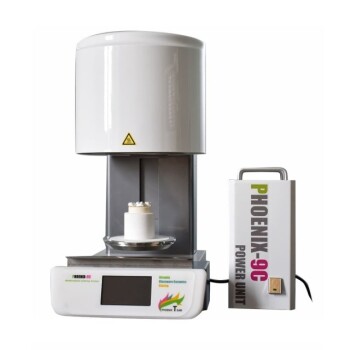
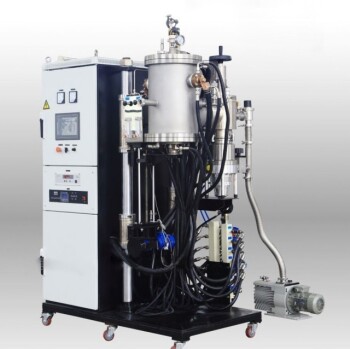
Atmosphere and vacuum control in high-temperature sintering is the decisive factor that transforms a compacted powder into a high-integrity component.
It directly shapes grain boundary purity, phase composition, and porosity—the very features that define an advanced alloy’s or ceramic’s ultimate performance. A precisely managed environment, whether ultra‑high vacuum or a tailored gas blend, prevents oxidation, suppresses elemental volatilization, and eliminates the gas entrapment that leads to bloated, strength‑robbing pores. The result is a microstructure with clean interfaces, preserved stoichiometry, and the exact density demanded by extreme service conditions.
The sintering atmosphere is not a passive shield; it is an active processing variable. It governs chemical stability, vapor‑phase transport, and pore evolution. Mastering this variable—understanding exactly how different environments impact the microstructure—is what separates a component that fails from one that achieves peak heat resistance, wear performance, or functional properties.
How the Atmosphere Controls Chemistry and Phase Stability
Preventing Oxidation and Decarburization in Alloys
Many high‑performance alloys—such as aeronautical MCrAlY coatings or carbide‑strengthened stainless steels—would react with oxygen in seconds at sintering temperature. A high vacuum or hydrogen/inert atmosphere suppresses that oxidation entirely.
This preserves the metallic bonding and carbon content that strengthen grain boundaries and enable superior heat resistance and tribological performance. Oxide‑free particle surfaces are a prerequisite for true metallurgical bonding.
Suppression of Volatilization and Decomposition in Ceramics
Advanced ceramics often contain volatile species. Lead‑based ferroelectrics can lose PbO, while Si₃N₄ will thermally decompose without a nitrogen overpressure.
A controlled atmosphere (or vacuum) maintains the material’s exact stoichiometry. Without this, secondary phases form at grain boundaries, weakening the ceramic and destroying the customized magnetic, optical, or piezoelectric properties for which it was designed.
Eliminating Unwanted Vapor‑Phase Transport
At high temperatures, even trace impurities can create a vapor phase that transports material unevenly, leading to exaggerated grain growth. A high‑purity atmosphere stops this uncontrolled mass transfer. The result is a homogeneous, fine‑grained microstructure with consistent mechanical properties throughout the part.
Porosity, Densification, and the Hidden Danger of Trapped Gases
How Trapped Gases Create Macro‑Pores and Swelling
When a green compact’s pores close prematurely during sintering, any remaining gas becomes trapped. That trapped gas creates an internal pressure that coarsens sub‑micron pores into large, stable spherical voids—sometimes up to 40 µm.
This phenomenon, known as desintering, swelling, or bloating, drastically reduces density and load‑bearing capacity. Even inert atmospheres (argon, nitrogen) can be culprits if they are sealed inside the porosity.
Using Vacuum and Gas Purging to Achieve Full Density
A high‑vacuum furnace actively pumps away these pore‑forming gases before pore closure. The extremely low oxygen partial pressure also prevents oxide skins from sealing pores prematurely.
A final hydrogen purge can chemically reduce any remaining oxides and increase the gas solubility in the metal, allowing pores to be absorbed by the lattice. The outcome is a dense, virtually pore‑free microstructure that delivers maximum compressive strength and wear resistance.
Grain Boundary Engineering and Microstructural Integrity
Clean Boundaries for Strength and Toughness
Atmosphere control directly determines the chemical purity of grain boundaries. If oxygen or sulfur is allowed to segregate there, the boundaries become brittle and fracture paths crystallize.
A well‑controlled vacuum or reducing atmosphere keeps those harmful impurities away, yielding clean grain boundaries that dramatically improve cohesion, creep resistance, and overall mechanical integrity.
Protecting Stoichiometry and Functional Performance
In functional ceramics (ferroelectrics, ferrites), even a minuscule shift in cation or anion concentration will erase the tailored electrical or magnetic response.
The sintering atmosphere preserves that precise chemical formula, ensuring that the final microstructure—free of off‑stoichiometry intergranular phases—delivers the intended functional property repeatedly and reliably.
Understanding the Trade‑Offs
- Vacuum vs. Gas Atmosphere: Ultra‑high vacuum excels at outgassing and preventing oxidation in non‑oxide ceramics and refractory alloys, but it can cause excessive evaporation of high‑vapor‑pressure elements (e.g., chromium, manganese) if not balanced with a partial pressure. Inert or hydrogen atmospheres avoid that evaporation but may introduce gas entrapment or, in the case of hydrogen, decarburize steels if cycles are not calibrated.
- Complexity and Cost: Precision atmosphere control—including gas purification, continuous oxygen probes, and mass‑spectrometer monitoring—adds significant capital and operational expense. For some applications, a modest level of porosity is acceptable; for aerospace or medical components, the investment is non‑negotiable.
- Hydrogen Embrittlement Risk: Using hydrogen can lead to embrittlement in susceptible alloys if cooling rates and post‑sinter treatments are not carefully managed. The same atmosphere that cleans boundaries can also weaken them if process steps are overlooked.
How to Apply This to Your Material Goal
The optimal atmosphere strategy is determined by the specific material system and the performance metric you must achieve.
- If your primary focus is maximizing wear resistance and compressive strength in a carbide‑strengthened alloy: Use a high‑vacuum sinter with a subsequent hydrogen reduction step to eliminate oxide inclusions without risking decarburization.
- If your primary focus is preserving the functional stoichiometry of a non‑oxide ceramic: Employ a nitrogen overpressure or a sealed inert environment to counteract decomposition and maintain exact element ratios for consistent dielectric or magnetic properties.
- If your primary focus is achieving full density in a complex powder‑metallurgy part: Choose a well‑purged hydrogen atmosphere to ensure gas dissolution and prevent the internal pore coarsening that causes blistering and swelling.
- If your primary focus is protecting reinforcement fibers in a ceramic matrix composite: Use an inert gas with extremely low oxygen partial pressure (or vacuum) to stop the oxidation of SiC fibers and the formation of strength‑degrading aluminosilicate phases.
Controlling the sintering environment is not just a protective measure—it is the most powerful lever you have to design a microstructure that delivers the exact performance your application demands.
Summary Table:
| Sintering Environment | Microstructural Mechanism | Key Benefits | Recommended Target Materials |
|---|---|---|---|
| High Vacuum | Degasses compacts; prevents oxide skin formation | Prevents macro-pores/swelling, cleans grain boundaries | Refractory alloys, non-oxide ceramics, carbide-strengthened metals |
| Reducing (Hydrogen) | Chemically reduces surface oxides; increases gas solubility | Eliminates inclusions, promotes lattice pore absorption | Powder metallurgy parts, alloy steel components |
| Inert / Overpressure | Suppresses thermal decomposition and elemental volatilization | Maintains exact stoichiometry, prevents grain boundary phase shifts | Volatile ceramics (e.g., Si₃N₄, ferroelectrics), CMCs |
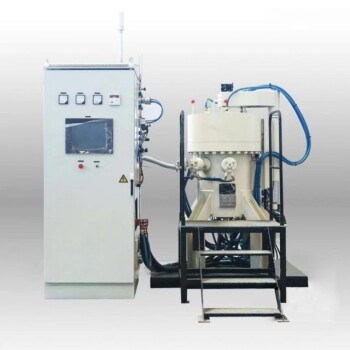
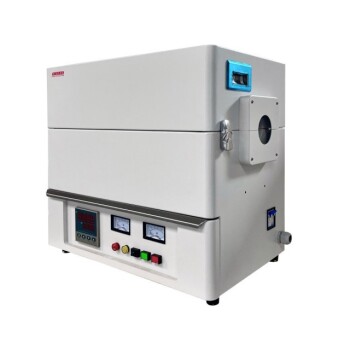
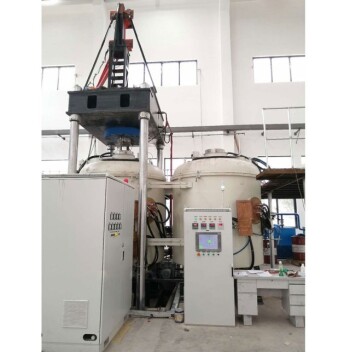
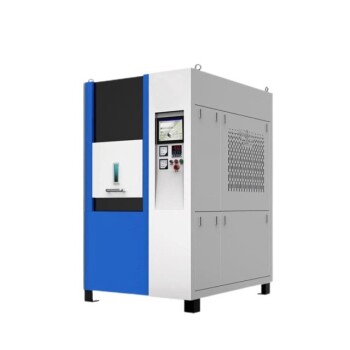
Ready to optimize your material microstructures and achieve full density? KINTEK specializes in advanced laboratory equipment and consumables, offering a comprehensive range of customizable high-temperature furnaces—including vacuum, atmosphere, tube, muffle, rotary, CVD, dental, and induction melting furnaces tailored to your precise sintering parameters. Whether you need ultra-high vacuum control or precise gas purging systems, our engineered thermal solutions deliver maximum material performance. Contact KINTEK today to customize your furnace solution!
Related Products
- 2200 ℃ Tungsten Vacuum Heat Treat and Sintering Furnace
- High Temperature Muffle Oven Furnace for Laboratory Debinding and Pre Sintering
- 2200 ℃ Graphite Vacuum Heat Treat Furnace
- Vacuum Heat Treat Sintering Furnace Molybdenum Wire Vacuum Sintering Furnace
- 1400℃ High Temperature Laboratory Tube Furnace with Alumina Tube
People Also Ask
- How does a tungsten-heated vacuum sintering furnace prepare (TbxY1-x)2O3 ceramics? Achieve 99%+ Density & Purity
- What wear-resistance enhancements are achieved by powder coating? The Role of Vacuum Sintering Furnaces
- How do compaction pressure and vacuum sintering optimize porous ceramics? Maximize Density & Toughness
- What role does a high-temperature vacuum sintering furnace play in the densification of WC-10(Ni, Ni/Co) alloys?
- How does high-temp vacuum sintering influence Y-TZP mechanical properties? Achieve Max Toughness