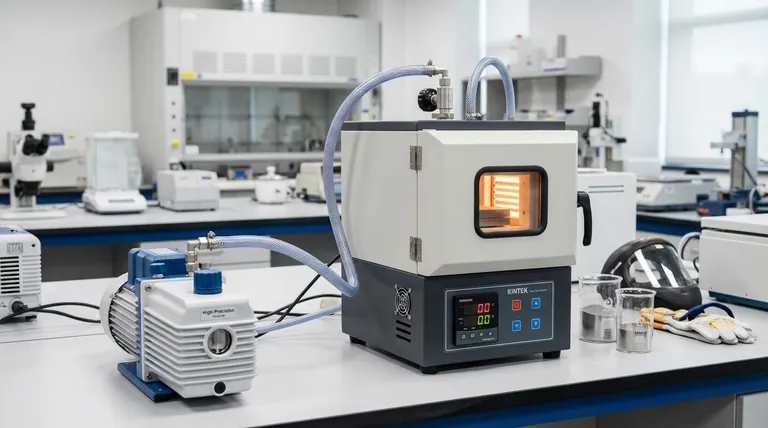
A high-precision vacuum pump acts as a critical thermodynamic lever in zinc extraction by lowering the initial furnace pressure to levels as low as 10Pa. This drastic reduction in pressure alters the chemical equilibrium, allowing expansion-type reactions that generate zinc vapor to occur at significantly reduced temperatures compared to atmospheric conditions.
Core Takeaway By creating a high-vacuum environment, the system lowers the energy barrier required to reduce iron oxide into active metallic iron. This accelerates the displacement reaction with zinc sulfide (ZnS) at lower temperatures, leading to a substantial reduction in overall energy consumption.
The Thermodynamics of Vacuum Extraction
Altering Equilibrium Conditions
A high-precision pump maintains a consistent internal pressure of approximately 10Pa.
This low-pressure environment fundamentally shifts the equilibrium conditions for gas phase generation.
Lowering Initiation Temperatures
Zinc extraction relies on expansion-type reactions that produce zinc vapor.
Under a higher degree of vacuum, the physical laws governing these reactions change.
Consequently, the reaction initiation temperature drops, allowing the process to begin with less thermal energy input.
The Chemical Pathway
Activating Iron Reductants
The vacuum environment specifically impacts the behavior of iron compounds within the matrix.
It allows iron oxide to be reduced to active metallic iron at a much lower temperature than usual.
Triggering Zinc Displacement
Once the metallic iron is formed, it acts as a reactant.
This active iron triggers a displacement reaction with zinc sulfide (ZnS).
Because the iron becomes available sooner (at cooler temperatures), the extraction of zinc proceeds more efficiently.
Operational Considerations
The Link Between Vacuum and Energy
The primary benefit of this setup is a significant reduction in process energy consumption.
However, this efficiency is entirely dependent on the pump's ability to maintain the vacuum.
If the pressure inside the furnace rises above the 10Pa target, the temperature required to initiate the reaction will increase correspondingly.
The Necessity of Precision
Standard vacuum pumps may struggle to hold the specific pressure required to alter the equilibrium.
High precision is essential to ensure the iron oxide reduction occurs early in the heating cycle.
Without this precision, the thermodynamic advantage is lost, and the system reverts to higher-energy requirements.
Making the Right Choice for Your Goal
To maximize the efficiency of your zinc extraction experiments, consider your specific priorities:
- If your primary focus is Energy Efficiency: Ensure your pump can consistently maintain 10Pa to maximize the temperature reduction benefits and lower power costs.
- If your primary focus is Reaction Kinetics: Prioritize high-precision vacuum control to accelerate the reduction of iron oxide and the subsequent displacement of zinc sulfide.
Mastering the vacuum level is the most effective way to lower thermal requirements and optimize the thermodynamics of zinc extraction.
Summary Table:
| Feature | Impact on Zinc Extraction |
|---|---|
| Vacuum Level | Consistently maintains 10Pa pressure |
| Equilibrium Shift | Lowers temperature for zinc vapor generation |
| Chemical Activation | Accelerates iron oxide reduction to metallic iron |
| Energy Benefit | Significant reduction in overall thermal input |
Maximize Your Lab’s Efficiency with KINTEK
Ready to optimize your zinc extraction and material research? Backed by expert R&D and manufacturing, KINTEK offers precision Muffle, Tube, Rotary, Vacuum, and CVD systems designed to maintain the exact thermodynamic conditions your experiments demand. Whether you need standard or fully customizable lab high-temp furnaces, our technology ensures precise control to lower your energy costs and accelerate reaction kinetics.
Empower your research today—Contact our experts now to find the perfect vacuum solution for your unique needs!
References
- Hang Ma, Xixia Zhao. Iron oxide synergistic vacuum carbothermal extraction of zinc from zinc sulfide. DOI: 10.2298/jmmb231212024m
This article is also based on technical information from Kintek Furnace Knowledge Base .
Related Products
- Vacuum Hot Press Furnace Machine Heated Vacuum Press
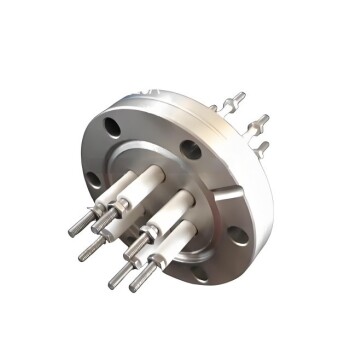
- CF KF Flange Vacuum Electrode Feedthrough Lead Sealing Assembly for Vacuum Systems
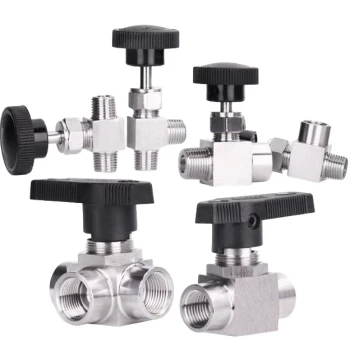
- 304 316 Stainless Steel High Vacuum Ball Stop Valve for Vacuum Systems
- Vacuum Hot Press Furnace Machine for Lamination and Heating
- Vacuum Hot Press Furnace Machine Heated Vacuum Press Tube Furnace
People Also Ask
- What are the primary components of a vacuum hot press furnace? Master the Core Systems for Precise Material Processing
- What are the benefits of the vacuum environment system in a vacuum hot press furnace? Unlock High-Density Sintering
- What safety features are incorporated in vacuum hot press furnaces? Ensure Operator and Equipment Protection
- What types of heating elements are used in vacuum hot press furnaces? Optimize for High-Temp Performance
- What are the core advantages of using a vacuum hot press furnace? Achieve Near-Forged Density for Ti-6Al-4V Alloys