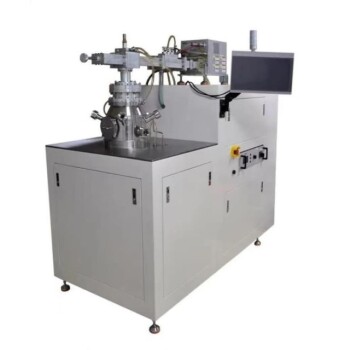
The transition from amorphous Pt-Se composites to crystalline PtSe2 is driven by high-precision thermal energy and atmospheric control. Within a Chemical Vapor Deposition (CVD) system, the composite material is subjected to a sustained temperature of 500 °C for 5 hours under an Argon atmosphere. This environment provides the necessary kinetic energy for atomic rearrangement, allowing the disordered platinum and selenium atoms to lock into a stable, high-quality crystalline lattice.
The CVD system facilitates phase transformation by acting as a controlled reaction chamber that balances thermal activation with chemical isolation. By maintaining a precise 500 °C threshold in an inert Argon environment, it enables the solid-state diffusion required to convert amorphous precursors into ordered PtSe2.
The Role of Thermal Energy in Atomic Rearrangement
Overcoming the Activation Energy Barrier
The primary function of the CVD system in this process is to provide steady thermal energy. At 500 °C, the atoms within the Pt-Se composite gain sufficient mobility to break their existing disordered bonds. This energy is critical for the atoms to migrate to their lowest-energy positions, forming the hexagonal lattice structure of PtSe2.
The Importance of Sustained Annealing
The phase transformation is not instantaneous; it requires a 5-hour holding period. The CVD system’s ability to maintain a constant temperature prevents thermal fluctuations that could lead to structural defects. This long-duration heating ensures that the crystalline grain growth is uniform across the entire silicon substrate.
Maintaining Chemical Purity through Managed Atmospheres
The Necessity of an Argon Environment
The CVD system flushes the chamber with Argon, an inert gas that creates a protected environment. This is vital because, at 500 °C, platinum and selenium are highly susceptible to oxidation if exposed to oxygen or moisture. The Argon atmosphere ensures that the chemical composition of the final PtSe2 remains pure and free from unwanted oxides.
High Reactivity and Coating Uniformity
While this specific process focuses on annealing, CVD systems are inherently designed to handle highly reactive precursors. This capability allows for the efficient and uniform coating of the substrate before or during the phase transformation. The system ensures that the Pt-Se composite is distributed evenly, which is a prerequisite for high-quality crystallization.
Understanding the Trade-offs and Constraints
Balancing Temperature and Material Integrity
Choosing the correct temperature is a delicate balance. While 500 °C is necessary for crystallization, excessive heat can lead to selenium desorption, where selenium atoms evaporate out of the film, leaving the stoichiometry unbalanced. Conversely, temperatures below this threshold may fail to provide enough energy, resulting in a partially amorphous or "glassy" film that lacks the desired electronic properties.
Throughput vs. Crystal Quality
The 5-hour annealing time represents a significant trade-off between processing speed and material quality. While shorter times would increase throughput, they often result in smaller crystalline domains and more grain boundaries. These boundaries can scatter charge carriers, significantly reducing the electrical conductivity and performance of the PtSe2 film.
How to Apply Process Controls to Your Project
The success of PtSe2 synthesis depends on how strictly you manage the CVD environment relative to your specific material goals.
- If your primary focus is Maximum Conductivity: You must prioritize the full 5-hour annealing time at 500 °C to ensure large, well-ordered crystal grains.
- If your primary focus is Substrate Sensitivity: You should investigate plasma-enhanced CVD variants that might lower the required thermal budget and prevent damage to low-melting-point substrates.
- If your primary focus is High-Throughput Production: Consider using a "flow-through" CVD setup where precursors are added to a burning gas for faster, albeit potentially less ordered, thin-film deposition.
A properly calibrated CVD system transforms a chaotic mixture of atoms into a precise crystalline tool by masterfully controlling the intersection of heat, time, and chemistry.
Summary Table:
| Parameter | Process Requirement | Role in Phase Transformation |
|---|---|---|
| Temperature | 500 °C | Provides kinetic energy for atomic rearrangement into crystalline lattice. |
| Duration | 5 Hours | Ensures uniform grain growth and eliminates structural defects through annealing. |
| Atmosphere | Argon (Inert) | Prevents oxidation and maintains chemical purity of the PtSe2 film. |
| Mechanisms | Thermal Activation | Overcomes activation energy barriers to reach a stable hexagonal structure. |
| End Product | Crystalline PtSe2 | Produces high-conductivity thin films suitable for electronic applications. |
Optimize Your Crystalline Synthesis with KINTEK Precision
Achieving the perfect phase transformation from Pt-Se to crystalline PtSe2 requires absolute control over thermal and atmospheric variables. KINTEK specializes in advanced laboratory equipment, offering a comprehensive range of high-temperature furnaces, including CVD systems, tube furnaces, vacuum furnaces, and atmosphere-controlled units—all fully customizable to meet your unique research needs.
Whether you are focusing on maximizing electrical conductivity or high-throughput production, our equipment provides the stability and uniformity your materials demand.
Ready to elevate your thin-film research?
Contact our technical experts today to find the perfect CVD solution for your lab!
References
- Mahendra S. Pawar, Dattatray J. Late. Temperature-dependent Raman spectroscopy and sensor applications of PtSe<sub>2</sub> nanosheets synthesized by wet chemistry. DOI: 10.3762/bjnano.10.46
This article is also based on technical information from Kintek Furnace Knowledge Base .
Related Products
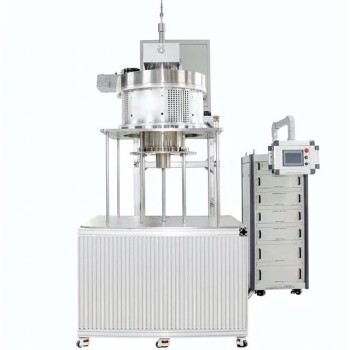
- 915MHz MPCVD Diamond Machine Microwave Plasma Chemical Vapor Deposition System Reactor
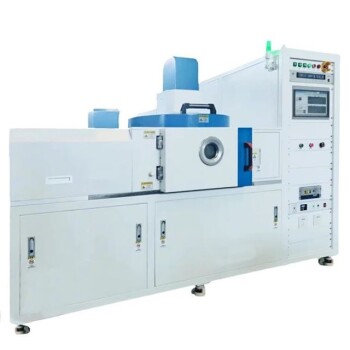
- Custom Made Versatile CVD Tube Furnace Chemical Vapor Deposition CVD Equipment Machine
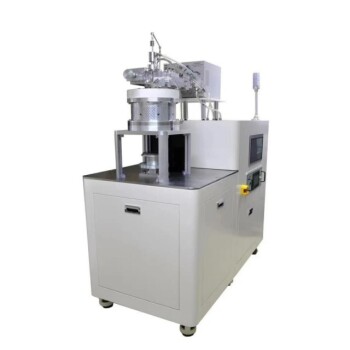
- RF PECVD System Radio Frequency Plasma Enhanced Chemical Vapor Deposition
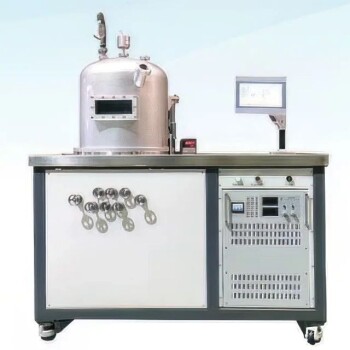
- MPCVD Machine System Reactor Bell-jar Resonator for Lab and Diamond Growth
- HFCVD Machine System Equipment for Drawing Die Nano Diamond Coating
People Also Ask
- What is the MPCVD method and why is it considered effective for diamond deposition? Superior Purity & High Growth Rates
- What factors influence the quality of diamond deposition in the MPCVD method? Master the Critical Parameters for High-Quality Diamond Growth
- What is the purpose of a microwave plasma chemical vapor deposition system? Grow High-Purity Diamonds and Advanced Materials
- What are some key features and benefits of the microwave plasma chemical vapor deposition system? Achieve Unmatched Material Synthesis
- What is the basic principle of operation for the microwave plasma chemical vapor deposition system? Unlock High-Purity Material Growth