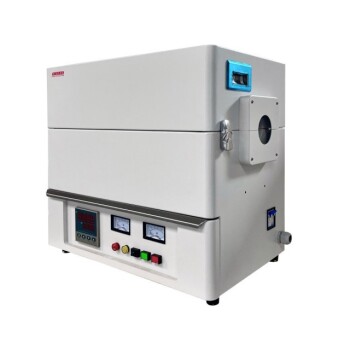
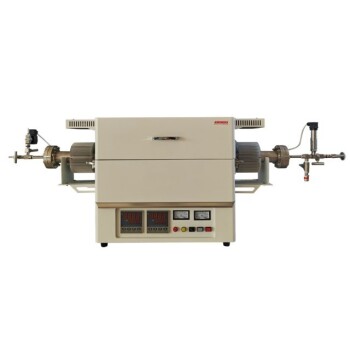
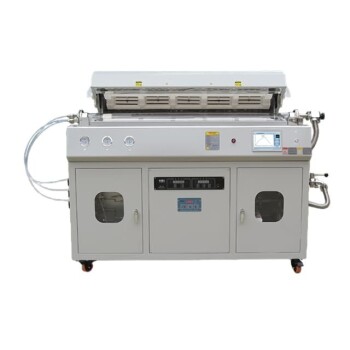
The key to unlocking high-performance parts from recycled metal powders lies in the thermal journey, not just the printing process. Controlled-atmosphere and high-temperature lab furnaces provide the exact environmental and thermal profiling needed to condition, degas, and sinter these powders without oxidation. This integrated approach eliminates residual moisture, relieves internal stresses, and ensures full densification, transforming low-cost, sustainable feedstocks into mechanically robust components.
Recycled metal powders carry hidden contaminants and irregular surfaces that undermine direct printing. High-temperature lab furnaces with vacuum or inert gas environments solve this by creating a chemically clean thermal zone—driving off moisture, removing oxides, and enabling atomic bonding. The result is a closed-loop, energy-efficient path from waste to high-performance parts.
The Critical Role of Thermal Processing in Sustainable AM
Dealing with the Hidden Challenges of Recycled Powders
Recycled powders often retain residual moisture, surface oxides, and irregular particle morphologies from prior machining or processing.
Simply melting them with a laser does not remove these contaminants—oxides weaken interparticle bonds and moisture vaporizes into porosity.
A dedicated thermal treatment before or after printing is essential to restore powder integrity.
Why the Furnace Environment Is Everything
A standard air furnace would exacerbate oxidation, especially with reactive metals like titanium or aluminum.
High-temperature vacuum furnaces eliminate oxygen entirely, while inert atmosphere furnaces purge the chamber with argon or nitrogen.
Some processes even use reducing atmospheres (hydrogen) to chemically strip existing surface oxides, ensuring a pristine particle surface for sintering.
From Powder Conditioning to Full Densification
Moisture Removal and Degassing
Before sintering, a controlled ramp in a lab furnace evaporates adsorbed water and desorbs trapped gases from recycled particles.
Skipping this step leads to blowholes and internal voids during densification.
The furnace’s ability to hold precise low-temperature soak segments is critical for safe, thorough outgassing without igniting fine powders.
Stress-Relief and Homogenization
3D-printed green bodies or laser-melted components often contain high residual stresses from rapid thermal cycles.
A furnace with exact thermal profiling applies stress-relief cycles that relax internal strains without distortion.
For recycled powders with variable microstructures, this homogenization step is what bridges the gap to consistent mechanical properties.
Sintering: The Heart of Performance
Sintering converts a compacted powder mass into a dense solid through atomic diffusion between particles.
In a vacuum or inert atmosphere furnace, clean particle-to-particle contacts form, allowing material transport and pore elimination.
The ultimate tensile strength and ductility of the final part are determined largely by the quality of this furnace-driven sintering step.
Matching the Sintering Mechanism to the Furnace
Solid-State Sintering for Purity Preservation
This mechanism operates below the absolute melting point, relying on surface, grain boundary, or volume diffusion.
A high-vacuum environment removes oxide layers that would otherwise block diffusion paths.
For recycled powders, solid-state sintering in vacuum ensures that the final part retains the alloy’s intrinsic purity without introducing new contaminants.
Liquid-Phase and Reactive Sintering: Precision Thermal Control
Liquid-phase sintering introduces a small amount of molten phase to accelerate densification.
Strict temperature uniformity is non-negotiable— without it, parts slump or develop uneven phase distribution.
Reactive sintering demands specific gases (e.g., nitrogen) to drive in-situ phase formation. Programmable atmosphere furnaces hit these narrow windows, a critical advantage when working with chemically diverse recycled feedstocks.
Understanding the Trade-offs
Not All Furnaces Are Alike: Cost vs. Capability
A simple muffle furnace can dry powder but cannot apply vacuum or reducing gases needed for oxide-sensitive alloys.
Advanced vacuum furnaces carry higher capital cost but enable processing of titanium, aluminum, or high-entropy alloys.
Selecting the right furnace means balancing the value of the recycled material against the required environment.
The Risk of Thermal Runaway with Fine Powders
Nanosized or highly reactive recycled powders can combust violently upon exposure to air at elevated temperatures.
Sealed vacuum furnaces with inert gas backfill are mandatory to manage these exothermic risks.
This safety consideration often dictates the entire furnace design, from gas handling to heating rate controls.
Cycle Time and Energy Consumption
While these furnaces reduce global energy use by enabling single-step debinding and sintering, the cycles themselves are long—often hours or days.
Optimizing the thermal profile to minimize holding time while achieving full densification is a continuous challenge.
An over-aggressive ramp can reintroduce stress, while an overly conservative cycle wastes energy and throughput.
Making the Right Choice for Your Goal
- If your primary focus is maximizing mechanical performance: Prioritize a high-vacuum furnace with ±1°C uniformity and a hydrogen partial pressure capability. This combination reduces oxides and drives complete densification, yielding properties that rival virgin-material parts.
- If your primary focus is developing a low-carbon, circular workflow: Couple an induction melter for scrap-to-powder conversion with a controlled atmosphere furnace for powder conditioning and sintering. The integrated batch process minimizes material loss and energy per part.
- If your primary focus is R&D flexibility across multiple alloys: Choose a customizable tube or chamber furnace that allows gas switching (Ar, N₂, H₂) and programmable vacuum levels. This adapts to varied recycled chemistries without retooling.
- If your primary focus is safety with ultrafine or combustible powders: Invest in a sealed vacuum furnace with overpressure management and automated purging. This guarantees containment of exothermic reactions while preserving chemical purity.
By mapping the furnace environment directly to the unique challenges of your recycled powder, you transform a potential process bottleneck into a reliable, high-performance foundation for sustainable additive manufacturing.
Summary Table:
| Thermal Stage | Environment & Thermal Need | Primary Impact on Recycled Powders |
|---|---|---|
| Moisture Removal & Degassing | Controlled low-temp soak, vacuum or inert purge | Eliminates trapped moisture/gases; prevents internal voids and porosity |
| Stress-Relief & Homogenization | Precise thermal profiling & uniform cooling | Relaxes residual strains from rapid AM cooling; standardizes microstructure |
| Solid-State Sintering | High vacuum or reducing atmosphere (H₂) | Strips surface oxides and drives atomic diffusion without contamination |
| Liquid-Phase & Reactive Sintering | High temperature uniformity (±1°C) with active gas | Accelerates full densification and drives targeted in-situ phase formation |
Maximize Density & Purity in Your Sustainable AM Workflow
Don't let surface oxides, moisture, or thermal defects compromise your recycled powder parts. KINTEK specializes in premium laboratory equipment and consumables, delivering custom high-temperature furnaces engineered to solve the toughest thermal processing challenges.
From high-vacuum and controlled-atmosphere chamber furnaces to tube, muffle, rotary, and induction melting systems, our solutions offer precise temperature control and programmable gas environments tailored to your specific alloy needs.
Ready to elevate your powder metallurgy and additive manufacturing research? Contact KINTEK today to consult with our experts and design the ideal furnace solution for your lab!
Related Products
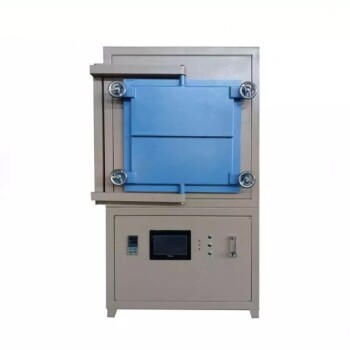
- 1400℃ Controlled Inert Nitrogen Atmosphere Furnace
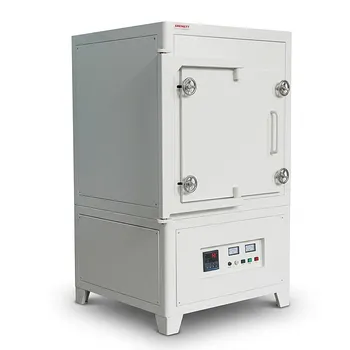
- 1700℃ Controlled Inert Nitrogen Atmosphere Furnace
- 1200℃ Controlled Inert Nitrogen Atmosphere Furnace
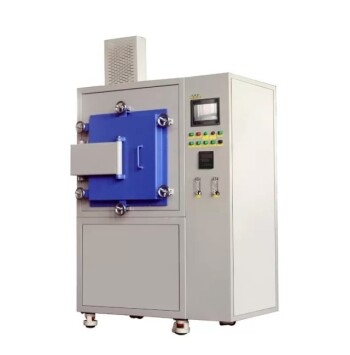
- Controlled Inert Nitrogen Hydrogen Atmosphere Furnace
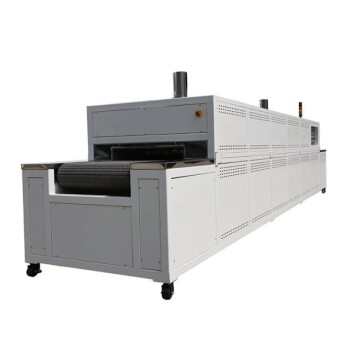
- Mesh Belt Controlled Atmosphere Furnace Inert Nitrogen Atmosphere Furnace
People Also Ask
- How does nitrogen atmosphere control in high-temperature furnaces prevent the decomposition of silicon nitride during sintering?
- How does oxygen partial pressure control affect ceramic sintering? Master Defect Chemistry
- How do controlled-atmosphere furnaces support polymer pyrolysis? Master SiC & Si3N4 Ceramic Conversion
- Why is thorough binder burnout necessary before sintering advanced ceramics? Ensure Peak Density & Zero Defects
- Why is controlled-atmosphere heating required for functional ceramics and sensors? Master Defect Engineering