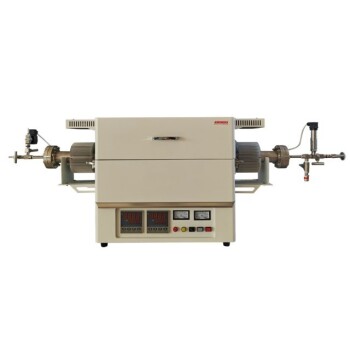
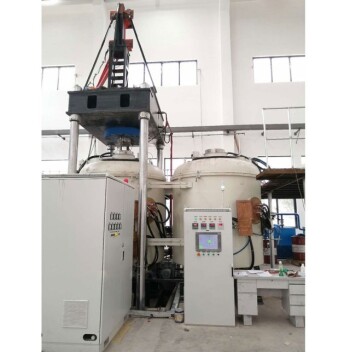
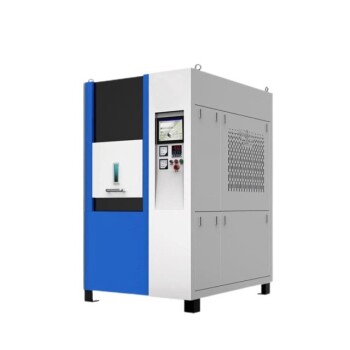
The key to scaling up new iron ore sinter blends and alternative fuels lies not in the plant, but in the laboratory. High-temperature sintering furnaces and pot-test setups replicate industrial packed-bed sintering on a controlled scale. By subjecting prepared mixtures of iron ore, solid fuels, fluxes, and recycled materials to controlled thermal cycles and suction airflow, researchers can precisely measure thermal and chemical phenomena. This enables accurate evaluation of raw material blends, bed permeability, and the performance of alternative energy sources—verifying that the resulting sinter meets strict physical and chemical standards before committing to full-scale production.
The core insight is that these lab-scale tools transform a complex, high‑volume industrial process into a data‑rich, manageable experiment. They allow metallurgists to measure exactly what happens inside the sinter bed when you change a blend component or fuel, providing the evidence needed to optimize recipes, derisk novel fuel adoption, and validate process models without costly plant trials.
How Laboratory Pot-Test Furnaces Mimic Industrial Sintering
The Sintering Process in Miniature
A pot-test furnace recreates industrial strand sintering by packing a scaled‑down bed of granulated raw materials into a cylindrical pot. High‑temperature gas ignition is applied to the top surface, while controlled suction airflow draws the heat front downward. This ignites the solid fuel (e.g., coke breeze or anthracite) and drives a descending flame front that partially melts the feed, bonding particles into a porous sinter cake.
Instrumentation for In-Situ Data Collection
What makes pot tests so powerful is the ability to embed sensors directly into the bed. Thermocouples placed at multiple depths (such as 5 cm, 35 cm, and 75 cm) continuously record local temperatures. Because bed‑embedded thermocouples measure the local arithmetic average of gas and solid temperatures, researchers obtain a true thermal signature of the combustion zone. This data validates numerical heat‑transfer and kinetic models, revealing how blend composition or fuel type alters heat release timing and peak temperatures.
Evaluating Raw Material Blends: Permeability, Temperature Windows, and Phase Transformations
Measuring Green Bed Permeability and Moisture Impact
Before ignition, the laboratory setup quantifies green bed permeability by measuring airflow resistance through the packed granules. This directly ties to industrial strand productivity. By varying the iron ore blend, flux basicity, or moisture content, researchers can see how these parameters affect bed structure—a critical factor for achieving uniform sintering.
Thermal Profiling to Map Reaction Zones
The multi‑level thermocouples record the temperature at each depth as the flame front passes. This thermal profile exposes the width and shape of the high‑temperature zone, which governs the extent of melt formation. A rapid, narrow profile may indicate incomplete bonding, while an overly broad one can lead to excessive melting and poor permeability. Such data lets teams pinpoint the optimal blend for a stable, efficient reaction front.
Post-Test Analysis: Porosity, Strength, and Mineralogy
After cooling, the sinter cake is examined for mechanical strength (tumbler index) , reduction degradation, and chemical composition. High‑temperature laboratory muffle or atmosphere furnaces can then be used on small samples to perform controlled thermal cycling—such as pre‑heating at 900 °C and calcining at 1250 °C—to study the development of glass phases, zincite crystallization, and spinel growth. These mineralogical insights explain why one blend yields superior metallurgical performance over another.
Assessing Alternative Fuels: From Solid Substitutes to Gas Recirculation
Replacing Coke Breeze with Biomass or Waste-Derived Fuels
When evaluating alternative solid fuels, the same pot-test furnace becomes a direct comparator. By substituting a portion of the coke breeze with biomass char or waste‑derived coke, researchers track changes in the thermal profile: ignition temperature, maximum bed temperature, and flame front speed. A fuel that ignites earlier but burns cooler may still produce acceptable sinter quality while reducing net CO₂ emissions—information that can only be confidently obtained through controlled lab experiments.
Simulating Gas Injection and Recirculation Strategies
High‑temperature laboratory atmosphere furnaces enable studies that go beyond solid fuels. With precise control over gas atmospheres, researchers can simulate gas recirculation or auxiliary fuel pre‑combustion. By flowing simulated off‑gas through the bed or injecting a supplementary gaseous fuel above the ignition hood, the setup measures how these strategies modify the heat distribution and reaction environment, optimizing energy efficiency and reducing solid fuel consumption.
Interpreting Combustion Signatures from Bed Thermocouples
The thermocouple data becomes the fuel’s fingerprint. An alternative fuel might produce a shorter high‑temperature hold time or a lower peak temperature, yet still achieve sufficient melt formation. By correlating these signatures with the sinter’s final mechanical properties, a lab team can define the acceptable operating window for each fuel, predicting industrial performance without the risk of plant‑scale trial failures.
Understanding the Trade-Offs: Limitations and Pitfalls of Lab Simulation
Scale-Down Effects and Heat Loss Management
A pot test holds only a few kilograms, not tonnes. This creates higher wall‑to‑bed heat loss ratios that can distort the thermal profile compared to a full‑scale strand. Rigorous insulation and careful pot design are needed to mimic industrial heat retention, but some edge effects remain inevitable.
Representativeness of Sample Bed Structure
The granulation and packing in a lab pot may not perfectly reproduce the segregation, compaction, and airflow channeling seen on a moving strand. This means bed permeability measurements can be optimistic if fines migration is underestimated. Researchers must cross‑check results with pilot‑scale trials for critical new blends.
Extrapolating Results to Full-Scale Strands
A pot test is a batch process; an industrial strand is continuous. Variables like strand speed, suction variation, and fresh surface ignition are not fully captured. Consequently, lab‑derived fuel substitution rates or permeability targets must be validated with simulation models and conservative first‑plant trials to account for the dynamic nature of the real process.
Making the Right Choice for Your Development Goal
Use these guidelines to align your lab sintering strategy with your specific objective:
- If your primary focus is optimizing an existing raw material mix: Leverage pot tests with multi‑level thermocouples to map the reaction front and post‑test sinter quality testing. Modify the blend in small, iterative steps while tracking bed permeability and cold strength.
- If your primary focus is qualifying a novel alternative solid fuel: Directly replace a percentage of the base coke in side‑by‑side pot tests. Analyze how the fuel shifts the thermal profile (peak temperature, time above 1200°C) and measure the resulting tumble strength and productivity index to define the maximum viable substitution rate.
- If your primary focus is exploring gas recirculation or auxiliary fuel injection: Combine pot‑test furnaces with tightly controlled laboratory atmosphere furnaces. First, use the atmosphere furnace to study phase transformations under recirculated gas compositions, then validate the overall bed behavior in an instrumented pot test with simulated off‑gas preheating.
- If your primary focus is building a predictive process model: Use every pot test to generate a complete set of thermal profiles at known depths. This data is your calibration bedrock for computational fluid dynamics (CFD) and kinetic models, enabling confident prediction of full‑scale strand performance.
Every well‑designed lab sinter test brings you closer to a de‑risked, profitable industrial process—turn your pot furnace into the ultimate decision‑support tool.
Summary Table:
| Evaluation Focus | Key Lab Tools | Primary Metrics Measured | Industrial Impact |
|---|---|---|---|
| Raw Material Blends | Pot-Test Furnace + Multi-Depth Thermocouples | Green bed permeability, thermal profile shape, tumble index | Optimizes granule structure, melt formation, and cold strength |
| Alternative Solid Fuels | Pot-Test Setup (Coke Breeze Replacement) | Ignition temp, flame front speed, peak bed temperature | De-risks biomass/waste adoption while lowering net CO₂ |
| Gas Recirculation | Controlled Atmosphere & Muffle Furnaces | Phase evolution (spinel/glass), gas composition effects | Reduces solid fuel consumption and enhances thermal efficiency |
| Model Validation | Instrumented Bed Thermocouple Arrays | In-situ gas/solid temperature history | Calibrates CFD/kinetic models for confident plant scaling |
Scale Up Your Sintering Research with KINTEK High-Temperature Solutions
Transitioning to novel iron ore blends or sustainable alternative fuels requires uncompromised precision in the laboratory. KINTEK specializes in high-performance laboratory equipment and consumables, offering a comprehensive range of high-temperature furnaces—including muffle, tube, atmosphere, vacuum, CVD, and induction melting furnaces—all fully customizable to meet your specific metallurgical research requirements.
Whether you need to perform detailed thermal profiling, simulate off-gas recirculation, or analyze post-sinter phase transformations, KINTEK provides the advanced thermal processing equipment needed to de-risk plant trials and maximize productivity.
Ready to optimize your sinter recipes and elevate your testing accuracy? Contact KINTEK today to consult with our technical experts on your custom lab furnace setup!
Related Products
- High Temperature Muffle Oven Furnace for Laboratory Debinding and Pre Sintering
- 1400℃ High Temperature Laboratory Tube Furnace with Alumina Tube
- 1700℃ High Temperature Laboratory Tube Furnace with Alumina Tube
- 1800℃ High Temperature Muffle Oven Furnace for Laboratory
- 1200℃ Muffle Oven Furnace for Laboratory
People Also Ask
- What thermal phenomena occur during polymer binder burnout in ceramic green bodies? Lab Furnace Guide
- What role does a high-temperature muffle furnace play in STFO synthesis? Achieve Pure Perovskite Results
- Why is controlled heat treatment in a muffle furnace necessary for calcined clay? Achieve Optimal Pozzolanic Activity
- How does a high-temperature muffle furnace facilitate the formation of LaNbxAl1−xO3+δ perovskite structures? Key Roles
- What role does a high-temperature muffle furnace play in the multi-stage synthesis of Li0.5MnFe1.5O4? Key to Pure Spinel