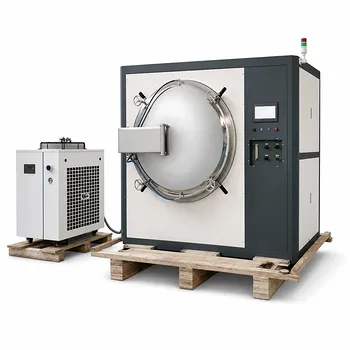
The Mystery of the "Leaking" Heat
Imagine you are running a high-temperature vacuum process, perhaps sintering a sensitive ceramic or performing a critical CVD coating. Your control panel shows the heating elements are drawing maximum power, yet the internal temperature refuses to stabilize. Worse, the outer shell of your furnace is becoming dangerously hot to the touch.
In an atmospheric furnace, the solution would be simple: add more insulation. But in a vacuum, traditional logic often fails. You might spend weeks recalibrating sensors or replacing heating elements, only to find that your energy bills remain astronomical and your material quality remains inconsistent. This isn't just a technical glitch; it is a fundamental misunderstanding of how heat moves when air is taken out of the equation.
The Common Struggle: Fighting a Ghost
When faced with "heat leakage" or temperature fluctuations in a vacuum environment, many operators attempt to fix the problem by simply "beefing up" the chamber or increasing the power density. They treat the vacuum furnace like a standard oven, expecting thick walls to hold the heat in.
The results of this approach are often disappointing:
- Thermal Runaway: The outer chamber walls overheat, potentially damaging vacuum seals and sensors.
- Poor Uniformity: The center of the "hot zone" stays cool while the edges fluctuate, leading to warped samples or failed batches.
- High Operational Costs: You are essentially paying to heat the room rather than your sample.
The business consequence is clear: project delays, wasted expensive raw materials, and a shortened lifespan for your equipment. The problem isn't that you don't have enough heat; it’s that you aren't controlling how it moves.
The Root Cause: In a Vacuum, Heat is Light
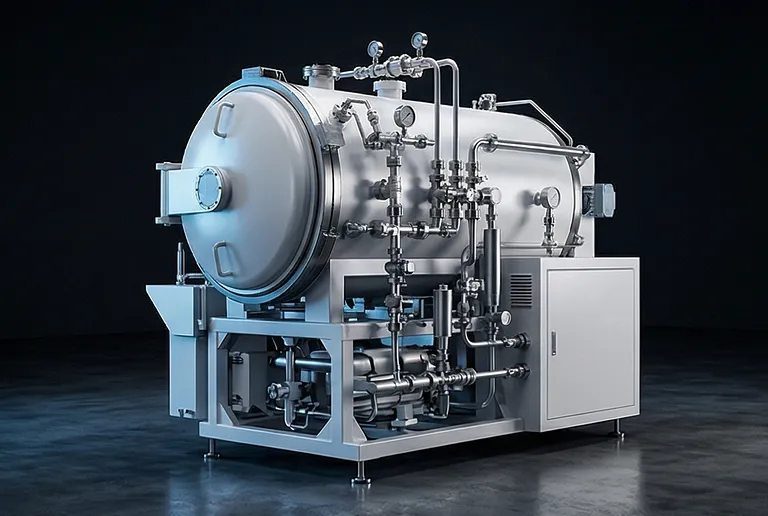
To understand why traditional insulation fails, we have to look at the physics of the vacuum. In a normal environment, heat moves through conduction (touching) and convection (air currents). In a vacuum, these are gone. Heat moves almost exclusively through radiation.
In this environment, heat behaves less like a flowing liquid and more like light. A standard "insulation blanket" that works in air won't stop these infrared "light" waves effectively. This is where molybdenum enters the story.
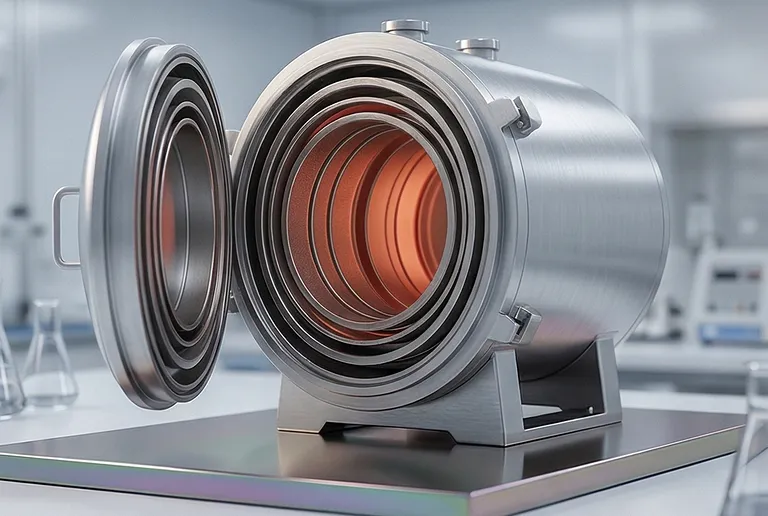
Molybdenum is a refractory metal with an incredibly high melting point and a unique surface characteristic: high reflectivity and low emissivity. While molybdenum itself is a good conductor of heat, its magic in a vacuum furnace comes from its ability to act as a thermal mirror.
However, a single sheet of molybdenum isn't enough. The true secret lies in the multi-layer configuration. By layering these shields with small vacuum gaps between them, we create a "radiation trap." Each layer reflects the majority of the heat back toward the center, and because there is no air between the layers, the heat cannot "hop" from one shield to the next via conduction. This suppresses radiative heat transfer so effectively that it protects the external structure of the furnace from the extreme temperatures inside.
The Solution: Precision-Engineered Thermal Zones
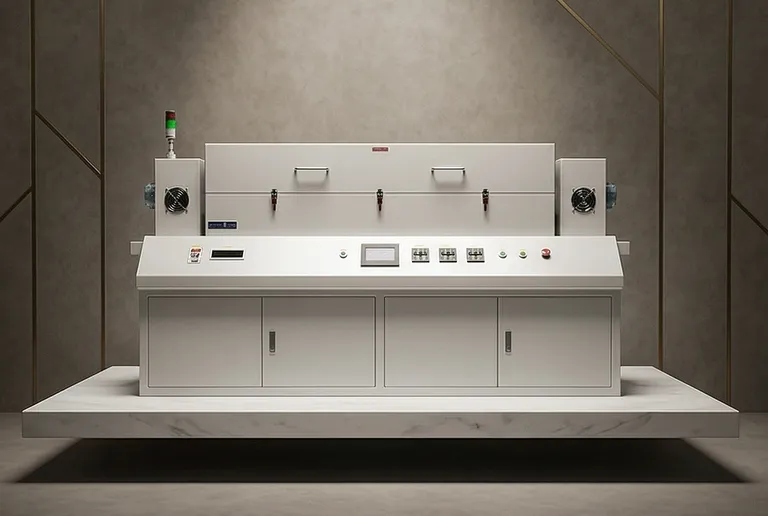
At KINTEK, we don't just build furnaces; we engineer thermal environments. We recognize that the molybdenum heat shield is the backbone of the heating chamber. It isn't just a passive wall; it is a structural foundation that fixes the heaters in place and manages the "bouncing" of heat waves.
Our vacuum resistance furnaces utilize a sophisticated three-to-four-layer shield assembly. This design ensures that:
- Reflectivity is Maximized: We use high-purity molybdenum that directly faces the heat zone to bounce energy back to your sample.
- The "Thermos" Effect: The vacuum gaps between our multi-layer shields act as a near-perfect barrier, preventing heat from reaching the water-cooled stainless steel shroud.
- Stability is Guaranteed: By combining these shields with our precision molybdenum heating coils, we achieve a uniform thermal field with fluctuations as low as ±2°C.
This isn't an accidental benefit; it is the result of choosing materials that understand the physics of a vacuum.
Opening New Doors for Materials Science
When you solve the problem of heat containment, you do more than just save on electricity. You unlock the ability to perform processes that were previously impossible.
With a stable, ±2°C thermal environment, you can now explore more precise sintering cycles, achieve perfectly uniform grain growth in metallurgy, and accelerate your production timelines because you are no longer fighting temperature "drift." Your furnace becomes a precision instrument rather than an unpredictable oven.
Whether you are working in aerospace, medical device manufacturing, or advanced electronics, the integrity of your thermal zone determines the success of your product. By mastering radiation with molybdenum shielding, you move from "managing symptoms" to "mastering the process."
Solving complex thermal challenges requires more than just high-quality parts; it requires an integrated approach to furnace design. At KINTEK, we specialize in customizing high-temperature vacuum solutions that address the specific physics of your application. If your current processes are suffering from inconsistency or inefficiency, let our team of experts help you design a thermal zone that turns your heat into a precision tool. Contact Our Experts to discuss how we can optimize your next project.
Related Products
- Vacuum Hot Press Furnace Machine Heated Vacuum Press Tube Furnace
- Vacuum Hot Press Furnace Machine Heated Vacuum Press
- 600T Vacuum Induction Hot Press Vacuum Heat Treat and Sintering Furnace
- 2200 ℃ Tungsten Vacuum Heat Treat and Sintering Furnace
- Vacuum Heat Treat Sintering Furnace with Pressure for Vacuum Sintering
Related Articles
- How Vacuum Hot Press Furnaces Transform Advanced Material Engineering
- How to Select the Right Vacuum Hot Pressing Furnace Temperature for Your Materials
- Beyond the Parts List: The Real Reason Your Vacuum Hot Press Fails (And How to Fix It)
- Why Your High-Temperature Materials Fail: The Hidden War Inside Your Furnace
- Is Your Material Data Real? Why Temperature Gradients Are Sabotaging Your Cu2Se Resistivity Measurements