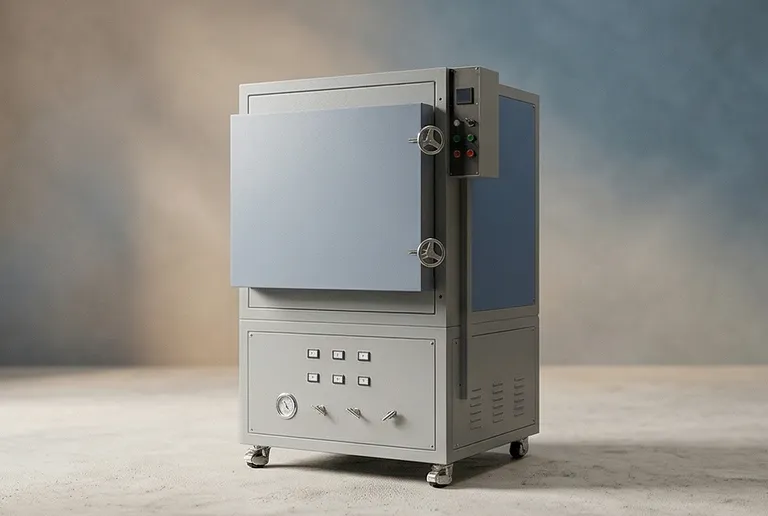
The Frustrating Reality of Copper Sintering
Imagine you have spent weeks meticulously engineering a new copper-based composite. You’ve balanced the alloys, added reinforcing phases like graphite or vanadium carbide, and calculated the exact thermal profile required. But when the furnace door opens, the result is a heartbreak: the material is dull, the grain boundaries are brittle, and the electrical conductivity is nowhere near the theoretical target.
In the world of high-performance metallurgy, copper is a "diva." It offers incredible thermal and electrical properties, but it is notoriously unforgiving during the sintering process. If your lab or production line is struggling with inconsistent batch quality, low density, or poor interfacial bonding, you aren't alone—and the culprit is likely a factor you can’t even see.
The Common Struggle: Why "Just Adding Argon" Isn't Enough
When faced with oxidation—the primary enemy of copper—many teams try to solve the problem by simply flowing an inert gas like Argon through a standard furnace. It seems logical: push the air out, and the copper should stay bright and pure.
However, this often leads to a cycle of expensive "trial and error." Despite the gas flow, residual oxygen trapped in the porous structure of the powder or in the corners of the heating chamber remains. At temperatures exceeding 900°C, even trace amounts of oxygen are enough to:
- Create brittle oxide layers at the grain boundaries, preventing the particles from bonding into a solid, dense mass.
- Degrade sensitive additives, such as causing diamonds to graphitize or rare earth elements to lose their functional properties.
- Increase scrap rates, leading to significant project delays and cost overruns in R&D and specialized manufacturing.
The Root Cause: The Physics of "Partial Pressure"
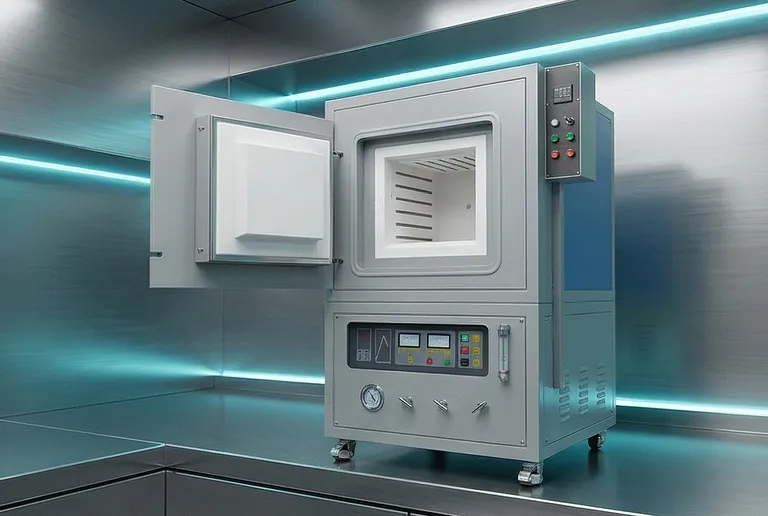
The fundamental reason these common solutions fail lies in the high reactivity of copper at elevated temperatures. Copper doesn't just "rust"; at high heat, it aggressively seeks out oxygen molecules to form copper oxides.
To prevent this, it isn't enough to just add Argon; you must first remove the oxygen entirely. This requires a Vacuum Atmosphere Furnace.
The "secret" to a successful sinter involves two critical steps that a standard atmosphere furnace cannot achieve:
- Vacuum Extraction: By pulling a vacuum (often down to -0.1 MPa), you eliminate the internal gases trapped between powder particles. This reduces the oxygen partial pressure to a level where oxidation is thermodynamically impossible.
- The Wetting Angle Advantage: In a vacuum, the "wettability" between the liquid copper and reinforcing phases (like Vanadium Carbide) improves significantly. For example, the wetting angle can drop to approximately 40°, allowing the copper to "flow" and bond tightly with other materials, creating a composite with superior structural integrity.
Without this vacuum stage, the "interfacial thermal resistance" remains high, meaning your composite won't conduct heat or electricity as designed.
The Solution: A Dual-Action Protective Environment
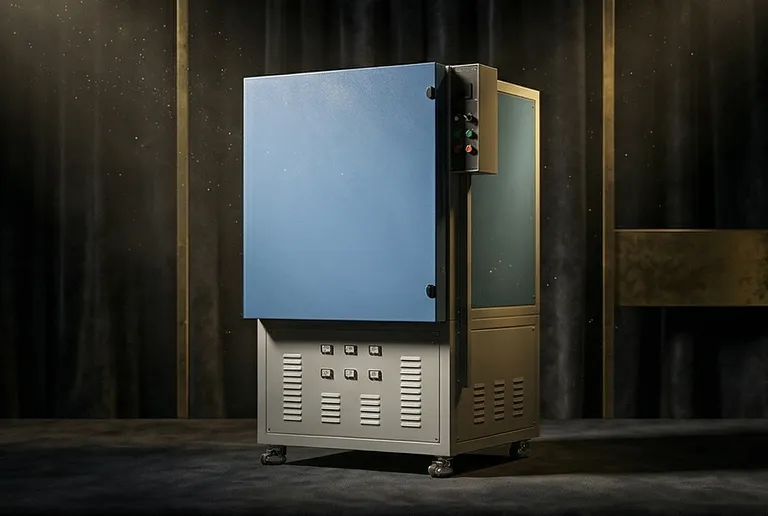
To solve the "Copper Problem" once and for all, you need a system designed for the Vacuum-Backfill process. This is where KINTEK’s Vacuum Atmosphere Furnaces excel.
Instead of fighting a losing battle against oxygen, our furnaces create a pristine environment. The process begins by vacuuming the chamber to strip away contaminants and moisture. Once the oxygen is removed, the chamber is backfilled with high-purity Argon gas.
This creates an inert "blanket" that:
- Maintains the reduced state of the metal matrix, ensuring the finished part looks and performs like pure copper.
- Protects alloying elements like Manganese or Zirconium, ensuring they contribute to the material's strength rather than being wasted as oxide slag.
- Prevents Graphitization: For composites involving diamond or graphite, the vacuum-argon environment ensures these materials remain stable at 1000°C+, preserving their hardness and drilling performance.
Beyond the Fix: Unlocking New Material Potential
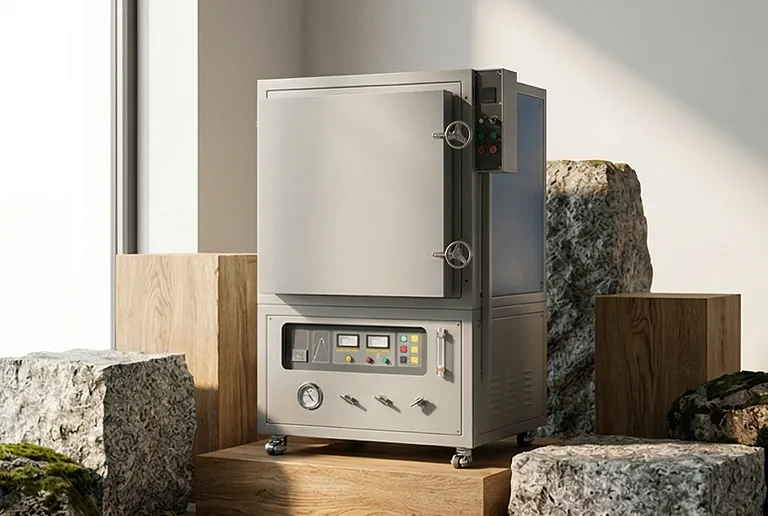
When you stop struggling with oxidation, the focus shifts from "fixing problems" to "pushing boundaries." By mastering the sintering environment, you unlock the ability to create copper composites that were previously impossible to produce reliably.
You can achieve near-theoretical density, explore complex alloying with rare earth elements, and produce components for the most demanding aerospace and electronic applications. The result isn't just a better piece of metal; it’s a faster path to market and a significant reduction in material waste.
At KINTEK, we understand that your research and production goals depend on absolute environmental control. Whether you are working with copper-iron composites, diamond tools, or advanced semiconductor materials, our customizable vacuum and atmosphere furnaces provide the stability your work demands. If you are ready to eliminate the guesswork from your high-temperature processes and want to discuss how our vacuum technology can be tailored to your specific alloy requirements, Contact Our Experts today.
Related Products
- Vacuum Heat Treat Sintering Furnace with Pressure for Vacuum Sintering
- 9MPa Air Pressure Vacuum Heat Treat and Sintering Furnace
- Vacuum Heat Treat Sintering Furnace Molybdenum Wire Vacuum Sintering Furnace
- 600T Vacuum Induction Hot Press Vacuum Heat Treat and Sintering Furnace
- Vacuum Heat Treat Sintering and Brazing Furnace
Related Articles
- Why Your Sintered Parts Fail: It’s Not Just About Heat, But Pressure and Purity
- Why Your Stainless Steel Parts Fail Pressure Tests—and How Vacuum Sintering Fixes the Density Gap
- Why Your Electrochromic Electrodes Fail During Sintering—And How Vacuum Control Restores Transparency
- Why Your 3D-Printed Maraging Steel Parts Aren't Performing—And How to Fix the Structural Weakness
- How Vacuum Pressure Sintering Furnaces Elevate Material Performance Across Industries



















