The Simulation Waiting Game: Is Your Progress Bar Stalling Your Project?
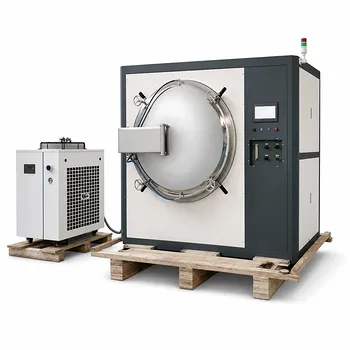
Imagine you are designing a high-performance vacuum resistance furnace. You’ve spent hours meticulously refining the mesh in ANSYS, pushing the element size down to the millimeter level to ensure "perfect" accuracy. You hit "Solve," and then you wait. Your workstation fans are screaming, your RAM is maxed out, and hours turn into a day.
When the results finally arrive, you ask yourself: Was the wait worth it?
In the high-stakes world of thermal engineering, there is a common belief that more data points always equal a better design. But for many engineers, this pursuit of hyper-precision becomes a bottleneck that delays R&D cycles and inflates computational costs without providing a meaningful return on the investment of time.
The Common Struggle: The Pursuit of "Perfect" Granularity
Most engineering teams fall into the trap of over-meshing. The logic seems sound: if a coarse mesh is good, a fine mesh must be better, and an ultra-fine mesh must be the gold standard.
When faced with temperature fluctuations or thermal gradients that don't match expectations, the first instinct is often to "tighten the mesh." This leads to a cycle of:
- Exponentially increasing solve times that eat into project deadlines.
- Hardware strain, requiring expensive server upgrades just to handle steady-state analyses.
- Analysis paralysis, where the sheer volume of data makes it harder to see the big-picture thermal trends.
The cost of this struggle isn't just a slow computer—it’s the delayed market entry of a new product or the unnecessary overhead of a design process that has lost its efficiency.
The Root Cause: The Law of Diminishing Returns in Thermal Gradients
Why does adding more mesh density often fail to change the design outcome? The answer lies in the physics of steady-state thermal analysis for vacuum furnaces.
In a vacuum environment, heat transfer is dominated by radiation and conduction through the furnace structure. Unlike high-velocity fluid dynamics, where tiny eddies require microscopic meshes, thermal gradients in a furnace are relatively "smooth" over distance.
Research into ANSYS thermal modeling reveals a startling truth: even if you reduce your mesh element size by 5 times, the resulting temperature difference is often as negligible as 5 °C.
When you consider that an industrial vacuum furnace might operate at 1,200 °C or 1,600 °C, a 5-degree variance represents less than a 0.5% difference in the result. By chasing that final 0.5%, engineers often increase their computational load by 500% or more. The "common solution" of finer meshing fails because it treats a linear engineering problem with a brute-force mathematical hammer.
The Solution: Engineering-Led Precision
To break the cycle of inefficiency, the goal should not be the finest mesh, but the optimal mesh. A medium-density mesh configuration provides the "Sweet Spot"—the perfect balance where calculation accuracy meets resource efficiency.
At KINTEK, we apply this philosophy to the design and customization of our high-temperature vacuum furnaces. We understand that true precision doesn't come from over-calculating a single point, but from a deep understanding of how materials and heat interact in a vacuum.
Our equipment—ranging from tube furnaces to complex CVD and vacuum atmosphere systems—is engineered based on these optimized thermal principles. By utilizing balanced simulation models, we can:
- Iterate Faster: Rapidly test custom furnace geometries to meet your specific application needs.
- Ensure Stability: Focus on the structural and material factors that truly influence temperature uniformity, rather than getting lost in computational noise.
- Validate Real-World Performance: Bridging the gap between a "medium-density" simulation and the actual high-temperature performance of the hardware.
Beyond the Fix: Unlocking Faster R&D Cycles
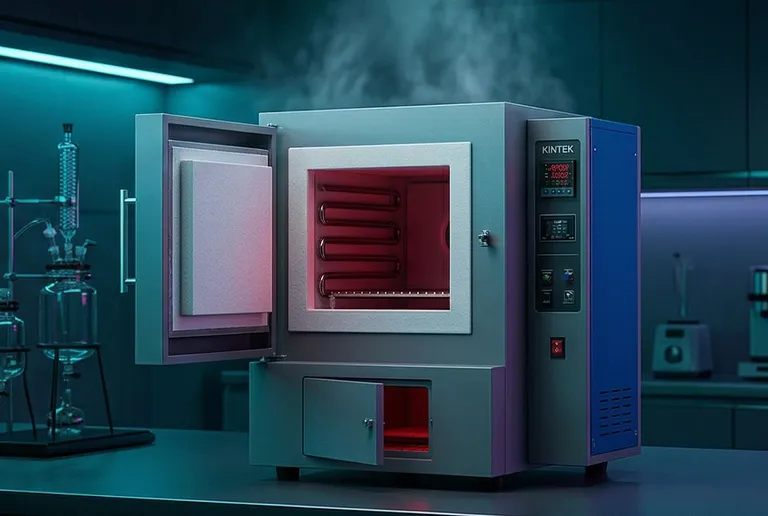
When you stop over-engineering the simulation, you start accelerating the innovation. Moving to an optimized, medium-density simulation strategy does more than just save computer memory; it transforms your workflow.
Instead of waiting days for one result, you can run five different iterations in the same timeframe. You can explore new insulation materials, test different heating element configurations, or refine the cooling jacket design—all while maintaining the 5 °C accuracy threshold required for industrial success.
By focusing on what truly impacts thermal performance, you move from being a "software operator" to a "thermal visionary," delivering reliable, high-performance furnace solutions in a fraction of the time.
Are you ready to optimize your thermal processes? At KINTEK, we don't just provide laboratory equipment; we provide the thermal expertise to help you overcome your most complex heat-treatment challenges. Whether you need a highly customized vacuum furnace or advice on scaling your high-temperature research, our team is ready to assist. Contact Our Experts today to discuss your next project.
Related Products
- Vacuum Hot Press Furnace Machine Heated Vacuum Press Tube Furnace
- Vacuum Hot Press Furnace Machine Heated Vacuum Press
- 600T Vacuum Induction Hot Press Vacuum Heat Treat and Sintering Furnace
- 2200 ℃ Tungsten Vacuum Heat Treat and Sintering Furnace
- Vacuum Heat Treat Sintering Furnace with Pressure for Vacuum Sintering
Related Articles
- How Vacuum Hot Press Furnaces Transform Advanced Material Engineering
- How to Select the Right Vacuum Hot Pressing Furnace Temperature for Your Materials
- Beyond the Parts List: The Real Reason Your Vacuum Hot Press Fails (And How to Fix It)
- Why Your High-Temperature Materials Fail: The Hidden War Inside Your Furnace
- Is Your Material Data Real? Why Temperature Gradients Are Sabotaging Your Cu2Se Resistivity Measurements