The Unseen Variable
An aerospace component fails its certification audit. A batch of medical implants shows microscopic surface contamination. A research experiment yields inconsistent results. The cause is often traced back not to a failure in process, but to a choice made months earlier—a decision about the very architecture of the tool used: the vacuum furnace.
Choosing the right options for a furnace isn't like adding accessories to a car. It's a series of fundamental engineering decisions. It's about tailoring the system's DNA—the hot zone, the controls, the vacuum pumps—to the precise demands of your application. The psychology here is simple: we often optimize for the initial price, forgetting that the true cost is measured in the success or failure of what comes out of it.
Deconstructing the Machine: Core vs. Configuration
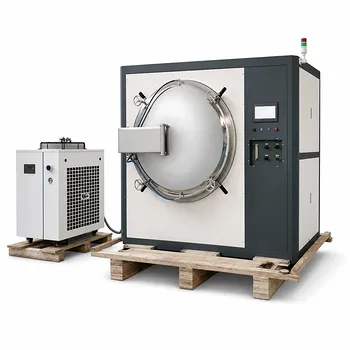
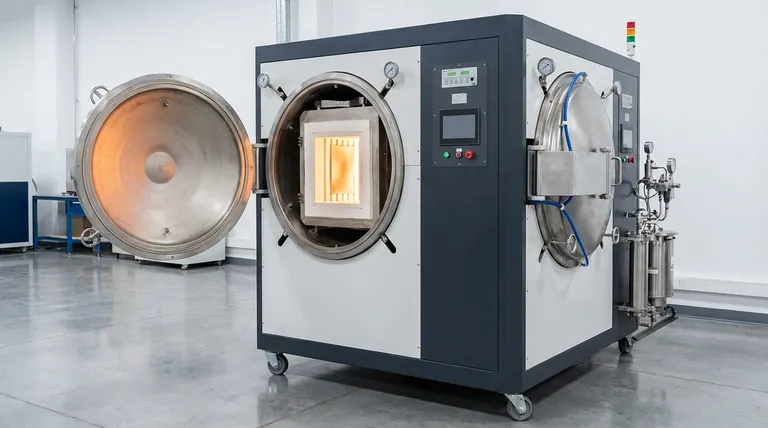
Every vacuum furnace shares a common chassis: an airtight chamber, a heating element, a basic vacuum system, and a temperature controller. This is the baseline. But no serious work is done with a "baseline" system.
The performance of the entire system hinges on the configuration of these core components. The material of the heating element, the number and placement of sensors, the intelligence of the controller—these are not add-ons. They are the variables that define the furnace's capability.
The Heart of the Furnace: The Hot Zone
The "hot zone"—the heating elements and insulation—is where the most critical decisions are made. It dictates the furnace's ultimate temperature, its chemical environment, and its purity.
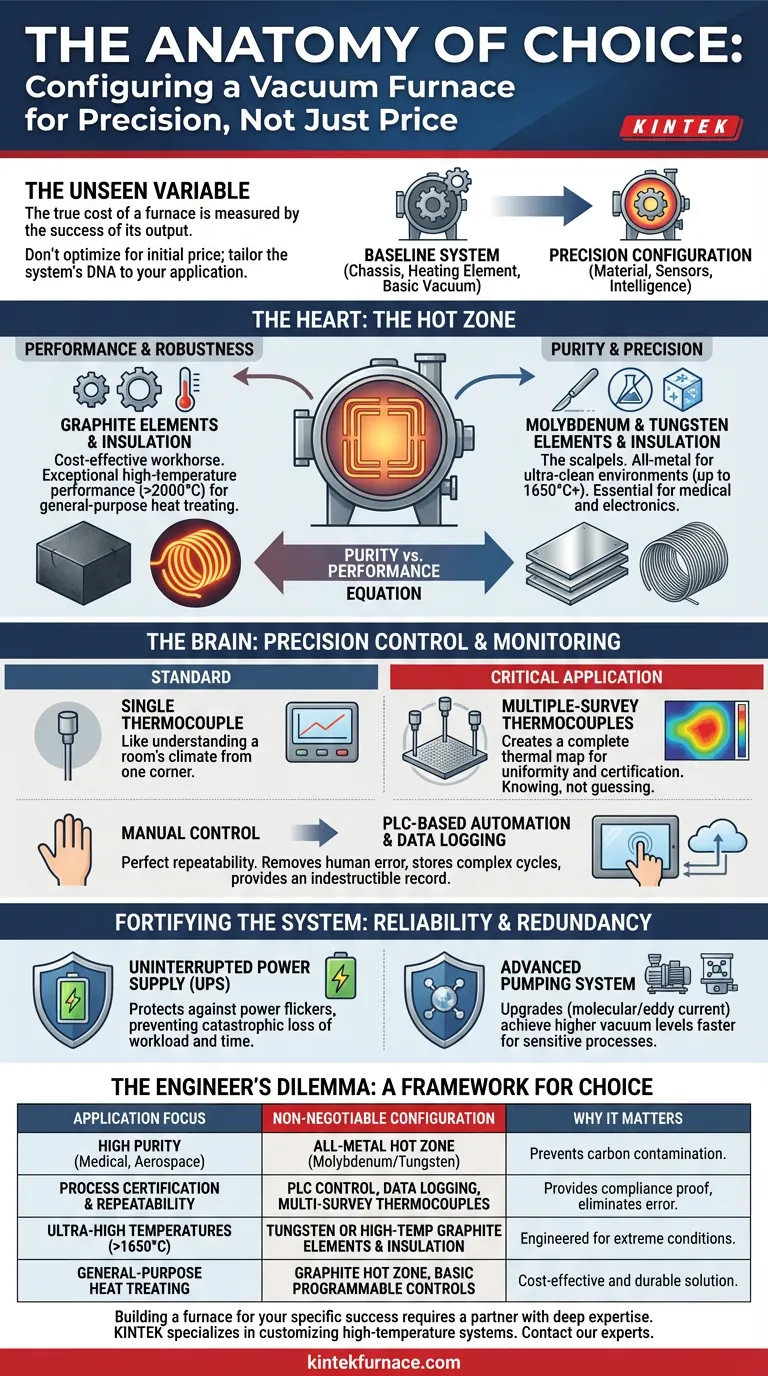
Heating Elements: The Purity vs. Performance Equation
The choice of element material is a perfect example of matching the tool to the task.
-
Graphite: This is the robust, cost-effective workhorse. For general-purpose heat treating and applications where the presence of carbon is benign, graphite delivers exceptional high-temperature performance (often over 2000°C) reliably.
-
Molybdenum & Tungsten: These are the scalpels. An all-metal hot zone is non-negotiable for processes where purity is paramount. When manufacturing a titanium medical implant or a sensitive electronic component, carbon isn't an impurity; it's a contaminant. Molybdenum is the standard for ultra-clean environments up to 1650°C, while tungsten takes you even higher.
Insulation: Containing the Fire
The right insulation works in concert with the elements. A molybdenum insulation package, for example, doesn’t just trap heat for uniformity and efficiency; it maintains the pristine, low-contamination environment created by an all-metal hot zone.
The Brain of the Operation: Precision Control & Monitoring
Heat without control is just fire. Precision in a vacuum furnace comes from its nervous system—the sensors and the controller that manages them.
From a Single Point to a Full Thermal Map
A standard furnace might have one thermocouple. This is like trying to understand the climate of a room by taking the temperature in one corner.
For critical applications, multiple-survey thermocouples are essential. They create a complete thermal map of the workload, verifying temperature uniformity to meet the stringent requirements of aerospace or medical device certifications. It's the difference between guessing and knowing.
Automation: From Manual Driving to Autopilot
A basic controller can execute a simple task. A PLC-based control system with a touch panel provides something far more valuable: perfect repeatability.
It allows you to design, store, and automatically execute complex thermal cycles. This removes the variable of human error, ensuring every batch runs exactly like the last. Paired with data logging, it becomes the furnace's "black box"—an indestructible record of every critical parameter, essential for quality control, troubleshooting, and process validation.
Fortifying the System: Reliability and Redundancy
A furnace run can represent hours, or even days, of investment in time, energy, and high-value materials. Protecting that investment is not a luxury.
-
Uninterrupted Power Supply (UPS): A brief power flicker can be catastrophic, ruining a multi-hour cycle and scrapping the entire load. A UPS provides backup power to the controls and critical systems, allowing for a controlled shutdown or the ability to ride through an outage. It's simple, effective insurance.
-
The Pumping System: The depth and speed of your vacuum are determined by your pump configuration. Upgrading from a basic mechanical pump to include molecular or eddy current pumps allows you to reach higher vacuum levels faster, which is critical for processes sensitive to atmosphere.
The Engineer's Dilemma: A Framework for Choice
Selecting the right configuration is about asking the right questions, driven by your specific goals. There is no single "best" furnace, only the furnace that is best for your process.
| Application Focus | Non-Negotiable Configuration | Why It Matters |
|---|---|---|
| High Purity (Medical, Aerospace) | All-Metal Hot Zone (Molybdenum/Tungsten) | Prevents any possibility of carbon contamination from graphite elements. |
| Process Certification & Repeatability | PLC Control, Data Logging, Multi-Survey Thermocouples | Provides proof of process compliance and eliminates human error for consistency. |
| Ultra-High Temperatures (>1650°C) | Tungsten or High-Temp Graphite Elements & Insulation | These materials are engineered to withstand and perform in extreme thermal conditions. |
| General-Purpose Heat Treating | Graphite Hot Zone, Basic Programmable Controls | A cost-effective and highly durable solution for a wide range of common tasks. |
Building a furnace that perfectly aligns with these deep process needs requires more than a catalog of options; it demands a partner with deep R&D and in-house manufacturing expertise. At KINTEK, we specialize in customizing high-temperature systems—from Muffle and Tube furnaces to advanced CVD platforms—to embody this philosophy of purpose-built precision.
If you're ready to move beyond a standard catalog and build a system designed for your specific definition of success, Contact Our Experts.
Visual Guide
Related Products
- Vacuum Hot Press Furnace Machine Heated Vacuum Press Tube Furnace
- Vacuum Hot Press Furnace Machine Heated Vacuum Press
- 600T Vacuum Induction Hot Press Vacuum Heat Treat and Sintering Furnace
- 2200 ℃ Tungsten Vacuum Heat Treat and Sintering Furnace
- Vacuum Heat Treat Sintering Furnace with Pressure for Vacuum Sintering
Related Articles
- How Vacuum Hot Press Furnaces Transform Advanced Material Engineering
- How to Select the Right Vacuum Hot Pressing Furnace Temperature for Your Materials
- Beyond the Parts List: The Real Reason Your Vacuum Hot Press Fails (And How to Fix It)
- Why Your High-Temperature Materials Fail: The Hidden War Inside Your Furnace
- Is Your Material Data Real? Why Temperature Gradients Are Sabotaging Your Cu2Se Resistivity Measurements