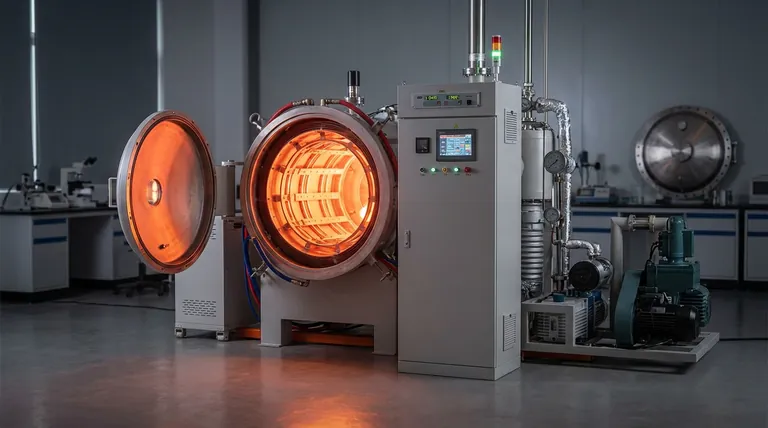
The Silent Hum of Wasted Energy
Walk into any advanced materials lab or production facility, and you'll hear it: the steady, low hum of machinery. It's the sound of progress, but it's also the sound of constant energy consumption. A significant portion of that energy is dedicated to thermal processing, and much of it silently bleeds away into the surrounding environment.
The common view of a furnace is a box that gets hot. The engineering view, however, sees it as a dynamic energy system where every watt must be accounted for. In this system, true efficiency isn't an afterthought or a feature—it's a design philosophy built on a foundation of physics and refined through purposeful engineering.
The Foundational Advantage: A Vacuum is a Near-Perfect Insulator
The single greatest leap in furnace efficiency comes not from a complex component, but from the absence of something: air.
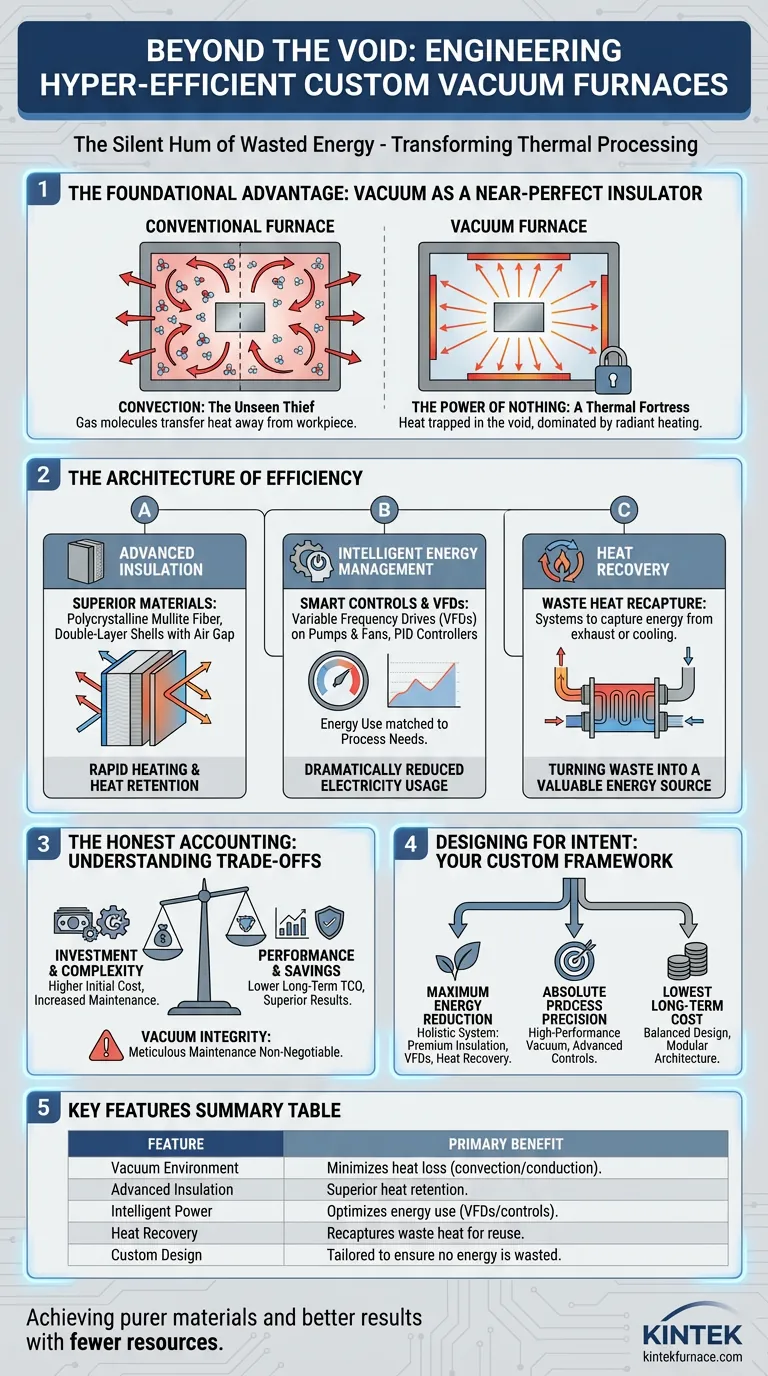
The Unseen Thief: Convection
In a conventional furnace, the atmosphere is the primary enemy of efficiency. Gas molecules heat up, circulate, and carry thermal energy away from the workpiece and toward the chamber walls—a process called convection. It's the same principle as wind chill making you feel colder. This constant thermal theft forces the system to work harder just to maintain temperature.
The Power of Nothing
By removing nearly all gas molecules, a vacuum environment severely cripples convection and conduction. The heat generated by the elements has almost nowhere to go. It is trapped in the void with the workpiece, unable to escape through the movement of air. This simple act of removal transforms the chamber from a leaky bucket into a thermal fortress.
The Purity of Radiant Heating
With convection neutralized, heat transfer is dominated by thermal radiation. Energy travels in a direct line of sight from the heating elements to the part. This is an inherently more efficient and controllable method of heating, delivering energy precisely where it's needed without an intermediary medium to waste it.
From Physics to Engineering: The Architecture of Efficiency
While the vacuum provides the stage, the performance of energy efficiency is directed by specific, customized engineering choices. This is where a standard furnace and a purpose-built system diverge completely.
Building a Better Wall: Advanced Insulation
The first line of defense is physical. Custom vacuum furnaces utilize superior insulation materials like polycrystalline mullite fiber, which boasts exceptionally low thermal conductivity. This isn't just about lining a box; it's about creating a barrier that allows for rapid heating cycles while keeping the thermal energy locked inside.
Sophisticated designs take this further, incorporating double-layer furnace shells. An air gap between the inner and outer shells acts as an additional thermal break, ensuring the furnace's external surface remains cool and energy stays within the system, not heating up the facility.
The Fallacy of Full Power: Intelligent Energy Management
A common source of hidden energy waste is running auxiliary systems at full, continuous power. Imagine a vacuum pump running at 100% capacity during a long holding phase where only a fraction of its power is needed. It’s like flooring the gas pedal in a traffic jam.
This is where intelligent controls make a profound difference:
- Variable Frequency Drives (VFDs): Integrated with pumps and cooling fans, VFDs act as a smart throttle. They precisely match the motor's speed and energy consumption to the exact requirement of the process stage, dramatically cutting electricity usage.
- Precise Temperature Controls: Modern PID controllers prevent the energy waste associated with overshooting target temperatures, applying heat with surgical precision only when and where it's needed.
Recycling Waste into Work: Heat Recovery
The most elegant expression of efficiency is not just preventing loss, but actively recapturing it. Advanced waste heat recovery systems can capture thermal energy from exhaust or cooling water. This "lost" energy is then recycled to preheat incoming gases or for other processes, turning a waste stream into a valuable energy source.
The Honest Accounting: Understanding the Trade-offs
A custom, high-efficiency vacuum furnace is a powerful tool, but it's a decision that requires acknowledging the trade-offs inherent in high-performance engineering.
- Higher Initial Investment: Advanced components like VFDs and heat recovery systems increase the upfront cost. This is an investment in lower long-term total cost of ownership, but it must be factored into the initial budget.
- Increased Maintenance Complexity: A system with more sophisticated controls and components requires a higher level of technical knowledge for maintenance. This is a consequence of its capability, not a flaw.
- Dependence on Vacuum Integrity: The entire efficiency model rests on a high-quality vacuum. A small leak in a seal isn't a minor issue; it fundamentally undermines the core physics that make the furnace efficient. Meticulous maintenance of pumps and seals is non-negotiable.
Designing for Intent: A Framework for Your Furnace
The right configuration is not about having every feature, but about having the right features for your objective. Building a truly efficient system starts with defining your primary goal.
- For Maximum Energy Reduction: Prioritize a holistic system—premium insulation, VFDs on all major motors, and a waste heat recovery unit.
- For Absolute Process Precision: Focus on a high-performance vacuum system for environmental stability and advanced temperature controls for repeatability.
- For Lowest Long-Term Cost: Select a design that balances initial investment with proven, reliable components and a modular architecture that allows for future upgrades.
This is where deep, collaborative expertise becomes critical. At KINTEK, our foundation in R&D and in-house manufacturing allows us to engineer thermal solutions, from Muffle and Tube Furnaces to advanced CVD and Vacuum Systems, that are precisely tailored to these goals. We don't just sell furnaces; we build integrated systems designed for specific outcomes.
| Feature | Primary Benefit |
|---|---|
| Vacuum Environment | Minimizes heat loss by reducing convection and conduction. |
| Advanced Insulation | Uses materials like polycrystalline mullite fiber for superior heat retention. |
| Intelligent Power | Employs VFDs and precise controls to optimize energy use. |
| Heat Recovery Systems | Recaptures waste heat for reuse, improving overall efficiency. |
| Custom Design | Tailored to specific processes, ensuring no energy is wasted. |
Ultimately, a custom vacuum furnace represents the convergence of performance and responsibility—achieving purer materials and better results while consuming fewer resources. To explore how a furnace designed for your specific process can transform your lab's efficiency and capabilities, Contact Our Experts.
Visual Guide
Related Products
- Vacuum Hot Press Furnace Machine Heated Vacuum Press Tube Furnace
- Vacuum Hot Press Furnace Machine Heated Vacuum Press
- 600T Vacuum Induction Hot Press Vacuum Heat Treat and Sintering Furnace
- Vacuum Heat Treat Sintering Furnace with Pressure for Vacuum Sintering
- Molybdenum Vacuum Heat Treat Furnace
Related Articles
- How Vacuum Hot Press Furnaces Transform Advanced Material Engineering
- How to Select the Right Vacuum Hot Pressing Furnace Temperature for Your Materials
- Beyond the Parts List: The Real Reason Your Vacuum Hot Press Fails (And How to Fix It)
- Why Your High-Temperature Materials Fail: The Hidden War Inside Your Furnace
- Is Your Material Data Real? Why Temperature Gradients Are Sabotaging Your Cu2Se Resistivity Measurements



















