Precise atmosphere and pressure control is non-negotiable for preserving powder chemistry during sintering because it directly governs the chemical potential of the gas species surrounding the compact. Without this control, even minor fluctuations can trigger oxidation, non-stoichiometry, or volatile impurity retention that catastrophically degrades the final material’s properties. The furnace environment doesn’t just protect the powder—it actively shapes the chemical reactions that define purity, phase stability, and compositional uniformity throughout densification.
The core challenge is that powder chemistry is thermodynamically fragile at sintering temperatures. Precise control of atmosphere and pressure gives you the ability to set the exact chemical potential needed to lock in the target oxidation state, purge unwanted volatile species, and maintain strict stoichiometry—turning the furnace from a simple heat source into a precision chemical reactor.
The Chemical Fragility of Sintering Powders
When a powder compact enters the high-temperature regime, its entire chemical character becomes vulnerable. The increased atomic mobility that enables densification also makes the material reactive and prone to losing its designed chemistry.
Surface Energy and Reactivity
Powders—especially nanometric ones—possess an enormous surface area and a huge fraction of grain-boundary atoms. This excess free energy drives sintering but also makes the particles aggressively reactive with any available gas species. Adsorbed oxygen, water vapor, or nitrogen can quickly form passivating layers or unwanted compounds that block inter-particle bonding.
Oxidation State Instability
Transition metal oxides, carbides, nitrides, and refractory metals all have narrow windows of thermodynamic stability at sintering temperatures. For example, molybdenum oxidizes rapidly above 1200 °C, and many ceramic powders shift away from their target stoichiometry if the oxygen partial pressure isn't held on a razor’s edge. The furnace atmosphere is the only lever you have to keep the metal-ion valence at its intended level.
Volatile Impurity Evolution
Impurities like carbon, sulfur, or residual binders become highly mobile at temperature and can escape the compact—or get trapped. A precisely controlled gas flow or vacuum extracts these volatiles before they form pores or chemically interact with the base powder. If they linger, they alter local chemistry and create weak spots in the final microstructure.
How Atmosphere Control Preserves Powder Chemistry
The gas species, its flow rate, and its purity create a chemical potential field that surrounds every particle. This field determines what reactions are thermodynamically allowed.
Manipulating the Chemical Potential Field
By choosing a specific atmosphere—whether inert argon, reducing hydrogen, or a vacuum—you set the effective partial pressure of oxygen, nitrogen, and carbon. This is the direct application of the primary principle: you manipulate the chemical potential of gaseous species to prevent undesired oxidation or reduction. In stainless steel sintering, for instance, the carbon-to‑oxygen ratio in the powder interacts with a hydrogen atmosphere to reduce surface oxides and drive interparticle bonding; any drift in that atmosphere shifts the balance and leaves residual oxide inclusions.
Surface Reduction and Grain Boundary Purity
A controlled atmosphere actively strips away native oxides from particle surfaces. This is not just protective—it is chemically transformative. The reduction reactions at the surface convert a diffusion-blocking oxide layer into a clean metal-metal contact, enabling true metallurgical bonding. Without this, even a powder with perfect bulk chemistry will fail because its inter-particle bridges remain chemically contaminated.
Preventing Catastrophic Oxidation in Sensitive Materials
Refractory metals like tungsten and molybdenum will oxidize catastrophically if heated in air, but a hydrogen or high-purity inert environment eliminates that risk entirely. The oxygen impurities that lower apparent density and impair densification are chemically driven out of the compact. The furnace becomes a purification system, removing dissolved oxygen and preventing the formation of volatile oxides that would otherwise create porosity.
The Often-Overlooked Role of Pressure Control
Pressure is not just a background variable—it is a chemical and physical tool that works in concert with atmosphere composition.
Controlling Vapor Transport and Decomposition
In ceramic sintering, the partial pressure of the atmosphere directly influences vapor transport kinetics and the decomposition rate of volatile species. If a nitride or carbide tends to lose nitrogen or carbon at high temperature, a slight overpressure of the relevant gas can suppress that decomposition. This is a direct application of Le Chatelier’s principle to keep the powder’s stoichiometry intact.
Pore Gas Removal and Chemical Purity
Entrapped gases inside pores must be transported out of the compact before pore closure, or they become permanent defects. Optimized atmospheric pressure—often a dynamic vacuum or a carefully managed gas flow—creates a driving force for pore gas to diffuse out. This doesn’t just improve density; it prevents gas molecules from being trapped and later reducing the surrounding material or forming pressurized voids that weaken the component.
Balancing Sintering Force and Surface Tension
The atmosphere’s pressure modifies the sintering force at particle necks. A vacuum, for example, removes any gas phase that could exert a counter-pressure to the surface-tension-driven shrinkage. This ensures that the chemical bonds formed at the neck are not mechanically disrupted, preserving the chemical integrity of the newly formed grain boundary.
Maintaining Stoichiometry and Homogeneity in Multi‑Component Systems
When you move beyond pure metals into alloys and complex ceramics, chemical complexity demands atmospheric precision.
Preventing Selective Vaporization
In multi-component material systems, some elements have higher vapor pressures and can preferentially evaporate. A carefully managed background pressure or inert gas blanket can suppress this selective loss, preventing the material from drifting into a non‑stoichiometric composition that ruins its functional properties—be it magnetic, dielectric, or catalytic.
Ensuring Uniform Chemical Environment
Gas flow patterns within the furnace must be designed to present the same chemical potential to every part of the compact. Stagnant zones or uneven flow can create micro-environments where one side of the part reduces while the other oxidizes. Precise control over atmosphere delivery eliminates these gradients, preserving chemical homogeneity across the entire sample.
Dimensional Control as a Chemical Proxy
Variations in atmosphere conditions change activation energies for diffusion and surface reactions, causing dimensional changes of up to 1.2%—far exceeding typical ±0.2% tolerances. While that might seem like a mechanical issue, dimensional drift is often the first symptom of a deeper chemical problem, like uneven oxide reduction or carbon loss. Consistent chemistry equals consistent shrinkage.
Understanding the Trade-offs
No control strategy is free of compromises, and a truly trusted advisor must acknowledge the limitations.
The Cost of Precision
Achieving and maintaining ultra‑precise atmosphere control demands sophisticated gas manifolds, mass‑flow controllers, and vacuum systems. This adds capital cost and operational complexity. For some low‑sensitivity materials, a simple inert gas purge may be chemically sufficient, and the extra investment yields diminishing returns.
Slower Processing for Stability
To keep atmosphere and pressure within narrow windows, heating and cooling ramps often need to be slower than the furnace’s maximum capability. This protects chemistry at the expense of throughput. The decision to sacrifice speed for chemical precision must be weighed against the final performance requirements of the part.
Interaction with Temperature Uniformity
Pressure and atmosphere settings can slightly alter convective heat transfer patterns within the furnace. If not accounted for, this can introduce thermal gradients that indirectly affect local chemistry. The most robust processes treat temperature, atmosphere, and pressure as an integrated control system, not independent parameters.
Making the Right Choice for Your Material’s Chemistry
The level of control you need depends entirely on what chemical variable you are protecting.
- If your primary focus is protecting reactive metals from oxidation: Choose a hydrogen or high-purity inert atmosphere with very low oxygen partial pressures, and ensure the furnace can hold a slight positive pressure to prevent air ingress.
- If your primary focus is maintaining exact stoichiometry in a complex oxide or nitride: Opt for a system capable of dynamic gas mixing and vacuum operation, so you can set the precise partial pressure of oxygen or nitrogen to suppress decomposition or non-stoichiometry.
- If your primary focus is removing volatile impurities and achieving pore-free densification: Use a vacuum or a flowing reducing gas at a controlled flow rate, and verify that the pressure profile actively sweeps pore gas away before final pore closure.
Treating your furnace as a chemical reactor—not just a heat source—is what separates a repeatable, high-quality sintering process from one that silently degrades the very powder you started with.
Summary Table:
| Control Parameter | Mechanism / Action | Impact on Powder Chemistry |
|---|---|---|
| Atmosphere Composition | Sets chemical potential of species (H₂, Ar, N₂) | Prevents oxidation & strips native surface oxide layers |
| Pressure Control | Regulates vapor transport & sweeps pore gas | Suppresses thermal decomposition & removes entrapped voids |
| Gas Flow & Purity | Maintains uniform chemical potential field | Eliminates volatile impurities & prevents local stoichiometry gradients |
Maximize Sintering Purity with KINTEK High-Temperature Furnaces
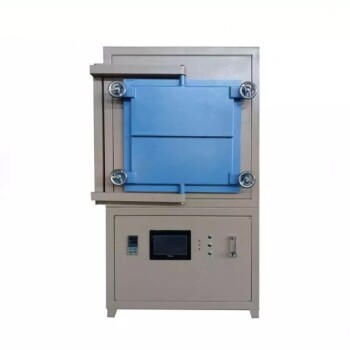
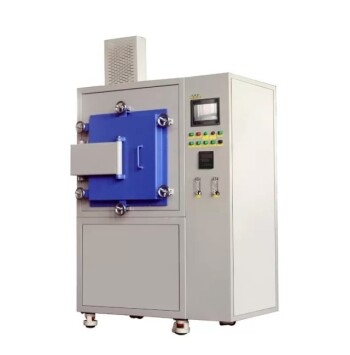
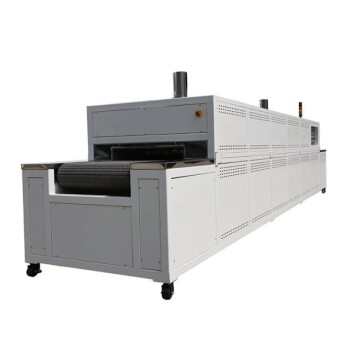
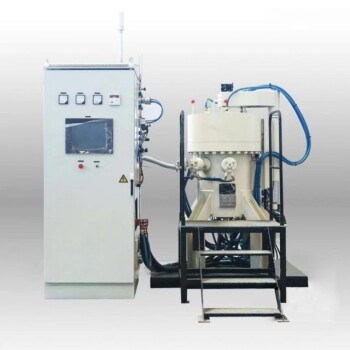
Preserving delicate powder chemistry requires absolute control over your thermal environment. KINTEK specializes in high-performance laboratory equipment and consumables, offering a full range of high-temperature furnaces—including atmosphere, vacuum, tube, CVD, muffle, rotary, and induction melting furnaces—all fully customizable to meet your exact atmosphere and pressure specifications.
Whether you are refining complex ceramics or sintering reactive metal alloys, our engineered solutions deliver the precise atmosphere control, tight pressure management, and thermal uniformity your process demands.
Ready to elevate your material performance and protect your powder chemistry?
Contact KINTEK Technical Experts Today to discover the ideal custom furnace solution for your laboratory!
Related Products
- 1700℃ Controlled Inert Nitrogen Atmosphere Furnace
- 1400℃ Controlled Inert Nitrogen Atmosphere Furnace
- 1200℃ Muffle Oven Furnace for Laboratory
- 1400℃ High Temperature Laboratory Tube Furnace with Alumina Tube
- Laboratory Muffle Oven Furnace with Bottom Lifting
People Also Ask
- How does oxygen partial pressure control affect ceramic sintering? Master Defect Chemistry
- How do controlled-atmosphere furnaces support polymer pyrolysis? Master SiC & Si3N4 Ceramic Conversion
- Why is thorough binder burnout necessary before sintering advanced ceramics? Ensure Peak Density & Zero Defects
- How does real-time dilatometric analysis in a controlled-atmosphere furnace optimize PZT ceramic sintering?
- Why is controlled-atmosphere heating required for functional ceramics and sensors? Master Defect Engineering