Your oxide ceramic layer may be flawless, but it will fail catastrophically if the metal beneath it falls apart. The essential role of a controlled atmosphere when heat-treating oxide ceramic green layers on metallic substrates is to prevent the underlying metal—such as chromium-nickel steel or titanium alloy—from oxidizing during high-temperature exposure. Without this protection, the metal surface would rapidly form a thick, non-protective oxide scale that destroys adhesion, creates interfacial voids, and compromises the structural and functional performance of the entire coated component.
A controlled atmosphere is the single most critical process parameter for successfully co-processing a ceramic green layer and a metal substrate. Its primary job is to shield the metal from catastrophic oxidation, but its influence extends much deeper: it governs interfacial bonding, binder removal, pore closure, and the defect chemistry that determines final ceramic density and stoichiometry. Neglect this, and you risk a component that delaminates, cracks, or loses the very properties you designed the ceramic to deliver.
Protecting the Foundation: Why the Metal Substrate Dictates the Atmosphere
The surface-level need is straightforward—stop the metal from burning up. Yet the true challenge is that the metal substrate is chemically vulnerable at the very temperatures required to densify the ceramic coating. Any atmosphere that allows oxygen to reach the metal surface will trigger a cascade of problems.
Oxidation: The Silent Process Killer
Metals react with oxygen at elevated temperatures to form oxide layers. Chromium-nickel steels and titanium alloys are no exception.
At the 800–1400°C range required for sintering alumina or YSZ, exposure to even trace oxygen causes rapid surface oxidation. The resulting scale is typically porous, mechanically weak, and poorly adherent to the parent metal.
If this scale grows between the substrate and the ceramic green layer, it acts as a built-in delamination plane. The ceramic coating may look intact after cooling, but the bond strength will be near zero.
Inert Gas Purging as a Protective Shield
High-temperature atmosphere furnaces solve this by flooding the chamber with an inert gas such as argon or nitrogen. These gases displace oxygen, creating a protective envelope around the component.
The primary reference confirms that inert gas purging enables thermal densification of the ceramic layer without causing thermal degradation, severe surface oxidation, or unwanted interfacial phase reactions with the supporting metal.
This is more than just avoiding scale. An inert environment preserves the clean metallic surface needed for direct ceramic-to-metal bonding, a prerequisite for structural integrity.
Controlling the Bond: The Ceramic-Metal Interface
Surface oxidation is the most visible danger, but the hidden threat lies at the atomic interface. Atmosphere control decides whether the ceramic and metal form a robust metallurgical bond or a fragile, reactive interlayer.
Preventing Unwanted Interfacial Reactions
At high temperatures, many metals can interdiffuse with oxide ceramics or react to form brittle intermetallic phases. Oxygen or other active gases in the furnace atmosphere fuel these reactions.
An inert atmosphere dramatically slows or suppresses these parasitic reactions. By excluding oxygen, you deny the system the chemical driver needed to form thick, mixed-oxide reaction zones that weaken the interface and disrupt coating adhesion.
The result is a sharp, clean transition from metal to ceramic—exactly what is needed for reliable thermal-cycled and mechanically loaded parts.
Ensuring Optimal Bonding and Mechanical Integrity
Bonding between an oxide ceramic and a metal relies on intimate contact and, in some cases, a thin, controlled oxide interlayer. Uncontrolled oxidation destroys this delicate balance.
With precise atmosphere management, you can achieve the ideal thin, adherent oxide layer on the metal that promotes chemical bonding without becoming a weak boundary. This is the foundation of components that survive thermal expansion mismatch and resist spallation.
Beyond the Substrate: The Multifaceted Role of Atmosphere in the Ceramic Layer
The metal may be the reason you need atmosphere control, but the ceramic itself demands it for full densification and microstructural perfection. Ignoring these factors leads to a porous, under-sintered coating that fails under load.
Binder Burnout Without Compromising the Substrate
Green ceramic layers applied by electrophoretic deposition (EPD) or tape casting contain organic binders. These must be fully removed before sintering.
Pure inert gas is often not enough. Complete binder decomposition typically requires a small, carefully controlled addition of oxygen, hydrogen, or moisture to form gaseous CO, CO₂, or CH₄—a technique described in supplementary references for carbon regulation.
The challenge is that this debinding step must be done at lower temperatures where the metal substrate is less oxidation-prone, and the reactive gas concentration must be held below the threshold that would oxidize the metal. A sophisticated atmosphere system with mixing and monitoring capabilities is non-negotiable.
Managing Trapped Gases for Complete Densification
As the ceramic coating densifies, pores shrink and eventually close off. Any gas trapped inside these isolated pores can resist further shrinkage, limiting final density and potentially causing swelling.
Supplementary references emphasize that insoluble gases like nitrogen or argon trapped in closed pores create an internal pressure that fights the sintering force. This is a well-known impediment to achieving high density.
Vacuum or hydrogen atmospheres can allow trapped gases to diffuse out, enabling full pore closure. However, pulling a high vacuum on a metal substrate risks evaporating volatile alloying elements. The atmosphere must therefore balance pore–elimination needs against substrate stability—often by using ultra-dry argon with a mild vacuum level, or by switching to a reducing atmosphere only after a protective ceramic skin has formed.
Defect Chemistry and Stoichiometry in Oxide Ceramics
The sintering rate and final microstructure of oxide ceramics are directly controlled by point defect concentrations, which themselves are set by the ambient oxygen partial pressure (PO₂).
For alumina, yttria-stabilized zirconia, or other oxides, the relationship between diffusion coefficient and vacancy concentration (Dₐ = Cᵥ Dᵥ) means that the furnace atmosphere literally dials the atomic transport kinetics. An incorrect PO₂ can slow densification to a crawl or lead to abnormal grain growth.
Moreover, some oxides can lose oxygen and become non-stoichiometric if processed in an overly reducing environment, altering their mechanical, electrical, or optical properties. A controlled inert or mildly oxidizing atmosphere prevents these stoichiometric changes and ensures the ceramic retains its designed performance.
Understanding the Trade-offs and Hidden Pitfalls
Atmosphere selection is never a one-size-fits-all decision. Every choice involves a compromise between protecting the metal, fully densifying the ceramic, and removing organic residues cleanly. Recognizing these trade-offs is what separates robust production from costly failure.
The Inert Atmosphere Paradox: When Protection Isn't Enough
Purging with pure argon completely stops metal oxidation, but it may leave carbon residue from binder decomposition trapped in the coating.
This carbon can react later in the process, creating porosity, impairing dielectric properties, or weakening grain boundaries. To avoid this, you must introduce a reactive gas at a critical, narrow process window without crossing the oxidation threshold of the substrate—a delicate balancing act.
Vacuum vs. Inert Gas: The Substrate Sensitivity Factor
Vacuum provides the ultimate environment for removing trapped gases and achieving full ceramic density. However, at sintering temperatures, many alloying elements (such as chromium or manganese) have a vapor pressure high enough to evaporate from the metal surface.
This not only degrades the substrate composition but also contaminates the furnace and can alter the ceramic coating chemistry. For most metal-supported oxide ceramic coatings, a flowing inert gas at slight positive pressure often represents the safest balance between protection and densification.
The Risk of Carbon Contamination
If the debinding atmosphere is not precisely tuned, carbonaceous residues can remain at the ceramic–metal interface. At high temperature, this carbon can diffuse into the metal, forming carbides that embrittle the interface, or it can react with the oxide ceramic, creating non-stoichiometric phases.
Only through controlled atmospheres with precise oxygen or hydrogen doping can you guarantee a carbon-free interface, essential for adhesion and mechanical performance under stress.
How to Apply This to Your Project
Atmosphere design must be treated as a primary variable equal to the heating profile itself. Your selection should be guided by the most sensitive component of your system—which, in virtually all cases of oxide-ceramic-on-metal, is the metal substrate.
- If your primary focus is maximizing substrate protection and bond strength: Use high-purity argon with an oxygen/humidity getter system. Begin with a low-temperature debinding step using a trace of oxygen (< 10 ppm) that is purged before the metal becomes reactive, then transition to pure inert gas for the sintering hold.
- If your primary focus is achieving the highest possible ceramic density and transparency: Consider a short vacuum or controlled hydrogen/argon step after the ceramic has achieved closed porosity, but only if your metal substrate is a low–vapor–pressure alloy and can tolerate the reducing environment without excessive evaporation or hydride formation.
- If your primary focus is a clean binder burnout without metal oxidation: Employ a wet argon or a forming gas (Ar–H₂) during the low-temperature debind phase. Profile the gas composition in real time to keep the carbon removal efficient while monitoring the substrate surface for any oxidation onset with a residual gas analyzer.
- If your primary focus is preserving exact ceramic stoichiometry for functional properties: Match the oxygen partial pressure in the furnace to the equilibrium PO₂ of the oxide at the sintering temperature, often achieved with a controlled CO/CO₂ mixture or a dedicated oxygen pump system, while still shielding the metal from gross oxidation through physical masking or graded atmosphere strategies.
The essential truth is that the furnace atmosphere is not a passive background—it is an active chemical reagent and protective shield. Mastering its control is the single most powerful lever you have to turn a coated metal part from a failed prototype into a production-ready component.
Summary Table:
| Process Phase | Primary Objective | Key Risk | Atmosphere Strategy |
|---|---|---|---|
| Substrate Protection | Shield metal substrate from oxygen | Scale growth & layer delamination | High-purity inert gas purge (Argon/Nitrogen) |
| Binder Burnout | Burn out organic binders completely | Residual carbon embrittlement | Trace oxygen, hydrogen, or wet gas doping |
| Ceramic Sintering | Maximize density & tune defect chemistry | Trapped pore gases & stoichiometry loss | Controlled atmosphere tuning or mild vacuum |
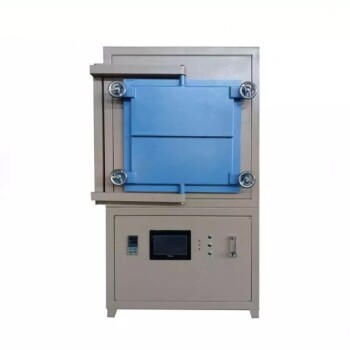
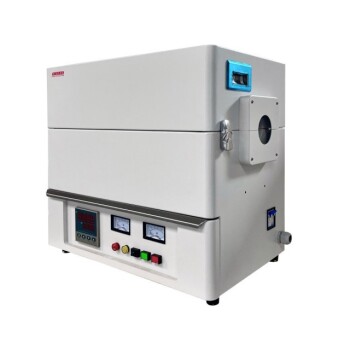
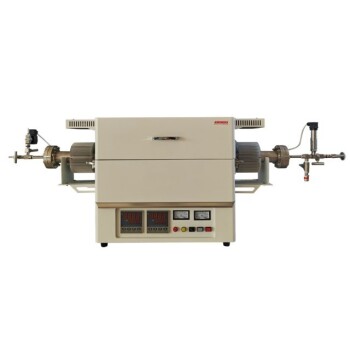
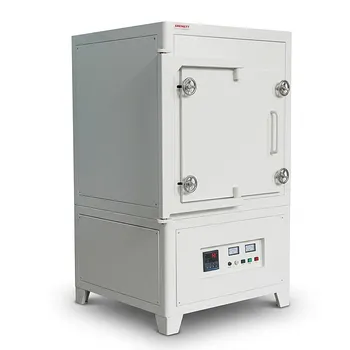
Achieve flawless ceramic-on-metal processing with KINTEK! As experts in advanced laboratory equipment and consumables, we offer a comprehensive range of customizable high-temperature furnaces—including controlled atmosphere, vacuum, tube, muffle, CVD, rotary, and induction melting systems—engineered to meet your exact process demands. Protect your metallic substrates and secure strong interfacial bonding—contact us today to tailor the perfect furnace solution for your laboratory!
Related Products
- 1400℃ High Temperature Laboratory Tube Furnace with Alumina Tube
- 1700℃ High Temperature Laboratory Tube Furnace with Alumina Tube
- 1800℃ High Temperature Muffle Oven Furnace for Laboratory
- 1700℃ High Temperature Muffle Oven Furnace for Laboratory
- High Temperature Muffle Oven Furnace for Laboratory Debinding and Pre Sintering
People Also Ask
- How does zone-melting in tube furnaces synthesize bismuth micro-wires? Master Single-Crystal Thermoelectric Growth
- How do high-temperature laboratory tube furnaces ensure environmental stability? Precision Thermal Reduction Tips
- How are high-temperature laboratory tube furnaces applied in long-term vacuum homogenization heat treatments for intermetallic samples?
- How are high-temp tube furnaces used to measure diffusion coefficients per Fick's law? Master Precision Annealing
- How are high-temperature tube furnaces applied in testing ceramic-supported alloy membranes? Insights