
Choosing the right porcelain furnace is not merely an equipment purchase; it is a foundational decision that directly dictates the quality, consistency, and profitability of your dental laboratory. The furnace controls the final physical and aesthetic properties of every ceramic restoration you produce, from strength and durability to shade and translucency. An unsuitable furnace can lead to inconsistent results, material failures, and costly remakes.
A porcelain furnace is more than a heat source—it is the instrument that transforms raw ceramic materials into high-performance dental restorations. Selecting the right one is about ensuring predictable outcomes, minimizing production errors, and safeguarding your lab's reputation for quality.
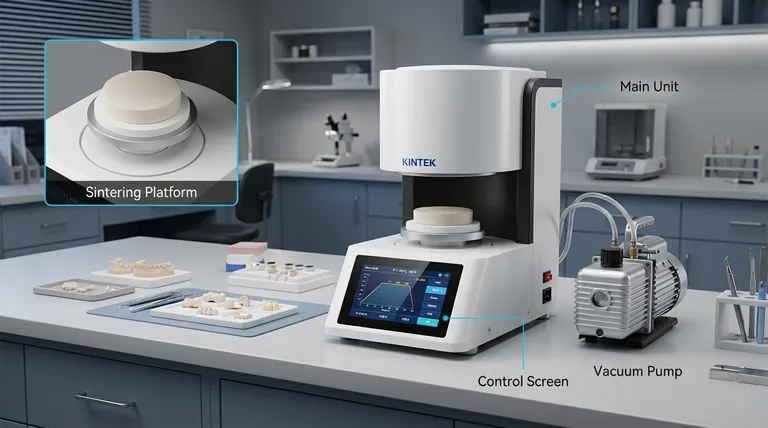
The Furnace's Role in a High-Quality Restoration
The core function of a porcelain furnace is to execute a precise, time-and-temperature-controlled heating cycle. This process, known as sintering or firing, is what gives a dental ceramic its final properties.
Achieving Precise Material Properties
Modern dental materials like zirconia and lithium disilicate have very specific firing schedules provided by the manufacturer. Adhering to these cycles is critical for achieving the specified strength, fit, and aesthetic characteristics. A high-quality furnace ensures these complex temperature protocols are followed exactly.
Ensuring Consistency and Predictability
The furnace must provide uniform temperature distribution throughout its firing chamber. This eliminates "hot spots" and "cold spots" that can cause inconsistencies across a single restoration or between multiple units in the same batch. Precise temperature control ensures that every restoration you produce meets the same high standard.
Preventing Costly Remakes
Firing errors are a primary cause of failed restorations. Issues like cracks, poor shade matching, or an improper fit often trace back to inaccurate temperature or uneven heating. A reliable furnace minimizes these failures, reducing the significant costs in time, labor, and materials associated with remakes.
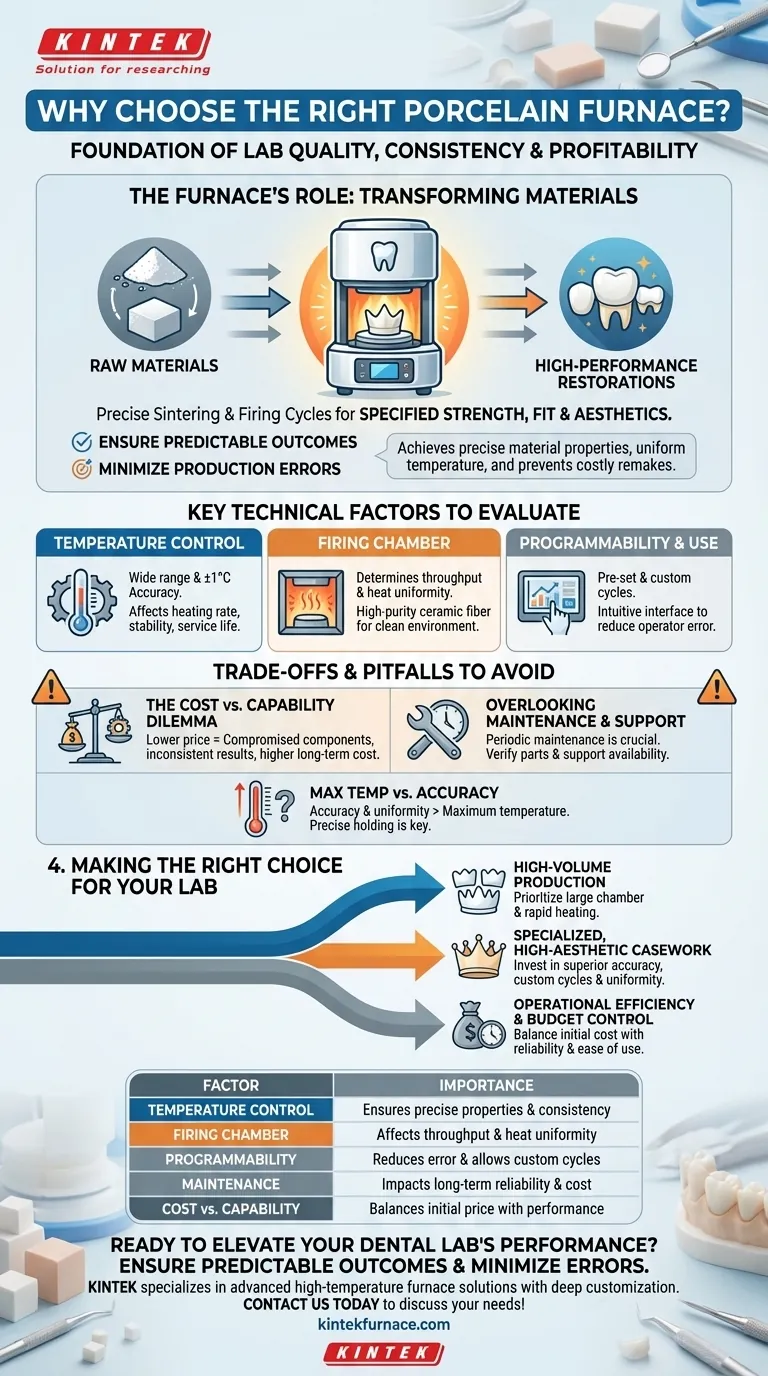
Key Technical Factors to Evaluate
When comparing furnaces, look beyond the marketing and focus on the technical specifications that have a direct impact on performance and reliability.
Temperature Control and Heating Technology
This is the single most important factor. The furnace must offer a wide temperature range (often up to 1,200°C or higher) to handle diverse materials. More importantly, it must maintain temperature accuracy (e.g., ±1°C) throughout the entire cycle. The type of heating element (such as quartz tube or silicon carbide) also impacts the heating rate, stability, and service life.
Firing Chamber Size and Construction
The chamber size determines your lab's throughput, or how many units you can fire at once. The chamber material, typically a high-purity ceramic fiber, is crucial for maintaining a clean firing environment and ensuring excellent heat uniformity.
Programmability and Ease of Use
A modern furnace should come with pre-set programs for common materials but also allow for the creation of fully custom firing cycles. The user interface should be intuitive, reducing the potential for operator error and minimizing training time for technicians.
Understanding the Trade-offs and Pitfalls
Making an informed decision requires understanding the common compromises and mistakes labs make when investing in a new furnace.
The Cost vs. Capability Dilemma
Lower-priced furnaces can be tempting, but they often compromise on critical components like the temperature controller or heating elements. This can lead to inconsistent results and a shorter lifespan, making the long-term cost of ownership (due to remakes and repairs) much higher than that of a premium, reliable unit.
Overlooking Maintenance and Support
A furnace is a long-term investment that requires periodic maintenance, such as calibration and heating element replacement. Before purchasing, verify the availability and cost of replacement parts and technical support from the manufacturer. Extended downtime waiting for a part can cripple a lab's production.
Focusing Only on Maximum Temperature
While a high maximum temperature indicates versatility, it is not the most critical metric. Temperature accuracy and uniformity at all stages of the firing cycle are far more vital for achieving high-quality clinical outcomes. A furnace that can hold a precise temperature is more valuable than one that can simply reach a high one.
Making the Right Choice for Your Lab
Your final decision should align with your lab's specific operational needs and business goals.
- If your primary focus is high-volume production: Prioritize a furnace with a larger firing chamber and rapid, reliable heating rates to maximize throughput without sacrificing quality.
- If your primary focus is specialized, high-aesthetic casework: Invest in a furnace with superior temperature accuracy, advanced programmability for custom cycles, and exceptional heat uniformity.
- If your primary focus is operational efficiency and budget control: Balance the initial purchase price with long-term reliability, ease of use for your technicians, and the availability of affordable maintenance from the manufacturer.
Ultimately, the right furnace is a strategic asset that consistently delivers predictable, high-quality results, safeguarding your lab's reputation and profitability.
Summary Table:
| Factor | Importance |
|---|---|
| Temperature Control | Ensures precise material properties and consistency |
| Firing Chamber | Affects throughput and heat uniformity |
| Programmability | Reduces operator error and allows custom cycles |
| Maintenance | Impacts long-term reliability and cost of ownership |
| Cost vs. Capability | Balances initial price with performance and durability |
Ready to elevate your dental lab's performance? At KINTEK, we specialize in advanced high-temperature furnace solutions tailored for laboratories like yours. Leveraging our exceptional R&D and in-house manufacturing, we offer products including Muffle, Tube, Rotary Furnaces, Vacuum & Atmosphere Furnaces, and CVD/PECVD Systems, all with deep customization to meet your unique needs. Ensure predictable outcomes and minimize production errors—contact us today to discuss how our furnaces can enhance your quality and profitability!
Visual Guide
Related Products
- Dental Porcelain Zirconia Sintering Ceramic Vacuum Press Furnace
- Vacuum Dental Porcelain Sintering Furnace for Dental Laboratories
- 2200 ℃ Graphite Vacuum Heat Treat Furnace
- Spark Plasma Sintering SPS Furnace
- High Temperature Muffle Oven Furnace for Laboratory Debinding and Pre Sintering
People Also Ask
- What factors determine the quality of sintered zirconia restorations? Master Material, Equipment, and Technique
- How do conventional vs rapid sintering in dental furnaces affect zirconia? Optimize Efficiency Without Sacrificing Strength
- What is the purpose of dental sintering furnaces? Transform Zirconia into Durable, High-Quality Dental Restorations
- What precautions should be taken when sintering zirconia in the Fast Slow Dental Sintering Furnace? Master Key Steps for Perfect Results
- What temperature range is used for sintering zirconia ceramics? Achieve Optimal Strength and Translucency



















