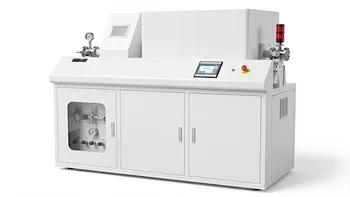
The high-temperature carbonization of mask-derived precursors demands an atmosphere-controlled tube furnace primarily to prevent the material from undergoing oxidative combustion. At temperatures ranging from 600°C to 1000°C, the carbon framework would react with ambient oxygen and turn into ash rather than the desired conductive structure. The furnace provides a strictly controlled, oxygen-free environment that allows organic precursors to reorganize into sophisticated carbon nanostructures.
An atmosphere-controlled tube furnace is essential because it isolates the carbonization process from oxygen using inert gases like nitrogen or argon. This controlled environment enables the precise thermal decomposition of polymers into stable, high-performance carbon nanosheets while preserving the intricate microscopic morphology required for energy storage.
Preventing Material Loss Through Oxidation
The Risk of High-Temperature Combustion
At the typical carbonization temperature of 800 °C, carbon is highly reactive. In the presence of oxygen, the organic precursor will burn completely, resulting in total material loss.
An atmosphere-controlled furnace replaces the air with an inert gas, such as high-purity nitrogen (N2). This ensures that the material undergoes pyrolysis—thermal decomposition in the absence of oxygen—rather than combustion.
Maintaining Chemical Purity
Oxygen-free environments are critical for ensuring that the resulting carbon framework remains pure. Even trace amounts of oxygen can introduce unwanted functional groups or surface defects that degrade the material's performance.
By maintaining a strict nitrogen inert environment, the furnace ensures that the organic precursors are successfully converted into clean carbon nanosheets. This purity is vital for applications in high-performance energy storage and mercury adsorption.
Facilitating Structural and Molecular Reorganization
From Polymer to Graphitic Framework
High-temperature treatment causes the molecular chains of the mask’s polymers to break and reorganize. The tube furnace provides the stable thermal energy required for graphitization, where carbon atoms align into a conductive skeleton.
This process transforms the precursor into a structurally stable carbonized material. Without precise atmosphere control, the delicate balance of chain-breaking and reorganization would be disrupted, leading to a weak or non-conductive final product.
Preserving Microscopic Morphology
Mask-derived materials often require specific nanostructures, such as nanosheets or porous nanotubes, to be effective. The tube furnace enables these precursors to maintain their smooth morphologies during the transition from polymer to carbon.
The furnace also facilitates the removal of volatile organic compounds (VOCs). By controlling the flow of inert gas, the furnace efficiently carries away these byproducts, preventing them from re-depositing and clogging the developing pore structure.
Precision Control of the Carbonization Environment
The Importance of Heating Curves
The ability to regulate the heating rate is a defining feature of a controlled tube furnace. Precise heating curves allow for the gradual cyclization and carbonization of materials like polyacrylonitrile (PAN) found in masks.
Uniform temperature distribution within the tube is a critical factor in determining carbon yield. It ensures that the entire batch of material reaches the target temperature simultaneously, preventing structural inconsistencies.
Inducing Porosity and Active Sites
In some processes, specific gases like carbon dioxide (CO2) are introduced as activating agents. At 1000 °C, this specific atmosphere creates structural defects and increases micropore volume, significantly boosting the specific surface area.
Furthermore, a controlled atmosphere ensures that active sites (such as Co-N-C) are firmly bonded to the carbon substrate. This is essential for creating materials with high catalytic activity or adsorption capacity.
Understanding the Trade-offs
Inert Gas vs. High Vacuum
While high-purity nitrogen is the standard for cost-effective carbonization, some high-end applications require a high vacuum. Vacuum environments can offer even higher purity but increase the complexity and cost of the equipment significantly.
Heating Speed vs. Structural Integrity
A rapid heating rate can increase throughput but risks "popping" the material or causing structural collapse due to the rapid escape of volatiles. Conversely, a very slow heating rate consumes more energy and nitrogen, increasing the operational cost per gram of carbon produced.
Gas Flow Rate Precision
If the inert gas flow is too low, volatile byproducts may not be removed effectively, leading to surface contamination. However, excessively high flow rates can cause temperature fluctuations within the tube, potentially leading to uneven carbonization and reduced mechanical strength.
Choosing the Right Configuration for Your Goal
How to Apply This to Your Project
Selecting the right parameters for your atmosphere-controlled furnace depends entirely on the intended application of your mask-derived carbon.
- If your primary focus is high electrical conductivity: Use a higher temperature (up to 1000 °C) and a slow heating curve under high-purity nitrogen to maximize graphitization.
- If your primary focus is high surface area for adsorption: Introduce a secondary activation stage using CO2 or steam at high temperatures to "etch" the carbon and create micropores.
- If your primary focus is preserving delicate nanofibers: Ensure a very stable, low-velocity inert gas flow to prevent mechanical damage to the nanostructures during the volatile-release phase.
- If your primary focus is maximizing carbon yield: Prioritize temperature uniformity and a strictly oxygen-free seal to prevent any localized oxidative loss.
The transition from waste mask to high-value carbon material is entirely dependent on the furnace's ability to maintain a precise, oxygen-free thermal environment.
Summary Table:
| Key Feature | Role in Carbonization | Core Benefit |
|---|---|---|
| Inert Atmosphere | Prevents oxidative combustion | High carbon yield and purity |
| Precise Temp Control | Regulates heating curves | Uniform graphitic framework |
| Controlled Gas Flow | Removes volatile organic compounds | Preserves microscopic morphology |
| Chemical Activation | Introduces CO2 or activating agents | Increases porosity and surface area |
Elevate Your Material Research with KINTEK Precision
Ready to transform mask waste into high-value carbon nanosheets? KINTEK specializes in advanced laboratory equipment and consumables, offering a comprehensive range of atmosphere-controlled tube furnaces, vacuum systems, CVD, and muffle furnaces—all customizable to meet your specific research demands.
Whether you need precise gas flow for VOC removal or stable heating curves for graphitization, our high-temperature solutions ensure your materials achieve superior structural integrity and purity.
Contact our experts today to find the perfect furnace configuration for your unique carbonization project!
References
- Aamir Ahmed, Sandeep Arya. Upcycling of surgical facemasks into carbon based thin film electrode for supercapacitor technology. DOI: 10.1038/s41598-023-37499-x
This article is also based on technical information from Kintek Furnace Knowledge Base .
Related Products
- 1200℃ Controlled Inert Nitrogen Atmosphere Furnace
- Mesh Belt Controlled Atmosphere Furnace Inert Nitrogen Atmosphere Furnace
- 1400℃ Controlled Inert Nitrogen Atmosphere Furnace
- Controlled Inert Nitrogen Hydrogen Atmosphere Furnace
- 1700℃ Controlled Inert Nitrogen Atmosphere Furnace
People Also Ask
- What controlled-atmosphere furnace conditions are required for sintering powder metallurgy copper alloy compacts? Ideal Setup
- How Sintering Temp Affects Density & Resistivity of Cu-Oxide Composites
- What Roles Do a Controlled Atmosphere Furnace and Oil Quenching Tank Play in AISI 5140 Steel Heat Treatment?
- Why is a controlled atmosphere furnace required for 316L debinding? Ensure Structural Integrity & Zero Cracks
- What causes discrepancies between theoretical and experimental grain boundary mobility during ceramic sintering? Explained