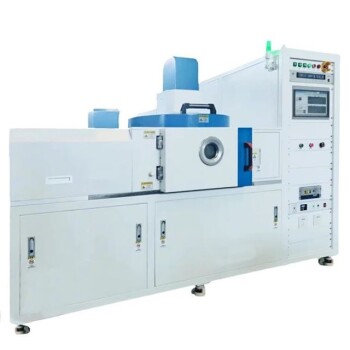
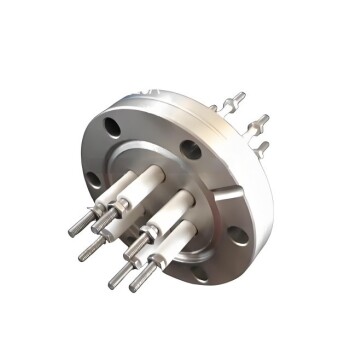
A high vacuum diffusion pump system is the standard for Ge-Se-Te-In synthesis because it creates a controlled environment where oxidation is physically impossible. By evacuating the reaction vessel to levels as low as 2.66 x 10⁻³ Pa, the system eliminates residual oxygen and moisture that would otherwise react with the chalcogenide elements at high temperatures. This ensures the resulting material achieves the high purity and precise stoichiometry required for high-performance infrared optics and semiconductors.
To maintain the functional integrity of Ge-Se-Te-In materials, a high vacuum system is used to prevent the formation of oxides that degrade infrared transmission. This process provides a chemically inert environment that preserves the material’s atomic structure and purity during high-temperature melting.
The Critical Role of Oxidation Prevention
Protecting Highly Reactive Chalcogenides
Chalcogenide elements like Germanium (Ge), Selenium (Se), and Tellurium (Te) are extremely susceptible to oxidation when heated. At the elevated temperatures required for the reaction, any residual oxygen in the air will bind with these elements to form oxides. These oxides act as impurities that fundamentally change the material's chemical behavior.
Removing Atmospheric Moisture
Beyond oxygen, atmospheric moisture (water vapor) is a primary contaminant in sealed reaction vessels. A diffusion pump system is powerful enough to strip residual water molecules from the internal surfaces of the quartz ampoules. This prevents hydrogen or oxygen from interfering with the delicate balance of the Ge-Se-Te-In alloy.
Ensuring Optical and Structural Quality
Preserving Infrared Transmission
The primary application for Ge-Se-Te-In materials is often infrared (IR) optics. Even trace amounts of oxide impurities can cause significant absorption of light, making the glass opaque in the necessary IR wavelengths. Maintaining a high vacuum ensures the final glass remains transparent and functional for its intended optical use.
Achieving Precise Stoichiometric Ratios
For complex alloys like Ge-Se-Te-In, the exact ratio of atoms is vital for its semiconductor or glass properties. High vacuum systems prevent non-stoichiometric loss, where elements might react with residual gases and precipitate out of the intended phase. This ensures the final alloy matches the exact chemical formula required for the application.
Managing the Mean Free Path
In processes involving evaporation or sublimation, a high vacuum increases the mean free path of atoms. This allows vaporized atoms to travel in a straight line from the source to the target without colliding with residual gas molecules. This is essential for creating films with uniform thickness and strong adhesion.
Understanding the Trade-offs
The Risk of Oil Backstreaming
Diffusion pumps use a specialized oil to trap gas molecules, which can occasionally migrate back into the reaction chamber—a process known as backstreaming. If not properly managed with cold traps or baffles, this oil can introduce carbon contaminants into the Ge-Se-Te-In mixture.
System Complexity and Start-up Time
Unlike simple mechanical pumps, diffusion pump systems require a backing pump to reach a preliminary vacuum before they can operate. They also require significant time to heat up the oil and cool down after use. This adds complexity to the manufacturing workflow compared to lower-vacuum alternatives.
How to Apply High Vacuum Standards to Your Project
To successfully prepare Ge-Se-Te-In materials, your vacuum strategy must align with your specific performance requirements.
- If your primary focus is maximum infrared transparency: Prioritize reaching a vacuum level of at least 10⁻³ Pa to ensure the complete absence of oxide-related absorption bands.
- If your primary focus is stoichiometric precision: Ensure the system is thoroughly purged and held at high vacuum for several hours before sealing to remove all adsorbed moisture from the vessel walls.
- If your primary focus is thin-film uniformity: Utilize the diffusion pump to maximize the mean free path, ensuring that vaporized atoms deposit in a clean, straight-line path onto the substrate.
The rigorous application of high vacuum technology is the only reliable way to transform reactive raw elements into high-purity Ge-Se-Te-In functional materials.
Summary Table:
| Feature | Impact on Ge-Se-Te-In Synthesis | Benefit |
|---|---|---|
| Oxidation Prevention | Eliminates oxygen at levels down to 2.66 x 10⁻³ Pa | Maintains chemical purity and atomic structure |
| Moisture Removal | Strips residual water molecules from vessel surfaces | Prevents interference with alloy balance |
| IR Transparency | Removes oxide impurities that absorb light | Ensures functional clarity for infrared optics |
| Stoichiometric Control | Prevents non-stoichiometric loss during heating | Guarantees precise semiconductor properties |
| Mean Free Path | Enables straight-line travel of vaporized atoms | Achieves uniform thickness in thin films |
Elevate Your Ge-Se-Te-In Synthesis with KINTEK
Precise control over vacuum and temperature is non-negotiable for high-performance infrared optics and semiconductors. KINTEK specializes in laboratory equipment and consumables, offering a comprehensive range of high-temperature furnaces, including vacuum, CVD, tube, muffle, and atmosphere furnaces, all fully customizable to meet your unique synthesis needs.
Ensure the highest purity and stoichiometric precision for your materials today. Contact KINTEK for a Custom Solution!
References
- Pravin Kumar Singh, D. K. Dwivedi. Effect of thermal annealing on structural and optical properties of In doped Ge-Se-Te chalcogenide thin films. DOI: 10.2478/msp-2019-0061
This article is also based on technical information from Kintek Furnace Knowledge Base .
Related Products
- High Performance Vacuum Bellows for Efficient Connection and Stable Vacuum in Systems
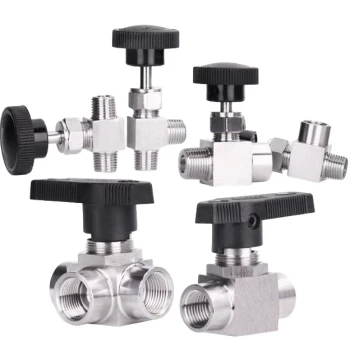
- 304 316 Stainless Steel High Vacuum Ball Stop Valve for Vacuum Systems
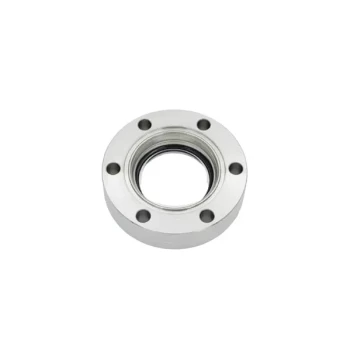
- Ultra High Vacuum CF Observation Window Flange with High Borosilicate Glass Sight Glass
- Split Chamber CVD Tube Furnace with Vacuum Station CVD Machine
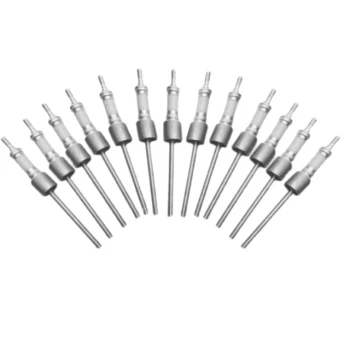
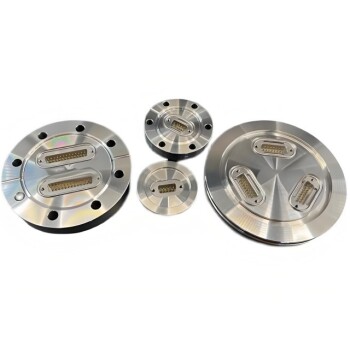
- Ultra Vacuum Electrode Feedthrough Connector Flange Power Lead for High Precision Applications
People Also Ask
- Why is an Ultra-High Vacuum (UHV) System Required for In2Se3? Achieving Atomic-Level Ferroelectric Clarity
- Why is an environmental laboratory chamber equipped with an optical window required for synthesizing Hafnium Carbide?
- What role does a closed pressure vessel play during the carbonation of gamma-C2S? Unlock Rapid Mineralization
- Why are desiccators containing saturated salt solutions used when evaluating the hygroscopicity of modified wood?
- How does the pressure environment affect the metallic thermal reduction for titanium? Master Precision Control