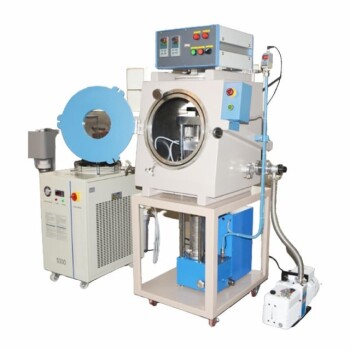
The single greatest threat to a MIM component after shaping is not crack formation—it’s the subtle, pervasive degradation that occurs during sintering when thermal and atmospheric conditions are uncontrolled.
High-temperature vacuum and controlled atmosphere furnaces are critical because they create a precise thermal and chemical environment that eliminates oxidation, ensures uniform shrinkage for dimensional accuracy, and enables the complete elimination of internal porosity—achieving the dense, high-integrity microstructure that defines a successful MIM part.
Without exacting control over temperature uniformity above 1320°C and a tailored atmosphere that manages binder burnout, oxide reduction, and gas removal, MIM components would suffer from oxidation, inconsistent dimensional change, trapped porosity, and degraded mechanical properties. High-temperature vacuum and controlled atmosphere furnaces are the only processing platform capable of delivering the predictable densification and microstructural purity that MIM demands.
The Sintering Imperative in MIM Production
From Green Body to High-Density Metal
Metal injection molded components begin as a binder-rich green part. After the binder is thermally removed, the remaining powder skeleton must be sintered—heated to a temperature where atomic diffusion welds particles together and dense material bridges replace voids. This step shrinks the part by up to 20% linearly, and that shrinkage must be absolutely predictable to hold final tolerances.
The Consequences of Suboptimal Processing
If the furnace environment is not tightly managed, three failure modes emerge. Oxidation corrodes particle surfaces, preventing strong neck formation. Thermal gradients cause uneven shrinkage, distorting complex geometries. And residual porosity remains trapped inside the part, lowering strength and fatigue life. A standard air furnace or an open-belt kiln simply cannot overcome these problems.
The Critical Role of Temperature Uniformity and Thresholds
Why 1320°C Matters
Key densification and grain‑growth mechanisms in MIM alloys—especially stainless steels and low‑alloy steels—activate most efficiently between 1320°C and 1360°C. Below 1320°C, insufficient thermal energy leaves pores only partially closed, leading to low sintered density and wide property scatter. A furnace must reliably hold every part within this narrow window throughout the entire load.
Uniform Heat for Complex Geometries
MIM parts often combine thin walls and thick bosses. Uniform thermal distribution ensures that every feature of every part reaches the same effective sintering temperature simultaneously. When a furnace can maintain a consistent temperature profile, the linear shrinkage becomes predictable, and the part exits the cycle dimensionally stable rather than warped.
The Multi-Faceted Power of Controlled Atmospheres
Beyond Oxidation Prevention
While shielding hot metal from air is essential, the furnace atmosphere does much more. It facilitates binder burnout by carrying away decomposition products, reduces native oxides to create clean particle surfaces necessary for neck formation, and influences heat transfer rates within the chamber. Without these chemical cleaning actions, sintering simply cannot start.
Eliminating Trapped Porosity
In the final sintering stage, pores become isolated inside the dense body. If insoluble gas (like argon or nitrogen from uncontrolled air) is trapped, it resists the surface‑energy driving force and prevents pore closure. High‑temperature vacuum furnaces evacuate these gases before pore sealing, while a well‑chosen atmosphere like hydrogen can diffuse into the metal and escape, allowing the pores to collapse fully and deliver maximum density.
Controlling Interstitial Elements and Microstructure
The processing atmosphere dictates the retention or removal of carbon and nitrogen in the part’s surface. A lean environment can cause decarburization, softening the component. A nitrogen-rich atmosphere can induce nitridation, changing surface hardness. Precise atmosphere control—often using hydrogen, nitrogen, or mixed gases—preserves the intended stoichiometry and can even enable sinter‑hardening during cooling.
Understanding the Trade-offs and Potential Pitfalls
The Risk of Surface Decarburization
When sintering steel‑based MIM parts in a hydrogen or dry inert atmosphere without adequate carbon potential, surface carbon atoms react to form CH₄ or CO. The result is a soft surface layer that compromises wear resistance. Restoring carbon through endothermic gas additions or careful vacuum‑partial‑pressure cycles is essential.
Balancing Vacuum and Partial Pressure
Pure vacuum is not always the ideal solution. In alloys containing high‑vapor‑pressure elements (e.g., chromium in stainless steels), extreme vacuum can cause elemental vaporization, depleting the surface and altering composition. A precisely controlled partial pressure of inert gas suppresses this loss while still removing reactive gases.
Capital and Operational Costs
High‑temperature vacuum and controlled‑atmosphere furnaces represent a significant investment and require rigorous maintenance of seals, gas purification systems, and temperature controls. However, these costs are the price of predictable densification, and any shortcut in atmosphere quality or thermal uniformity leads directly to scrap and field failures.
Making the Right Choice for Your MIM Process
The specific furnace and atmosphere you select should align with your alloy system, part complexity, and quality targets.
- If your primary focus is achieving maximum sintered density: Prioritize high‑vacuum capability for final‑stage pore elimination and use hydrogen‑bearing atmospheres to reduce surface oxides.
- If your primary focus is dimensional consistency across complex geometries: Ensure the furnace delivers uniform temperature distribution within the 1320°C–1360°C window and stable gas flow to avoid thermal gradients.
- If your primary focus is maintaining surface hardness and carbon control: Use controlled carbon‑potential atmospheres and monitor decarburization risk, possibly employing mixed gases like nitrogen‑hydrogen with trace hydrocarbons.
- If your primary focus is processing reactive metals or high‑performance alloys: Opt for a vacuum furnace with precise partial‑pressure control to prevent vaporization while still achieving clean particle surfaces.
Ultimately, a high‑temperature vacuum or controlled atmosphere furnace isn’t just a tool—it’s the process enabler that transforms a fragile green shape into a reliable, high‑density metal component.
Summary Table:
| Sintering Factor | Challenge in MIM Production | Furnace Solution | Impact on Final Component |
|---|---|---|---|
| Temperature Window | Pore closure failure below 1320°C | Precise heating (1320°C–1360°C) | Maximum sintered density & microstructural strength |
| Atmosphere Control | Oxide formation & binder residue | Hydrogen/Inert gas purging & reduction | Clean particle surfaces & complete oxide reduction |
| Vacuum & Pressure | Trapped gas porosity & element vaporization | Evacuation with partial pressure control | Porosity-free parts & stable alloy stoichiometry |
| Thermal Uniformity | Irregular shrinkage & distortion/warping | Uniform heat distribution across chamber | Predictable ~20% linear shrinkage & tight tolerances |
Ready to achieve flawless density and precise dimensional control for your MIM components? KINTEK specializes in premium laboratory equipment and customizable high-temperature furnaces—including advanced vacuum, controlled atmosphere, tube, muffle, and CVD systems designed to meet your specific sintering demands. Protect your components from oxidation, distortion, and porosity. Contact KINTEK today to consult with our high-temperature furnace specialists and elevate your material processing capability!
Related Products
- Vacuum Heat Treat Sintering Furnace Molybdenum Wire Vacuum Sintering Furnace
- Vacuum Heat Treat Sintering Furnace with Pressure for Vacuum Sintering
- 600T Vacuum Induction Hot Press Vacuum Heat Treat and Sintering Furnace
- Small Vacuum Heat Treat and Tungsten Wire Sintering Furnace
- 2200 ℃ Tungsten Vacuum Heat Treat and Sintering Furnace
People Also Ask
- What are the main structural components of a vacuum sintering furnace? Unlock Precision in High-Temperature Processing
- What are the key components of a vacuum sintering furnace? Essential Parts for Precision Material Processing
- How does vacuum sintering improve dimensional tolerances? Achieve Uniform Shrinkage and Precision
- What is the purpose of setting a mid-temperature dwell stage? Eliminate Defects in Vacuum Sintering
- How does vacuum sintering contribute to cost reduction in material processing? Lower Expenses with Superior Parts