Precision in thermal management starts with mastering fundamental units. When evaluating high-temperature laboratory furnaces — from rapid-ramp tube designs to ultra-stable muffle systems — the critical standard units are the Kelvin and degree Celsius for temperature, the Joule for energy, and the Watt for power. Key thermal energy conversions include the fixed relationship T(°C) = T(K) - 273.15 and the equivalence 1 calorie = 4.1868 J. These linear transformations allow you to move seamlessly between thermodynamic theory and the real-world controller displays that govern furnace performance.
True control over a high-temperature furnace means translating electrical input into predictable heating curves. The SI framework of Kelvin, Joule, and Watt gives you the common language to calculate element wattage, verify ramp rates, and audit energy efficiency — but only when paired with an understanding of how atmosphere and element materials impose practical conversion limits.
The Language of Heat: Core SI Units and Conversions
Temperature: The Difference Between a Setpoint and a Safety Margin
All thermodynamic calculations rely on the absolute Kelvin scale, where zero represents the absence of thermal motion. Practical furnace control, however, uses degrees Celsius. The conversion is a simple shift: subtract 273.15 from the Kelvin reading. For most lab workflows, ΔT in Kelvin equals ΔT in °C, so ramp-rate calculations need no numerical adjustment — a 10 K/min rise is exactly a 10 °C/min rise.
Energy: The Common Currency of Furnace Performance
Total thermal input, heat lost through insulation, and energy absorbed by the workload are all measured in Joules (J). Because many legacy heating standards and older reference materials still use the calorie, you must apply the exact factor 1 cal = 4.1868 J to compare historical data with modern furnace specifications. For atomic-scale interactions — relevant when examining reaction kinetics inside the furnace — the electron volt serves as a microscopic energy yardstick (1 eV = 1.6022 × 10⁻¹⁹ J), ensuring that bulk and molecular observations stay consistent.
Power: The Rate That Defines Heating Speed
Power expresses the rate of energy delivery, and in SI it is the Watt (1 W = 1 J/s). In a furnace, this single unit underpins two vital evaluations: the maximum heating power available to drive the temperature upward, and the sustained electrical draw needed to hold a setpoint against thermal losses. Comparing the wattage of different heating element configurations in the same unit tells you immediately which can reach a target temperature faster or handle a heavier workload.
Beyond Definitions: How These Units Solve Real Furnace Challenges
Sizing Heating Elements from Target Temperatures
A furnace’s heating elements must supply enough power to overcome heat losses at the highest required process temperature. By calculating the steady-state thermal loss in Watts at that temperature — derived from insulation properties and surface area — you can specify the minimum required element wattage. Failing to do so in an oxidizing atmosphere with silicon carbide, for instance, can mean the difference between holding a steady 1450 °C and a premature controller shutdown.
Determining Ramp Rates from Power Headroom
Once the soak-holding power is known, ramp rate depends on the surplus power available to raise the thermal mass of the chamber and workload. Using the relationship power surplus (W) = (ΔT × heat capacity) / time, you can predict how many degrees per minute a furnace can achieve. If your protocol demands a fast 15 °C/min ramp through a critical reaction window, the system’s wattage must justify it — otherwise you risk missing the kinetic sweet spot.
Verifying Soak-Power Efficiency
Electrical meters measure input in Watts and Watt-hours, but the useful thermal energy absorbed by the sample is always lower. By converting total electrical consumption into Joules and comparing it to the theoretical energy needed to heat the sample (mass × specific heat × ΔT), you get a dimensionless thermal efficiency ratio. Tracking this over time spots insulation degradation or element aging before it corrupts a sensitive long-duration experiment.
Understanding the Trade-offs When Unit Conversions Meet Real-World Constraints
The mathematical conversions are exact, but their practical application is filtered through material and atmospheric limits. A perfectly calculated Joule requirement for reaching 1600 °C means nothing if the heating element material can survive only 1400 °C in your chosen gas environment. For example, molybdenum disilicide (MoSi₂) thrives in oxidizing air up to ~1600 °C but cannot be used in reducing atmospheres without rapid failure. Graphite, rated for 2800 °C under inert gas, will disintegrate if heated in air beyond a few hundred degrees. The most accurate power calculation in Watts becomes irrelevant if the element chemistry is mismatched — you may hit the temperature for a brief moment, but you will lose control as the element degrades.
A second trade-off hides inside the temperature scale itself. While the Kelvin-to-Celsius shift is trivial, the choice of temperature sensor (thermocouple vs. pyrometer) introduces non-linear conversion errors that no simple formula fixes. A Type B thermocouple reading in °C can be precise at 1500 °C, but if you calculate a required Kelvin value for a Boltzmann radiation model using that direct conversion, a sensor calibration drift of just a few degrees may invalidate your heat-transfer prediction. The units are correct; the measurement chain demands scrutiny.
Making the Right Choice for Your Goal
Applying SI thermal conversions is less about memorizing one factor and more about aligning the calculation with the specific performance parameter you need to safeguard.
- If your primary focus is preventing over-temperature failure: Prioritize the temperature limits of your heating elements in their actual operating atmosphere. Let the element’s maximum °C rating — not the furnace’s theoretical power wattage — set your safety interlock thresholds.
- If your primary focus is maximizing heating speed and throughput: Use the Watt-based power surplus calculation to evaluate whether the installed elements can deliver the ramp rate your protocol demands. A high wattage rating is only useful if the thermal mass can be heated without overshooting the element’s thermal ceiling.
- If your primary focus is energy auditing and cost control: Convert all electrical consumption data to Joules and track the real thermal efficiency. Only a Joule-by-Joule comparison reveals the hidden cost of aging heating elements or deteriorating insulation.
Mastering the interplay between Kelvin, Celsius, Joules, and Watts transforms furnace operation from a black-box recipe into a fully engineered thermal process where every degree and every Watt serves a calculated purpose.
Summary Table:
| Metric / Parameter | Core SI Unit | Key Conversion / Formula | Lab Furnace Application |
|---|---|---|---|
| Temperature | Kelvin (K) / Celsius (°C) | $T(°C) = T(K) - 273.15$ | Setting safe atmosphere/element thresholds & sensor calibration |
| Thermal Energy | Joule (J) | $1 \text{ cal} = 4.1868 \text{ J}$ | Auditing overall heat retention & sample absorption efficiency |
| Heating Power | Watt (W) | $1 \text{ W} = 1 \text{ J/s}$ | Sizing heating elements to overcome steady-state thermal loss |
| Ramp Surplus | Watt (W) | $\text{Surplus W} = \frac{\Delta T \times \text{Heat Capacity}}{\text{Time}}$ | Determining achievable heating rates (°C/min) without thermal overshoot |
Precision Thermal Management Starts with KINTEK
Translating thermal equations into reliable, real-world laboratory performance requires high-temperature furnace technology built for accuracy and efficiency. At KINTEK, we specialize in high-performance laboratory equipment and consumables designed to meet the rigorous standards of modern research and industrial processes.
Our extensive furnace portfolio includes:
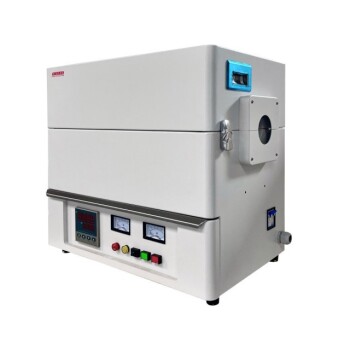
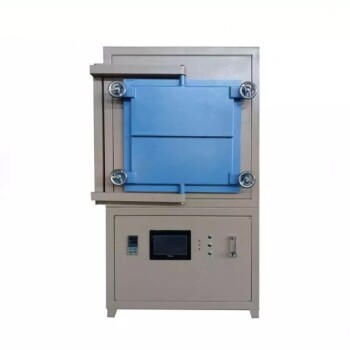
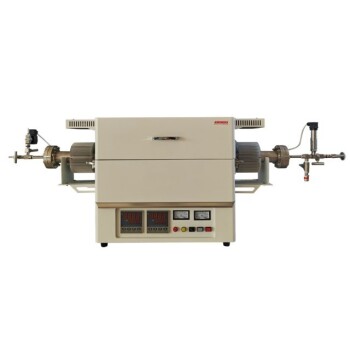
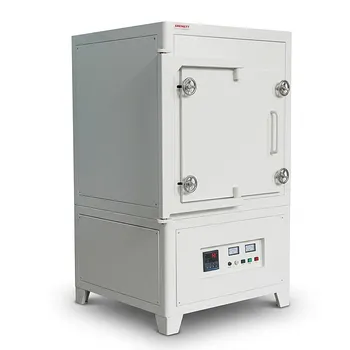
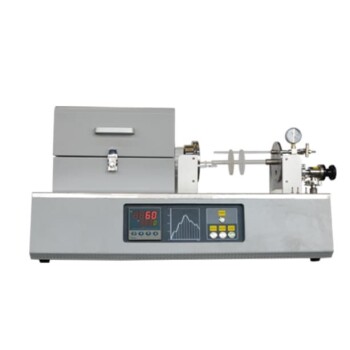
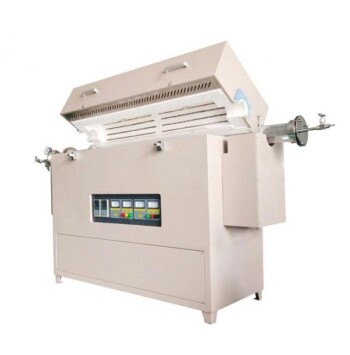
- Muffle & Tube Furnaces: Ultra-stable heating and rapid-ramp configurations for routine or high-precision testing.
- Atmosphere & Vacuum Furnaces: Controlled environments engineered to protect sensitive samples and heating elements.
- Rotary, CVD & Induction Melting Systems: Advanced thermal solutions for specialized material synthesis and processing.
- Dental & Custom High-Temp Furnaces: Fully tailorable configurations designed around your exact process temperatures, gas types, and ramp rate requirements.
Whether you need help calculating required element wattage or selecting the optimal furnace configuration for your research, our technical experts are here to help.
👉 Contact KINTEK Today to Discuss Your Custom Furnace Needs
Related Products
- 1400℃ High Temperature Laboratory Tube Furnace with Alumina Tube
- 1700℃ High Temperature Laboratory Tube Furnace with Alumina Tube
- 1800℃ High Temperature Muffle Oven Furnace for Laboratory
- 1700℃ High Temperature Muffle Oven Furnace for Laboratory
- 1200℃ Muffle Oven Furnace for Laboratory
People Also Ask
- How does zone-melting in tube furnaces synthesize bismuth micro-wires? Master Single-Crystal Thermoelectric Growth
- How are high-temperature laboratory tube furnaces applied in long-term vacuum homogenization heat treatments for intermetallic samples?
- How do high-temperature laboratory tube furnaces ensure environmental stability? Precision Thermal Reduction Tips
- How are high-temp tube furnaces used to measure diffusion coefficients per Fick's law? Master Precision Annealing
- How are high-temperature tube furnaces applied in testing ceramic-supported alloy membranes? Insights